
by Moira Cullings
moira.cullings@theleaven.org
OMAHA, Neb. — Infertility can be isolating.
“Because it’s so heavy on your heart, it’s very hard to talk about,” said Erin Swindler, a parishioner at Church of the Magdalen in Wichita. “And so, it doesn’t get talked about.”
Women experiencing infertility often have reproductive issues that go undiagnosed.
Physicians might try hormone treatment, and if that’s unsuccessful will likely refer them to fertility clinics that offer in vitro fertilization (IVF) or intrauterine insemination (IUI).
IVF combines sperm and eggs in a laboratory dish to create embryos. IUI inserts specially prepared sperm directly into the uterus during ovulation.
Because the Catholic Church opposes both methods, it can leave women who don’t want to pursue either one feeling lost.
“They feel like they don’t have resources,” said Cloe Noll, a parishioner at Curé of Ars Parish in Leawood. “They’re just going off what their doctors are telling them.
“Hopefully, people will read this and see [there is] another option.”
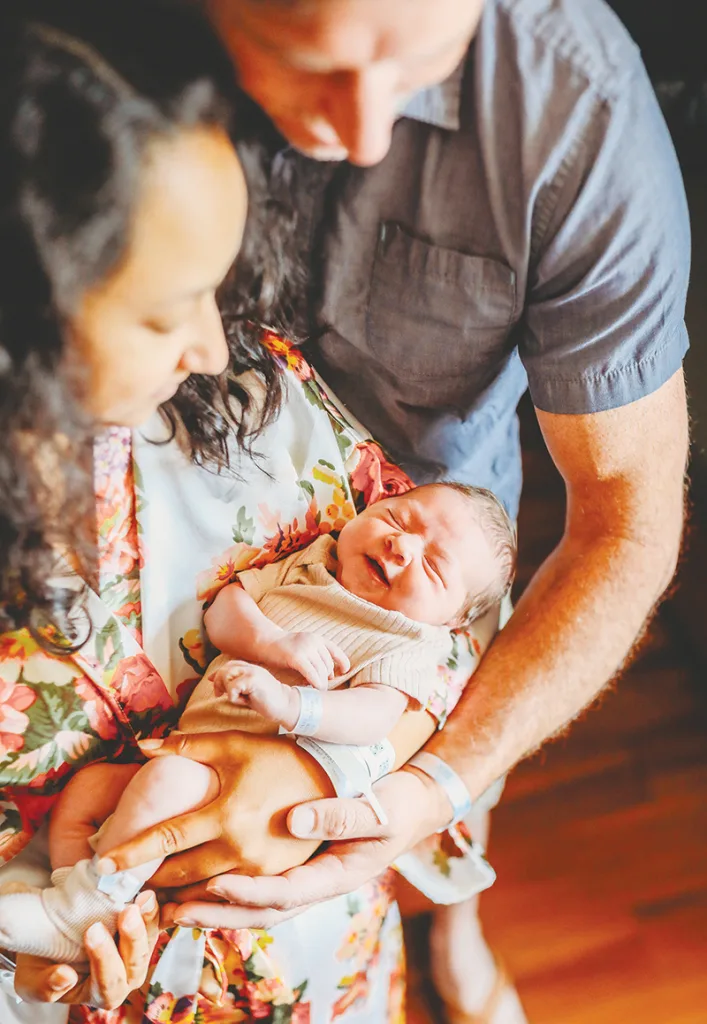
After years of infertility, Cloe and Erin, who are both nurses, received treatment through the Saint Paul VI Institute in Omaha, Nebraska, which specializes in the research, diagnosis and treatment of women’s health care within a pro-life ethic.
“People that I come into contact with that feel like they’ve tried everything — I always encourage them to go there,” said Erin.
“They take time to look so deeply and really get to the root [causes of infertility],” she added.
An unexpected breakthrough
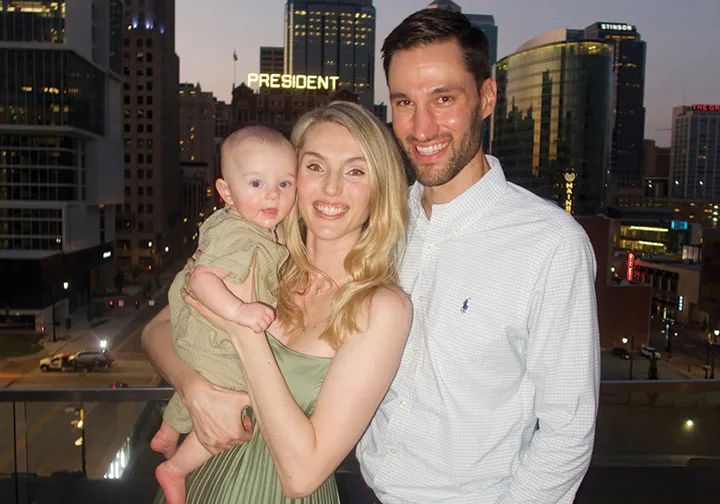
Erin and her husband Jason were on a pilgrimage in Rome with her parents, who are parishioners at Holy Trinity Parish in Lenexa, when they met Cloe’s mom, who’s also from Holy Trinity.
Later on, they realized that Cloe and Erin were both receiving treatment from Saint Paul VI. The women connected on Facebook and bonded over their shared experience.
The Nolls had been trying for a baby for around six months when Cloe had a gut feeling something was wrong.
She went to her OB-GYN, who said everything looked normal and that if she wasn’t pregnant after a year, she could try a fertility clinic.
Cloe wasn’t interested in IVF or IUI. She had also experienced a miscarriage and wanted to get to the root cause of her issues.
“I remembered that I kept my marriage prep booklet,” she said, “and there was this page in there that had Catholic resources for infertility.”
She was ultimately referred to Dr. Teresa Hilgers, an OB-GYN at Saint Paul VI.

Those like Cloe who don’t live in Omaha can submit their health charts and history and undergo hormone testing remotely.
“For most people who have infertility and don’t have a known cause yet, they will recommend doing an exploratory laparoscopy,” said Cloe.
She opted for the procedure, which examines the abdominal and pelvic organs, and was diagnosed with endometriosis, which Hilgers told her she finds 95% of the time.
Hilgers also looks inside the fallopian tubes during the procedure.
“And if they find blockage, they can actually go in and remove whatever is blocking it so that you have an open tube,” said Cloe.
Cloe’s blockage was removed, but her endometriosis was severe enough for Hilgers to recommend a second surgery.
After taking a blood test the day before that procedure was scheduled, Cloe found out she was pregnant.
She believes clearing out her fallopian tubes was a major breakthrough.
“It was definitely a miracle,” she said. “We believe that it would not have happened if we had not gone through all this and found Pope Paul.”
“It was absolutely unbelievable news given our circumstances and the fact that Cloe was supposed to be having surgery the next day,” said Gabe.
Their son Levi is now 6 months old.
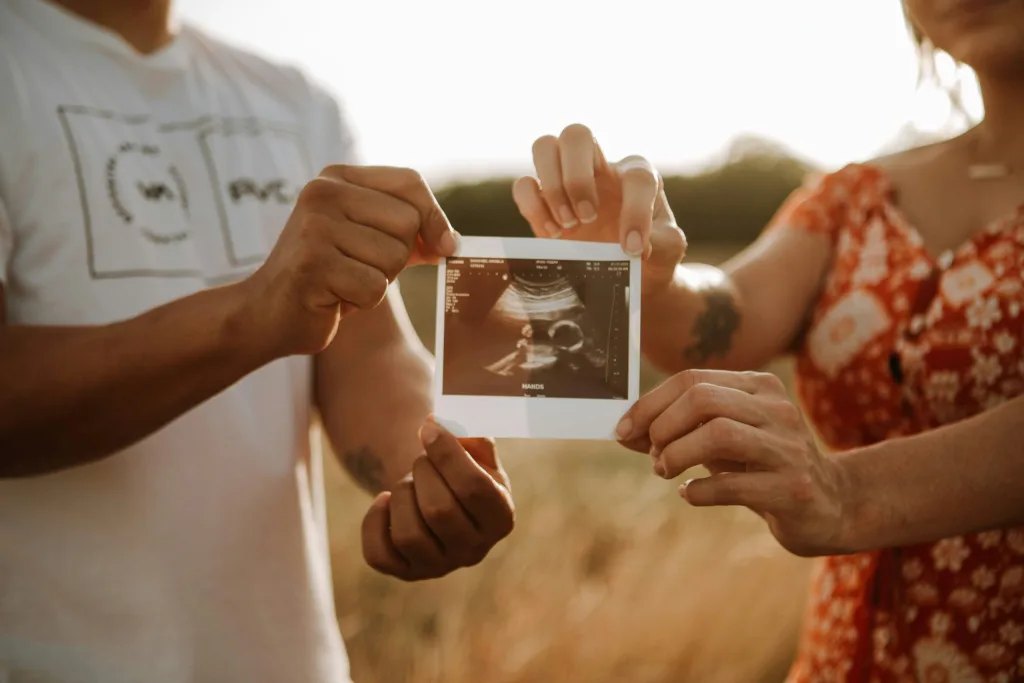
Gabe called Saint Paul VI “an unexpected answer to our prayers.”
“They take the time to find the actual root cause of the issue and come up with ways to better your health and not just try for a quick fix,” he said.
A transformative experience
The Swindlers also understand the suffering infertility causes. They tried for a baby for seven years.
Erin had symptoms like severe pain during menstruation and eventually underwent an exploratory laparoscopy surgery but was told she didn’t have endometriosis.
She was encouraged to pursue IVF or IUI but instead chose to try medicated menstrual cycles, still with no success.
“It felt very clinical,” said Erin. “It didn’t feel like we’re dealing with something precious here.”
The Swindlers took two years off from seeking medical help before Erin heard about Saint Paul VI through women at her church.
She saw Hilgers, who performed an exploratory laparoscopy surgery in two-and- a-half hours. Erin’s previous exploratory surgery had only taken 20 minutes.
“That right there says so much to me,” said Erin. “She really took her time, and not just inside of my uterus. She spent a lot of time going through my entire abdominal cavity looking everywhere.
“[The endometriosis] wasn’t inside my uterus, but it was everywhere else.”
Erin had a second procedure that required the additional help of a general surgeon so she could have a bowel resection.
“I had to lose about five inches of small bowel and then my appendix as well,” she said.
Eleven months after the second surgery, she found out she was pregnant.
“I burst into tears,” said Erin. “It was hard to believe after so many negatives.”
The Swindlers now have a 3-month-old daughter named Annabelle.
“She’s brought us so much joy — the whole family, the whole community,” said Erin. “So many people loved her before she even got here.”
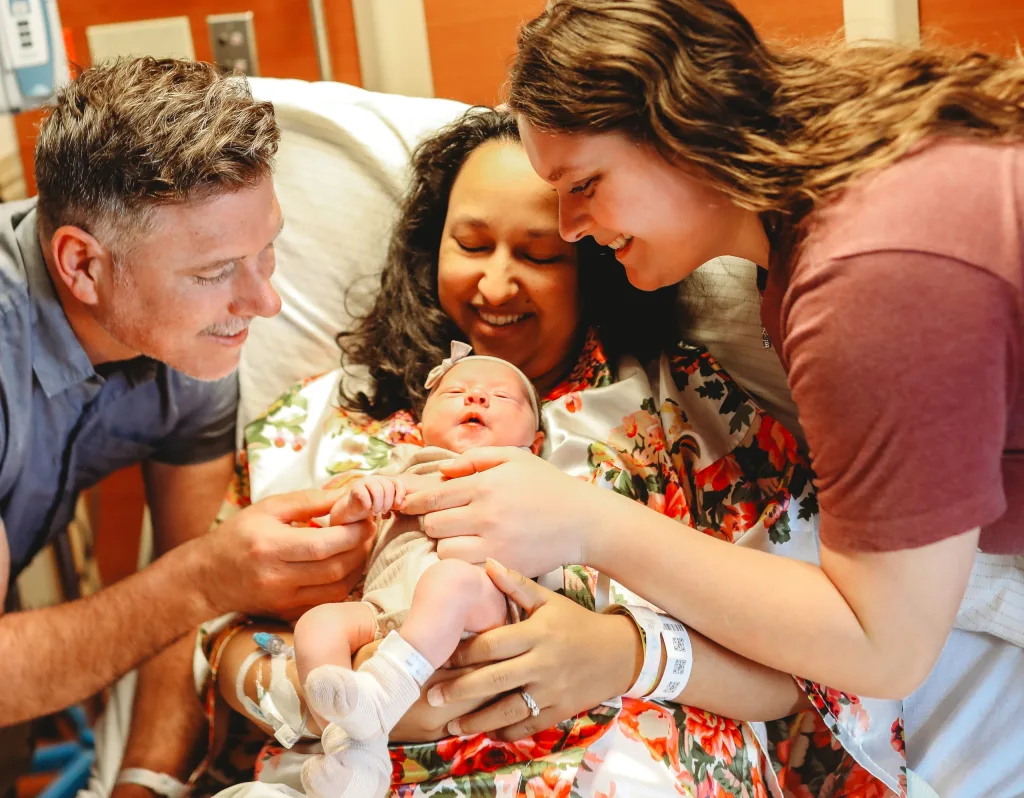
The experience tested the Swindlers’ faith, but they never gave up hope.
“The journey of faith has a lot of ups and downs,” said Jason, “and we have to learn to be thankful for the hard times as well as the good, because the hard times are there to teach us and help us grow.”
It’s also opened Erin’s eyes to the issues surrounding infertility treatment.
“You can’t throw the same medication at the same five women and have the same results,” she said. “We’re all so different.
“And that is how [Saint Paul VI] approaches everything. They take time to look so deeply and really get to the root.”
About the Saint Paul VI Institute
The Saint Paul VI Institute was founded by Thomas W. Hilgers, MD, in 1985 to offer reproductive health care that respects life completely.
It developed the Creighton Model FertilityCare System and NaPro Technology, which work together to improve the reproductive health of women by medical and surgical approaches.
It also developed a surgical technique called pelvioplasty, which eliminates scar tissue that forms after endometriosis surgery to prevent it from coming back.
The institute treats clients from out of state and other countries and offers support throughout pregnancy.
To learn more, visit the website at: saintpaulvi.com.

[…] Discover their inspiring stories of perseverance, faith, and new life in The Leaven. […]