How Catholic immigrants built America
This is the fourth article in a series.
by Therese Horvat
Special to The Leaven
CROATIAN
St. John the Baptist Parish, Kansas City, Kansas
As a member of the team that compiled the book commemorating the 125th anniversary of St. John the Baptist Parish, Kathy Lally Bareiss is amazed at the history of the Croatian immigrants who founded and built the church.
As early as 1888, a number of Croatians arrived in Kansas City. They settled first in “The Patch,” where early immigrants of different ethnicities lived in shacks until they could afford better housing.
In May 1900, a meeting was held to discuss building a church and forming a committee to lead the process. Things progressed quickly with approval from Bishop Louis Mary Fink and the purchase of land.
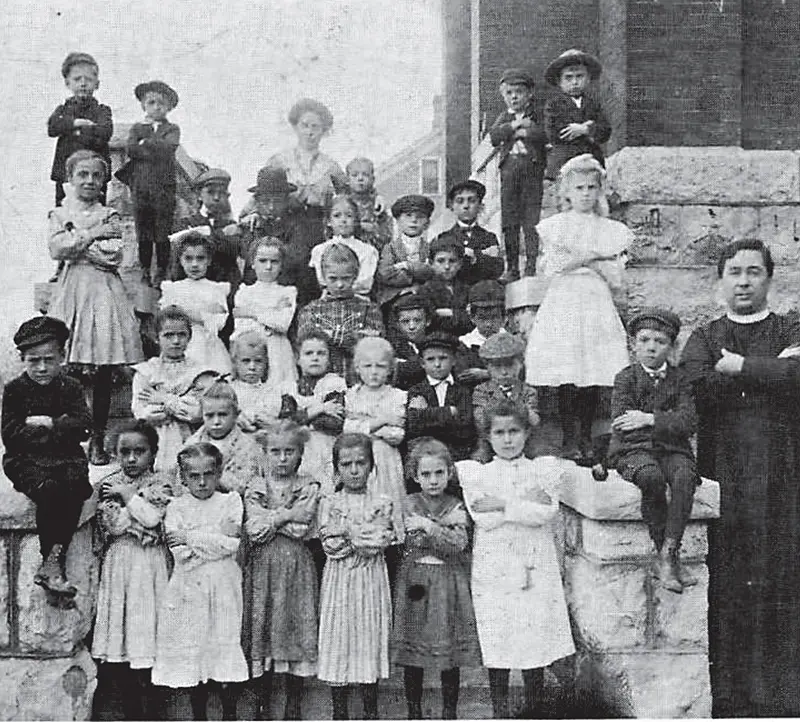
In 1902, a Croatian priest was secured to lead the parish. Msgr. Martin Krmpotic advanced the cause of building the church and even did some of the stone masonry. People moved to homes near the church, which was blessed in January 1905. The first Croatian Catholic school in the country opened in its basement.
The parish became the center of life for immigrant families — a trait that held true for many years. Ike and Kata Modrcin, Bareiss’ maternal grandparents, lived nearby in the neighborhood populated with friends from their Croatian villages. Both Modrcins worked in a meatpacking plant. Bareiss remembers that as a child she found a pair of chain metal gloves her grandmother wore to protect her hands while working.
The younger of the Modrcins’ two children, Joanne, was a latchkey kid while her parents worked. The surrounding neighborhood looked after her until daycare was provided at St. John’s Orphanage that opened in 1919 in the aftermath of the devastating Spanish flu epidemic. Today, that building houses the Strawberry Hill Ethnic Cultural Society.
To care for his parishioners, Msgr. Krmpotic taught citizenship classes and encouraged the construction of a club for young men. The St. John’s Catholic Club remains a thriving gathering place to this day.
Over the years, St. John fostered many vocations to the priesthood and religious life. More than 500 men and women from the parish served in World War II, including Father John Yadrich, a native son who later served as pastor at the parish.
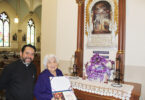
Bareiss acknowledged the strong bond her grandparents and her mother, who remains a parishioner, had with the church. When Bareiss’ parents married, her dad Tom Lally, of Irish descent, assimilated into the Croatian community at St. John. The couple’s three children were baptized at the parish, graduated from the school, married at St. John and continued as parishioners.
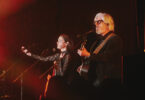
The annual Croatian Festival and the Croatian Day Picnic draw people back to celebrate and share their heritage with visitors and guests. Bareiss attended last summer to give her young grandchildren a taste of the homemade flavor of the culture.