by Kimberley Heatherington
OSV News
(OSV News) — Long before the era of winding asphalt roads and cruising American cars, California’s longest highway, U.S. Route 101, had another name: “El Camino Real” — The Royal Road — christened to honor the Spanish monarchs who financed expeditions to the region as they sought to expand their impressive empire.
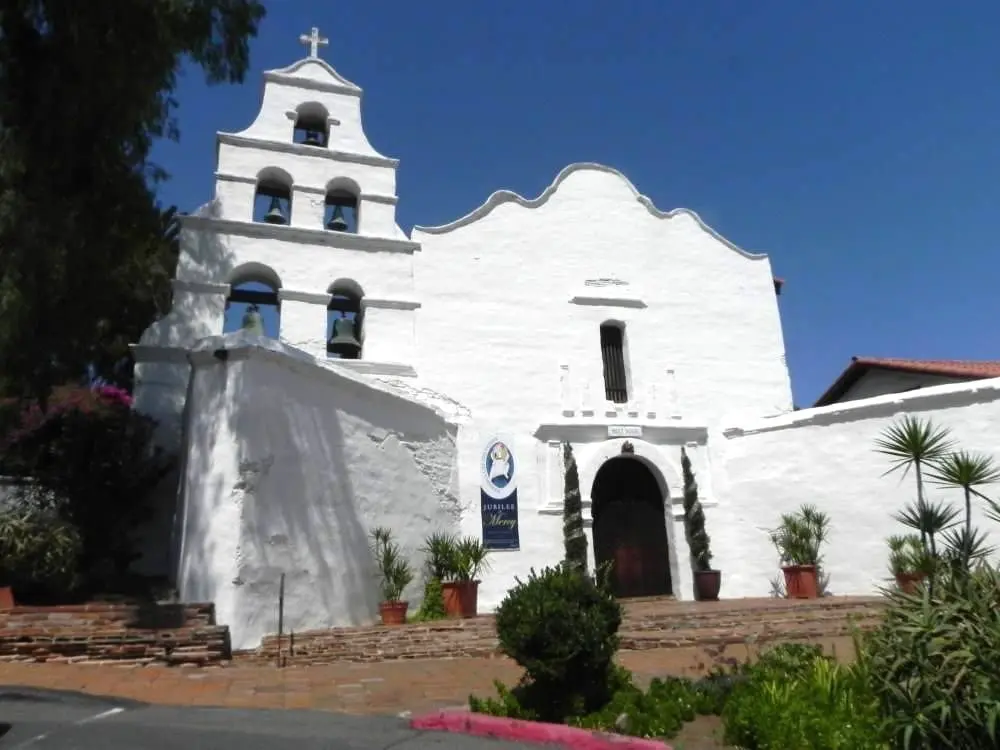
The 21 Catholic mission churches Spain planted from San Diego to Sonoma, beginning in 1769 and ending in 1823, are all located on or near Route 101 — and collectively, they represent one of the largest impacts of St. Francis of Assisi and his religious order upon the United States.
So during the Jubilee Year of St. Francis proclaimed by Pope Leo XIV — concluding Jan. 10, 2027 — California’s Historic Mission Trail holds obvious spiritual significance. But those who devotedly trek, study and preserve it also want potential pilgrims to know this: The invitation to visit has no expiration date.
Christian Clifford, author of “Pilgrimage: In Search of the Real California Missions,” recently conducted a small sample survey to determine just why people walk California’s El Camino Real.
“I found that those who did the survey did it for religious and spiritual reasons, number one,” he said.
That was followed by those seeking greater appreciation of California history and for an athletic challenge.
“I didn’t ask for religious beliefs,” explained Clifford, “but I think it’s safe to assume plenty of people are doing it to search for more — something beyond themselves.”
He also discovered “not many people” have actually walked the full 800-plus mile route — which he has.
“It was way harder than I anticipated,” he admitted of his 2020 trek. “So I got a lot of blisters and sunburns, and I ran out of water a few times. But I learned along the way.”
He credits his success in part to members of the California Mission Walkers — a group of historians, hikers, religious pilgrims and enthusiasts who either walk or plan to walk the El Camino Real.
Founded in 2013, the organization has over 2,800 members and supports more than 150 people currently walking the trail.
“They gave recommendations on different things to do,” Clifford said. “I wasn’t prepared — but I ended up doing the entire, roughly 800 miles, from Mission San Diego to Mission Sonoma, over a 45-day period.”
“I did bits and pieces — because I’m married and we have a child,” he added.
That piecemeal approach nonetheless confirms there’s no one way to walk the Camino — it just starts with a step.
As the Mission Walkers’ website notes, “This 800 mile pilgrimage can be walked in one continuous thru-hike (which takes 55-60 days), or it can be walked in segments for a week (or a weekend) at a time over a year or more.”
Naomi Torres, former National Park Service superintendent of the Juan Bautista de Anza National Historic Trail and keynote speaker for the Mission Walkers’ 2026 Conference, said that however hikers choose to approach their walk, they will encounter both beauty and connections.
“The mission walkers are walking on city streets (and) along highways, where cars are zooming by — but they’re also walking in some of the most beautiful places,” she told OSV News. “This act of walking is connecting with the land, in a world where there’s so much technology and so much coming at us.”
And, Torres emphasized, they are literally following in the historical footsteps of others.
“Humans have been doing these paths of pilgrimage — paths of understanding — for, I’m sure, millennia, all over the world,” Torres said.
Anyone who accepts the El Camino Real challenge may want to adopt the motto of St. Junípero Serra (1713-1784), a Spanish Franciscan friar and missionary often referred to as the “Apostle of California” who is credited with establishing eight of the eventual 21 missions.
St. Junípero, it is said, embraced the credo “siempre adelante!” — always forward! — as he planted churches and converted the native population. His legacy has encountered controversy owing to modern assessments of Spanish colonialism’s impact upon indigenous peoples; activists have toppled St. Junípero statues and also objected to his 2015 canonization by Pope Francis.
“The historical record really shows that he was a good, holy man,” Clifford asserts.
While dramatic or contested history dots the trail of St. Junípero for some seekers, others — such as Edie Littlefield Sundby, author of the 2024 book “The Mission Walker” published by Thomas Nelson press — speak of its healing properties.
The subtitle of Sundby’s book reveals why: “I was given three months to live.”
A triggering moment came in 2007 after she received a Stage 4 gallbladder cancer diagnosis, with widespread metastasis.
“When they first discovered the cancer, they told me I was filled with it — and you know, it’s kind of a shock,” she said.
Leaving a clinic, she pulled her car into the shade of a tree. “I wanted to catch my breath and say a short prayer,” Sundby recalled. “And I remember, I just noticed in the weeds this old California bell marker.”
The El Camino Real bells — actual bells attached to a pole resembling a lamppost — mark the mission trail route. Installed as early as 1906, they are today maintained by the California Department of Transportation.
The solitary bell struck a chord with Sundby.
“It was so beautiful. Life is so beautiful and intense when you confront it — when your mortality hits you in the face,” she said.
She was determined to respond. By 2013 — after 79 rounds of chemo, four major surgeries and losing her right lung — Sundby was on the trail, walking 1,600 miles from Loreto, Mexico, to Sonoma, California.
Ron “Butch” Briery, author of the 2012 guidebook, “California Mission Walk: The Hiker’s Guide to California’s 21 Spanish Missions Along El Camino Real,” was a literal and metaphorical guide; his volume inspired hundreds of people to walk the Mission Trail and form the California Mission Walkers community.
“I connected with him,” explained Sundby, “and said, ‘I want to do this. I want to walk. I’m determined to do this.'”
Sundby was accompanied by a strong mixture of fortitude and intentionality.
“Every step I took, I would think, I’d exhale cancer out … and 1,000 steps became 1,000 prayers,” she recalled. “Basically, when I got to Sonoma, I had 80% normal lung capacity — as if I’d never had a lung removed. That’s what walking — and prayer and pilgrimage — can do for us.”
Of walking the full route, Sundby said, “Regardless of what your issues are — what your problems are — you can get out there.”
That holistic outlook, she is convinced, is a true life-saver — and indeed, she’s still walking.
“Life breaks every single one of us — emotionally, physically, spiritually. We’re all broken, and walking heals us,” she said. “That’s why a pilgrimage is not a one-time event. Pilgrimage needs to be a part of our life. So don’t make it just a one-time thing.”