Most Reverend Shawn McKnight, S.Th.D.
Archbishop of Kansas City in Kansas
November 11, 2026
To the Laity, Clergy, and those in Consecrated Life in the Archdiocese of Kansas City in Kansas
PREAMBLE
Healing the wounds of sexual abuse is integral to the mission of the Church received from our Lord and Divine Physician, Jesus Christ, who healed the sick, expelled demons, and brought glad tidings to the poor. As a sanctuary of mercy, the Church is called to be a safe environment where the Lord encounters his people and shepherds them to wholeness and holiness.
A safe environment is more than developing sound procedures, policies, and protocols, although those are essential elements. As Pope Leo XIV said, “It is about helping to form, throughout the Church, a culture of care, in which the protection of minors and persons in vulnerable situations is not seen as an obligation imposed from outside, but as a natural expression of faith. It calls therefore for a process of conversion where the sufferings of others are heard and move us to take action.”1
The Church, therefore, affords her greatest attention and sense of maternal obligation to those who have been harmed physically, spiritually, psychologically, and emotionally by someone holding a sacred trust in the Church. When anyone who is serving others as a representative of the Church—whether clergy or lay—is guilty of sexual abuse,2 I recognize my duty to respond justly and pastorally to the person who has been harmed. Furthermore, I recognize our duty to hold one another and all who exercise authority and power over others to moral standards that preserve and foster the innate human dignity of every person. I therefore hold myself accountable to ensure that victims/survivors of sexual abuse in the Church are accompanied as our sisters and brothers, so that they may experience healing and that justice may be restored in our communities. What we do flows from who we are.
As the Archbishop of Kansas City in Kansas, I know I cannot accomplish the full reconciliation and healing of wounds caused by the scourge of abuse on my own, nor in only one action reform our culture. The trauma of deep wounds of abuse affecting the Church moves me to renew our local church’s commitment, in solidarity with our Holy Father and the United States Conference of Catholic Bishops, and in the name of our archdiocesan clergy, those in consecrated life, and the laity. Only by fully engaging the whole People of God, who are called and empowered by the Holy Spirit, each according to their own office, charisms, talents, and expertise, are we able to work together in a spirit of mutual respect and with a sense of co-responsibility for our mission to proclaim Jesus Christ risen from the dead.
OUR PAST FORMS OUR FUTURE
Nearly twenty-five years ago, the bishops of the United States Conference of Catholic Bishops (USCCB) adopted the Charter for the Protection of Children and Young People (Charter) as a means of morally committing the Church in this country to practices of transparency and accountability. The Charter has been revised over the years and includes commitments on how we respond to allegations of sexual abuse of minors by clergy, the development of safeguarding3 policies, such as background checks and safe environment training requirements, and the establishment of diocesan review boards. A separate statement of episcopal commitment manifests the bishops’ obligation to hold each other to account. And with the consent of the competent authorities in the Holy See, the Essential Norms established particular law to ensure our objectives would be fulfilled.
Since the adoption of the Charter, we have learned so much about the painful reality of trauma caused by abuse and what happens if we fail in our responsibility to take action. Sexual abuse by those in positions of trust, and the failure of some bishops to respond appropriately, have deeply wounded not just the victims/survivors but the whole community of the Church.
Legislation from the Holy See has updated and further expanded the scope of responsibility all diocesan bishops have, and the abuse of vulnerable adults is now included as a canonical crime for which special processes are required. Current canon law recognizes the abuse of minors and vulnerable adults by non-ordained persons in consecrated life, and lay persons entrusted with responsibilities in the Church, as crimes requiring canonical processes to ensure the repair of harm caused, the restoration of justice, and the reform of the offender.
Even now, I recommit to learning from our failures and the changing realities. I continue to read the “signs of the times” and review what we are learning from professionals and from those who have been harmed. Our Holy Father is specifically encouraging consideration of the “concept of vulnerability in relation to abuse” for adult relationships. Vulnerability is not necessarily determined by the victim/survivor’s weakness, but something that can be exploited by those exercising authority, whether spiritual, moral, in the workplace, or otherwise.
As I consider the needs of our local Church today, I commit to expanding our efforts to include all those who act on behalf of the Church and to advance a holistic approach to create a culture of care for the People of God. These efforts are about preventing harm by protecting the health, well-being, and personal dignity of everyone in the Church. They are also about responding justly and fairly, in a timely manner, to allegations of crimes against our children, young people, and vulnerable adults. Thirdly, these efforts are about a holistic approach to education and communication, so that entire communities understand their responsibilities to their children and the vulnerable among them, and to holding one another accountable in preventing abuse. To accomplish these goals, I realize that it is necessary to move beyond the groundbreaking response our Church made in the Charter and the Essential Norms, and that we act to fulfill our obligations from recent universal legislation to promote the mission of the Church as a sanctuary of mercy.
FOSTERING A CULTURE OF CARE
Care for the most vulnerable, especially minors and vulnerable adults,4 as well as adults in vulnerable situations, must always be of foremost concern. They must be placed in the center of visibility, concern, and protection. A healthy and vibrant culture of care is enabled by a shared sense of urgency, a deliberate focus on accountability, transparency, continual education and communication.
True care requires us to accompany those seeking healing, to pursue restorative justice, and to reform our culture. In the language of St. Paul’s Letter to the Galatians, we strive to “bear one another’s burdens” in order to “fulfill the law of Christ” (6:2). We are called to be a light unto the world, a “city set on a mountain” (Matthew 5:14) where the powerful honor their sacred obligation to serve the vulnerable, and the dignity of every person is upheld.
Guided by these values, I commit the archdiocese to a trauma-informed care program, such as our Bridges program, modeled using restorative principles and designed to address the egregious harm caused by sexual abuse. Guided by our Catholic social teaching, the symbolism of bridges represents our dedication to forging a path of atonement and accountability, honoring the needs of victims/survivors.
Protecting the safety of people requires commitment to an ongoing evaluation of our policies, standards, and educational materials to ensure they reflect current methods of abuse prevention, current teaching of the Magisterium, and current requirements of civil and canon law. As we now commit ourselves anew to a culture of care in the Archdiocese of Kansas City in Kansas, I have initiated a review process to update all our archdiocesan policies in accordance with this pastoral letter to ensure a safe environment in our churches and pastoral programs.
Safeguarding Embedded in our Culture
In a safeguarding culture, individuals and groups (such as parishes and schools) are enabled and empowered to create and uphold a safe environment. This goal means that:
- We will enhance our archdiocesan safe environment programs so that they directly support embedding a safeguarding culture into the whole life of the Church. While the necessary efforts entail implementing policies and systems designed for the safety of all the People of God, the protection of minors and vulnerable adults is always to be the primary concern.
- We will provide a just and fair response to any reports of sexual abuse that occur—whether by a cleric, a person in consecrated life, or a lay person who is appointed to serve the Church in a public way (can. 1398 CIC).
- We will ensure that implementation of these standards and guidelines for protecting vulnerable adults and others in the Church will never come at the detriment of the primary efforts for the protections for minors and the response given to allegations of sexual abuse.
- We will act with transparency by sharing information that supports advancing a safeguarding culture. We will achieve this goal in a way that upholds the dignity and safety of all persons involved.5 Our efforts will include making public the outcome of canonical processes regarding the person accused (e.g. dismissal from the clerical state or employment, restrictions on ministry or service, or the determination that reports are unfounded).
- We will demonstrate our unwavering commitment to safeguarding by steadfast compliance with applicable policies, procedures, and audits.
- I will hold myself accountable, as well as all priests, deacons, and others in positions of authority in the Church, using the means available in canon law for ensuring that these safeguarding standards are implemented and adhered to throughout our archdiocese.
- I will engage and empower the lay faithful to take up their own distinct role in the protection of all God’s people from abuse. Without the participation and collaboration of the laity, a safeguarding culture simply cannot be formed. This commitment includes engaging qualified persons to assist me in preventing abuse and appropriately responding to reports of abuse, as well as involving the lay faithful in safeguarding work in parishes and schools. For these purposes, I renew my commitment to the following:
- I will consult the Archdiocesan Safe Environment Review Board, which is a confidential consultative body to me and made up primarily of lay persons not employed by the diocese.6
- The role of the Archdiocesan Safe Environment Review Board includes but is not limited to: reviewing and updating archdiocesan safe environment policies; reviewing annual reports on archdiocesan compliance; giving advice on the pastoral care of victims/survivors; and stating their counsels retrospectively and prospectively on any aspects of how individual cases are handled.
- For an allegation of sexual abuse of a minor by a cleric, the Archdiocesan Safe Environment Review Board will review all information gathered about the alleged delict and will advise me whether sufficient evidence exists to petition the Dicastery for the Doctrine of the Faith to initiate a canonical penal process. For other allegations of sexual abuse, the Archdiocesan Safe Environment Review Board will advise me if a disciplinary canonical process should be initiated.
- I will appoint and consult other experts in one or more fields as the response to a particular allegation may warrant.
Assistance and Pastoral Care of Persons
The Church has the irreplaceable moral duty to accompany victims/survivors and offer pastoral assistance to address the harm they have suffered, regardless of whether it occurred recently or in the past.
To advance our commitments:
- We will continue to ensure that persons reporting that they have experienced sexual abuse are to be provided with information regarding our practices, and we will extend this outreach to include:
- An explanation of the overall process and procedures in the archdiocesan process for responding to allegations of sexual abuse of a minor, including our policy on reporting to civil authorities;
- An assurance that the archdiocese will endeavor to conduct the initial investigations with appropriate discretion, with full respect to the extent prudent and possible in the individual case for the privacy and reputations of all persons involved; and
- A timely response to inquiries and periodic update(s) as to the status or resolution of the report, including the final determination regarding the report.
- We commit ourselves and all in archdiocesan or parish leadership to meet, when requested, with a victim/survivor and/or with his or her support person(s), at times that may be reasonably arranged and with all due respect for the needs of the victim/survivor.
- Our archdiocese will continue to make appropriate pastoral assistance available to those who may be affected by sexual abuse of a minor or vulnerable adult by members of the clergy or any person representing the Church, whether the abuse was recent or occurred many years in the past. This assistance may include provisions for counseling, spiritual assistance, support groups, and other social services that are mutually agreed upon. In cooperation with social service agencies and other churches, our archdiocese and parishes may foster support groups for victims/survivors and others affected by sexual abuse.
- With the clear recognition that criminal, civil, and canonical processes often do not address directly or fully the harm suffered by the victims/survivors and by the broader community, I commend the use of non-financial restorative justice and other restorative practices, such as our archdiocesan Bridges program, in order to fulfill the moral and canonical duty of the Church to restore justice and repair harm (can. 1341). These efforts are particularly important when the harm experienced was a result of actions by Church authorities in relation to the abuse that occurred. Restorative practices that are especially commended include: healing circles, providing victims/ survivors with a safe place to share their stories, establishing healing gardens or monuments to demonstrate the Church’s commitment to support for victims/survivors, and offering public prayers, Masses, and other healing services that invite reconciliation and healing from the painful wounds caused by abuse, not only for victims/survivors and their families, but also for the entire Body of Christ. The work of restoration and healing will always be the work of the Church.
PROTECTION OF MINORS AND VULNERABLE ADULTS
“People need to know that there is no place in the priesthood and religious life for those who would harm the young.”7 These profound words from Pope Saint John Paul II are as true today as when spoken to the cardinals of the United States in 2002. The principle expressed here has been affirmed by Pope Benedict XVI, Pope Francis, and Pope Leo XIV, and consistently affirmed by the bishops of the United States.
To advance this commitment, I again state:
- When a judgment has been lawfully made that a cleric, employee, or volunteer has committed an act of sexual abuse of a minor or vulnerable adult, that person will not be eligible for public ministry or service in our archdiocese.
- I will ensure that other ecclesial entities, including institutes, societies, and associations, do not permit, when a judgment has been lawfully made that a person has committed an act of sexual abuse of a minor or vulnerable adult, that person to be active in ministry or service within our archdiocese.
- In situations where a lawful judgment has been made that alleged actions did not constitute sexual abuse, or where the guilt of the person accused is not established, I will determine, in consultation with the Archdiocesan Safe Environment Review Board, the accused person’s suitability for ministry or service. This determination is to be based on the facts that have been established, whether this person is a cleric, employee, or volunteer. In such cases, I may utilize the means available through civil law and canon law to place administrative restrictions on the person, if these are warranted.
PREVENTION
Preventing sexual abuse is a shared responsibility of the ecclesial community that requires a communal and intentional effort to create safe environments for all persons in all Church spaces. When the entire community understands itself as responsible for the safety of everyone present, prevention of harm is strengthened, and the members of the Body of Christ better fulfill their duty of care to the rest of the Body.
- I commit our archdiocese to conduct training for the implementation of High Reliability Organization Principles (HRO) for effective risk management in our archdiocese, especially in our parishes and schools.
- All clergy, employees, and volunteers who interact regularly or unsupervised with minors or vulnerable adults are required to do so in compliance with the archdiocesan safe environment programs, which are to include requirements for background checks and safe environment training.
- All clergy, employees, and volunteers are to accept in writing the archdiocesan Code of Conduct, which is to set forth clear behavioral expectations for safe ministerial interactions with everyone in the Church, with particular provisions for ministry to minors and vulnerable adults.
EDUCATION
All persons in a safeguarding culture have the right to be informed, in a clear and inclusive manner, as to their role in upholding a culture of safeguarding in the Church and in their community. To ensure the proper ecclesial formation:
- I commit our archdiocese to continue to promote safe environment education in every parish, school, formation program, and archdiocesan agency. This education is to include the topics of prevention of abuse, training on how to identify signs of abuse, affirmation of the dignity of those who suffer abuse, and encouraging the reporting of abuse.
- I commit to fostering trauma-informed pastoral care training for all our clergy, seminarians, and lay ministers.
- Safeguarding programs are to include education and resources addressing:
- Safety risks that can be anticipated, including those that are physical, online, sexual, emotional, and spiritual;
- How to recognize, accommodate, and include those who have disabilities, and awareness that many disabling conditions are not apparent or visible to others; and
- Needs specific to various ministerial settings (such as: catechetical and youth ministry programs, one-to-one interactions, spiritual direction and counseling, visits to the homebound, and celebration of the sacrament of confession).
- Safeguarding awareness and promotion are to be celebrated throughout every ecclesial entity, especially our parishes, on at least an annual basis.
REPORTING
I commit us to building a safeguarding culture. To accomplish this, the processes for raising concerns are to be responsive, accessible, and understood by all, including children, adults, clergy, employees, and volunteers. To ensure a proper reporting process, I commit the archdiocese to the following:
- All allegations of sexual abuse of a minor or vulnerable adult by clergy, employees, or volunteers, except those manifestly false, are to be reported to law enforcement in fulfillment of applicable civil law.
- In accordance with canon law, bishops and priests are absolutely prohibited from acting on information received during the sacrament of confession outside of the celebration of the sacrament.
- It is permissible for bishops and priests who receive such information during the celebration of the sacrament of confession to advise the penitent of the seal of confession, but when possible and appropriate, encourage the person to make a report in the external forum to the responsible authorities.
- In accord with the requirements of law, reports of sexual abuse of minors are to be made to civil authorities.
- Members of the Church are also to observe the requirements in canon law for mandatory reporting to civil authorities and for respecting the duty not to interfere with civil investigations (cf. Vos estis lux mundi art. 3; can. 1371 §6).
- In accord with Church law and agreements with civil authorities, representatives of the Church are not to interfere with law enforcement and are to collaborate with them, as appropriate, and required by applicable law.
- All who act in good faith and report knowledge, suspicion, or concern of abuse or misconduct are to be afforded protection against retaliation. They are to receive timely responses to inquiries and may be provided periodic update(s) as to the status or resolution of the report.
RESPONSE
In a safeguarding culture, policies, protocols, and laws are to be respected and upheld by all. Additional harm can occur, and has in fact occurred, during the actions taken after a report is made and from the failure to act. This harm is often suffered on multiple levels—the victim/survivor, the accused, and the surrounding community.
I affirm as well that safeguarding standards that protect human dignity of all persons are to apply in the procedural realm. Archdiocesan policies and protocols are to reflect our commitments and be carried out in practice.
For these reasons, I commit our archdiocese to:
- Assess all reports of abuse and follow up on them in accordance with the norm of law, regardless of how they came to the attention of Church authorities.
- Honor those with sincere allegations and protect the validity of their claims by responding justly to manifestly frivolous and intentionally false allegations, which defame the accused and disenfranchise true victims/survivors of abuse.
- Cooperate with law enforcement and other civil authorities according to the norms of both civil and canon law.
- Determine promptly whether to initiate a canonical investigation or penal process, fully implementing the norms of canon law and together with the requisite respect for the work of civil law enforcement.
- Document decisions regarding investigations and penal processes, including all decrees and decisions with the motivating reasons and explanations as to why they were given.
- Consult the Archdiocesan Safe Environment Review Board regarding:
- Initiating and concluding a preliminary investigation, with a recommendation regarding the plausibility of an allegation;
- Initiating a penal process or, when warranted, a disciplinary process;
- Determining the suitability for ministry or service of a person not found guilty of sexual abuse but alleged to have committed other violations of the archdiocesan Code of Conduct or other safeguarding policies.
- Implement fully the norms and procedures established in Church law and in guidelines published by the Holy See regarding investigations and penal processes. We commit ourselves, for instance:
- To maintain confidentiality during the investigative process and to protect the right of all persons involved to privacy and to protect their reputation from illegitimate harm (can. 220);
- To be transparent and accountable regarding the conduct of canonical processes;
- Under no circumstance to coerce or bind to silence a victim/survivor, another person who reports being harmed, or a witness regarding the information they report to civil or Church authority (cf. Vos estis lux mundi art. 4 §3);
- To uphold the presumption of innocence for a person subject to investigation of a report of sexual abuse, and to protect the rights to personal privacy and against self-incrimination (cf. cann. 220; 1321 §1; 1728 §2).
- To conduct all canonical investigations and processes without unnecessary delay and to reach a decision in a timely manner.
- Implement a new and comprehensive communications policy, which we commit ourselves to developing in consultation with experts in fields related to the topics addressed in the policy. This policy is to enact the norms given in Church law and the commitments made in the Charter. Regarding allegations of a crime of sexual abuse, this policy is to address, for example, when and how:
- Information regarding an allegation is to be communicated to the accused;
- Information is to be released to the public initially and at the different stages of canonical processes;
- Victims/survivors are to be kept informed at each stage of the process;
- The final conclusion of the canonical penal process is to be published, including the disposition of the accused for ministry or service in the Church.
- Uphold the procedural rights of the accused, which include their rights during a penal process. I commit us to:
- Informing the accused of the content of the allegation and to review the evidence and proofs that are gathered;
- Ensuring proper representation of the accused;
- Observing the right of the accused to present evidence and proofs during the instruction of the process;
- Providing the accused the opportunity to offer a defense before a final decision is made;
- Providing the written decision to the accused;
- Providing the accused of the necessary information to appeal or take recourse against the decision;
- If the allegation is deemed not substantiated, every step possible is to be taken to repair any undue harm to the accused person’s reputation.
- Impose any precautionary measures during an investigation or penal process by precept, in accord with the norm of law, and to make any restrictions or prohibitions public for the purpose of protecting minors and vulnerable adults.
- Coordinate any investigations of allegations of the sexual abuse of a minor or vulnerable adult with the ordinaries, hierarchs, and superiors identified in the law, including allegations of abuse by a member of an institute of consecrated life, society or apostolic life, prelature, association or other ecclesial entity.
CONCLUSION
The work before us calls us not merely to fulfill our obligations under legislation from the Holy See and the USCCB, but to renew our commitment to ensuring the Church becomes a true sanctuary of mercy. I ask all the faithful of our archdiocese to join me in supporting the implementation of these principles, recognizing that fostering safe environments for every person who enters our parishes, schools, and ministries requires the intentional and ongoing commitment of our entire Catholic community.
The work of healing and restoration will always be part of the mission of the Church as we seek to accompany all those who have been harmed and heal the wounds caused by the scourge of abuse in every sector of society. I invite you to join me to pray for our local Church in this effort.
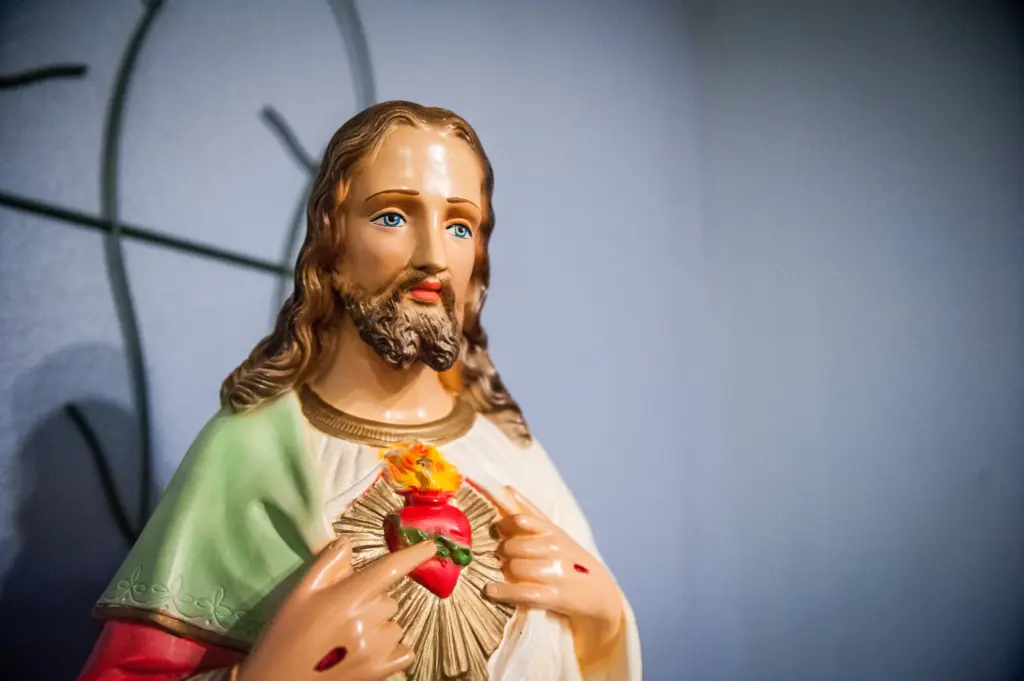
May the Sacred Heart of Jesus, wounded by our offenses, be a source of comfort, healing and strength for all who have suffered the scourge of abuse. And may the Blessed Virgin Mary, under the title of the Immaculate Conception, our Archdiocesan Patroness, help our local Church be like a loving mother. I am
Sincerely yours in Christ,
Most Reverend Shawn McKnight, S.Th.D.
Archbishop of Kansas City in Kansas
ENDNOTES
1 Pope Leo XIV, “Address of Pope Leo XIV to the Plenary Assembly of the Pontifical Commission for the Protection of Minors,” March 16, 2026; https://www.vatican.va/content/leo-xiv/en/speeches/2026/march/documents/20260316-tutela-minori.html.
2 For the purposes of these standards, “sexual abuse by a representative of the Church” refers to every external offense against the sixth commandment of the Decalogue, with a minor or vulnerable adult, committed by a cleric (bishop, priest, or deacon), member of an institute of consecrated life or of a society of apostolic life, or any one of the faithful who enjoys a dignity or performs an office or function in the Church (can. 1398 Code of Canon Law [CIC]).
The express “external offense against the sixth commandment of the Decalogue” applies to a broad range of actions. According to the Vademecum from the Dicastery for the Doctrine of the Faith (I.2), “It can include, for example, sexual relations (consensual or non-consensual), physical contact for sexual gratification, exhibitionism, masturbation, the production of pornography, inducement to prostitution, conversations and/or propositions of a sexual nature, which can also occur through various means of communication.” It also includes all offenses indicated in can. 1395 §3 CIC; can. 1398 §1, 2-3° CIC; can. 1398 §2 CIC; and Vos estis lux mundi art. 1 §1(a).
3 For the purposes of these standards, “safeguarding” refers to the shared responsibility to prevent and respond to abuse and harm, promote safe environments, and protect the dignity and rights of every person, especially children and vulnerable people.
4 A “minor” is a person who has not reached 18 years of age. For the purposes of these standards, “minor” also includes adults who habitually have the imperfect use of reason and so are treated as juridically equivalent to minors (can. 1398 CIC; Sacramentorum sanctitatis tutela art. 6, 1°).
For the purposes of these standards, “vulnerable adult” means any person in a state of infirmity, physical or mental deficiency, or deprivation of personal liberty which, in fact, even occasionally, limits their ability to understand or to want or otherwise resist an offense of sexual abuse (Vos estis lux mundi, art. 1 §2(b)).
5 We recall these words from the Final Document of the XVI Ordinary General Assembly of the Synod of Bishops, second session (2024), For a Synodal Church: communion, participation, mission, n. 96-97: “Transparency, in its correct evangelical sense, does not compromise respect for privacy and confidentiality, the protection of persons, their dignity and rights, even in the face of unreasonable demands of civil authorities. However, this privacy can never legitimate practices contrary to the Gospel or become a pretext to circumvent or cover up actions to combat evil. … Wherever the Church enjoys trust, the practice of transparency, accountability and evaluation helps to strengthen its credibility. These practices are even more critical where the Church’s credibility needs rebuilding. They are particularly important in regard to the safeguarding of minors and vulnerable adults.”
6 “Charter for the Protection of Children and Young People,” revised June 2026, art. 2; https://www.usccb.org/offices/child-and-youth-protection/charter-protection-children-and-young-people-revised-june-2026.
7 Pope Saint John Paul II, “Address of John Paul II to the Cardinals of the United States,” April 23, 2002; https://www.vatican.va/content/john-paul-ii/en/speeches/2002/april/documents/hf_jp-ii_spe_20020423_usa-cardinals.html.
From the Heart: A Pastoral Letter on Advancing Our Commitment to Healing and Safeguarding the People of God from Sexual Abuse
Most Reverend Shawn McKnight, S.Th.D., Archbishop of Kansas City in Kansas. November 11, 2026.
Published by the Archdiocese of Kansas City in Kansas.
12615 Parallel Parkway, Kansas City, Kansas 66109
www.archkck.org
PERMISSIONS
The Archdiocese of Kansas City in Kansas hereby grants permission to duplicate this work in its entirety without adaptation for non-commercial use. The text must be shared in its original, unabridged form. The document may not be sold or used for commercial purposes. Proper attribution to the Most Reverend Shawn McKnight, S.Th.D., Archbishop of Kansas City in Kansas, must remain intact, including this copyright page.
Brief excerpts may be quoted in articles, homilies, catechetical materials, and other publications without further permission, provided the quotations are accurate, are not altered in a way that changes their meaning, and are attributed to Most Reverend Shawn McKnight, S.Th.D., Archbishop of Kansas City in Kansas, From the Heart Pastoral Letter, 2026. Requests to quote more extensively, or for any commercial use, should be directed to communications@archkck.org.
PHOTOGRAPHY
All photographs in this work are © Archdiocese of Kansas City in Kansas, created by archdiocesan staff, or used under license through the archdiocese’s corporate Adobe Stock account. All rights reserved.