by Olivia Martin-Davies
Special to The Leaven
KANSAS CITY, Kan. — Leftover-based casseroles. Playing outside despite the rain. Packing in as many activities as possible on vacation.
These scenarios have something in common: They’re the products of a “make the most of it” mentality.
That is exactly what schools and institutions across the archdiocese are doing with their social media accounts.
From working through personnel and resource constraints to navigating a difficult online landscape, the archdiocese is home to some exceptional people who work hard to share the good news happening in their communities.
Mission-forward
Melissa Schramp, a middle school teacher at St. Benedict School in Atchison, has seen firsthand how social media is uniquely positioned to inform and uplift.
Schramp manages the school’s Facebook and Instagram accounts, and she relies on the school’s mission to guide every post.
“The purpose of our social media is to educate the whole child in a Christ-centered environment, with the ultimate goal of creating Christian disciples,” said Schramp. “I really want people to see that we are living out that mission.”
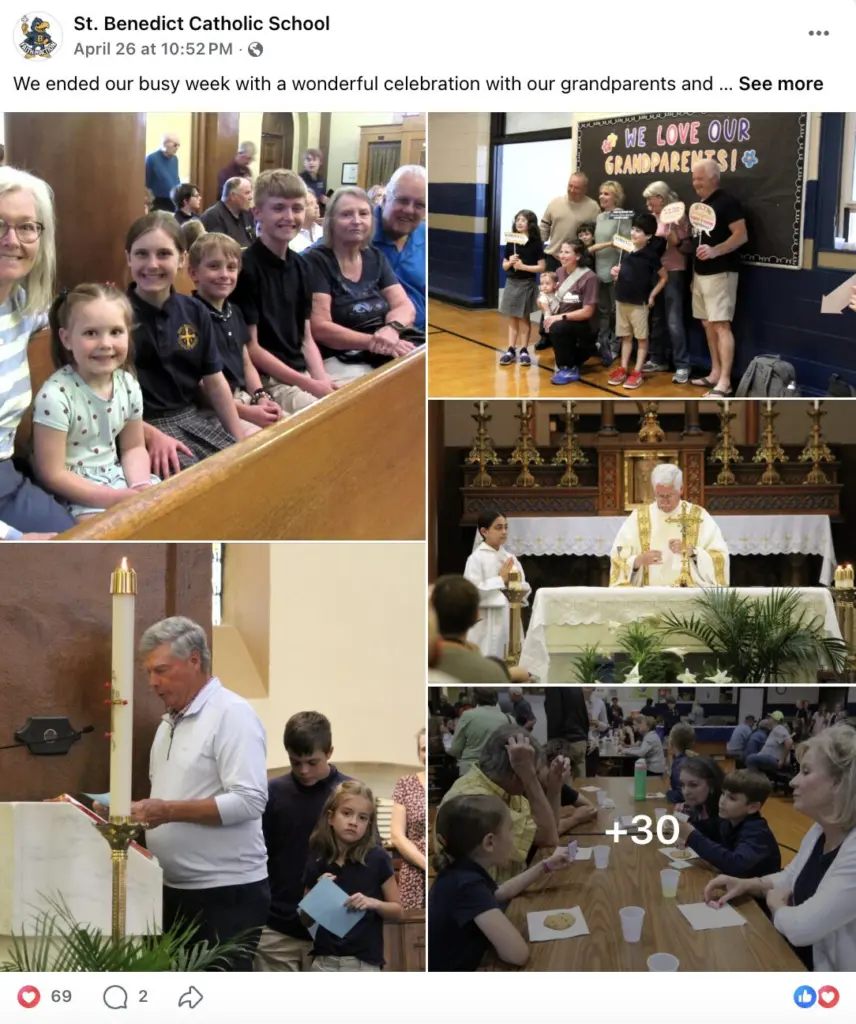
And that’s one of social media’s biggest assets: showing how real people are living truth, goodness and beauty.
Marissa Easter, chief communications officer, manages the social media outreach of the archdiocese with input from Archbishop Shawn McKnight. The media channel strategy, she said, reflects the importance he places on both the archdiocese’s and his personal social media pages uplifting people. It is important, he believes, to help make social media a Christian space.
“Social media can be great, but it can also be pretty negative,” said Easter. “[Archbishop McKnight] wants to be a voice that uplifts people so when they’re scrolling, they’ll stop and feel encouraged when they see what he’s saying.”
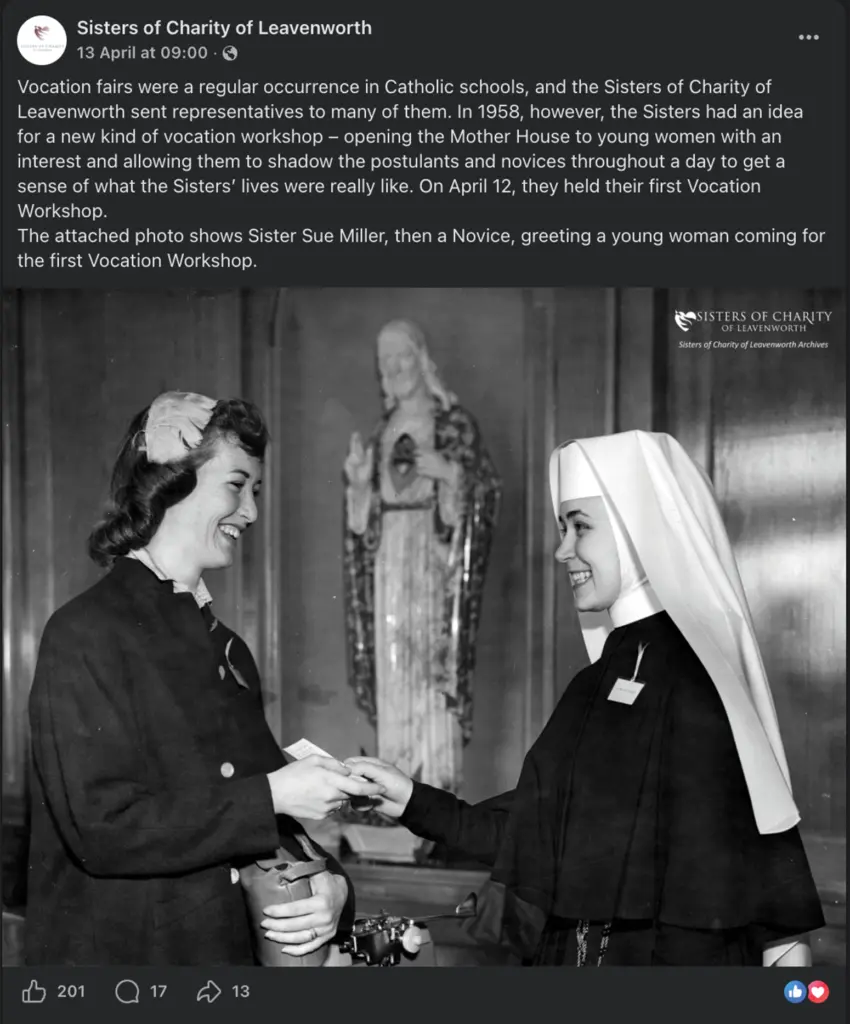
Stephanie Nash, the interim director of communications for the Sisters of Charity of Leavenworth, shared that when Catholic institutions have an active presence on social media, they have an opportunity to bring the Gospel to people wherever they are.
“Come along with us on this journey of loving all of God’s creation. The Gospel doesn’t die, and we want to take you with us,” said Nash.
Sarah McCambridge, director of marketing at Bishop Miege High School in Roeland Park, echoed Nash.
“We want to celebrate Miege, we want to celebrate its goodness. Our community is one of a kind,” said McCambridge. “We love showcasing our faith.”
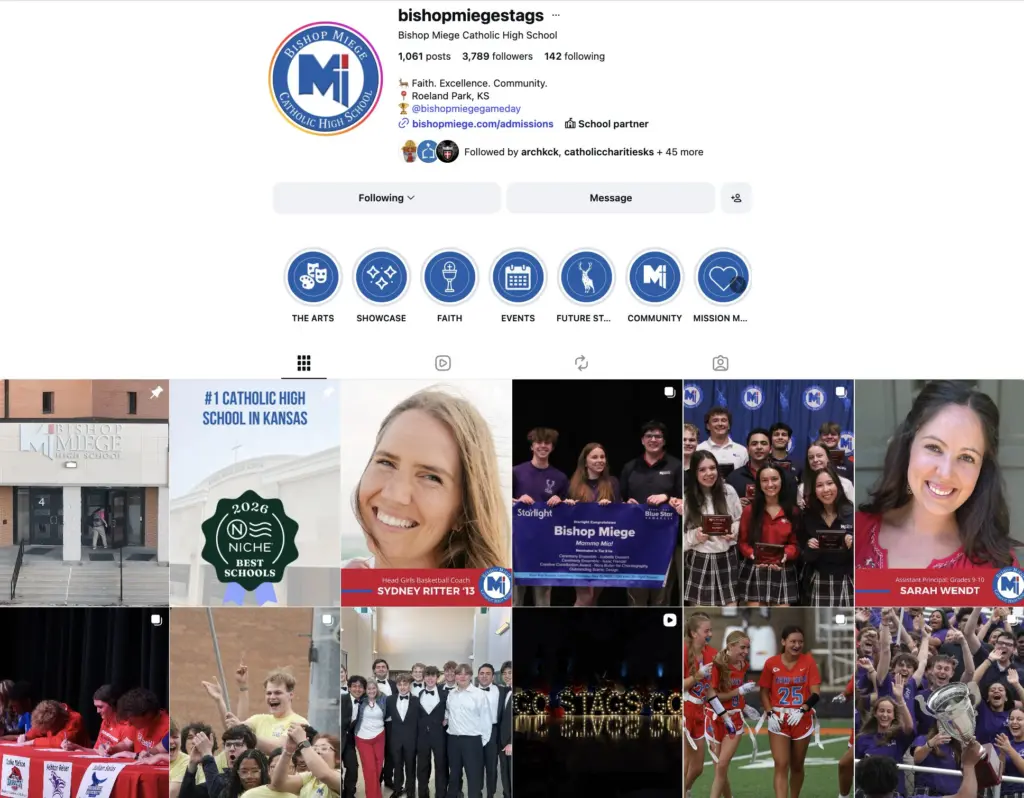
Lindsay Franco, the physical education department chair at Bishop Miege, helps McCambridge manage the school’s various social media accounts.
They’ve found that different platforms reach different audiences: Instagram and TikTok for students and young alumni, LinkedIn for professional-age alumni and Facebook for parents and grandparents.
“Our LinkedIn is really just growing with our alums,” said Franco. “They all kind of are serving their own unique purpose right now.”
Time and talent
On social media, photos are the surest path to engagement.
“I’m playing around with what number of photos is the most impactful,” said Schramp “We get a lot of engagement with them and it’s always so fun when grandparents or parents or even the kids can see the fun that happens at our school.”
McCambridge and Franco have found, especially with young audiences, that trendy posts perform well.
“The kids come up with a lot of the ideas,” said Franco. “I can say, ‘We need this video for open house.’ And they’re like, ‘Done. We can do this.’”
While not every organization has ready access to young people’s creativity and brainstorming, Franco stressed that collaboration is necessary, nonetheless, for a successful social media presence.
“I could not imagine not having someone else to just bounce ideas off of,” she said.
“There’s going to be someone in your building,” McCambridge added, “that probably likes to post or likes to watch things, so just pick their brain. Chat about it over lunch.
“Then you feel more confident posting, too, because at least two people like [the idea].”
Nash adds that preparation is also key to success.
“Plan. Plan. Plan,” she said. “Take a day of the month and dedicate it to planning that month’s posts.”
For example, Nash looks ahead for feasts days, anniversaries and other celebrations at the start of the month. She finds photos and writes captions in advance and schedules them to post on the appropriate day.
“Also look at analytics to find out what days and times are best to post,” said Nash. “Know your target audience and take some time to get to know them and what they’re looking for. They want to know your story!”
Facing challenges
It can feel overwhelming to know what to post, when, for what audience — and make sure it’s high-quality content.
But McCambridge believes that polished isn’t always preferred.
“A lot of times, we see so many good things out there and so it feels like I’m never gonna live up to that,” she said. “But I actually have heard, like with the rise of AI, people are craving genuine content versus super-polished content.
“It doesn’t necessarily have to be this really produced thing. People are craving authenticity more than they’re craving ‘It has to look perfect.’”
The appetite for authenticity gives creators freedom. Something as small as sharing what students made in their food class or the blossoms on the convent’s grounds can be prime material to share with audiences.
“The biggest challenge is just time,” said Schramp. “It just takes a lot of time to edit and curate because I take and edit most of the photos, and then I create a cohesive story through my photographs and the text.”
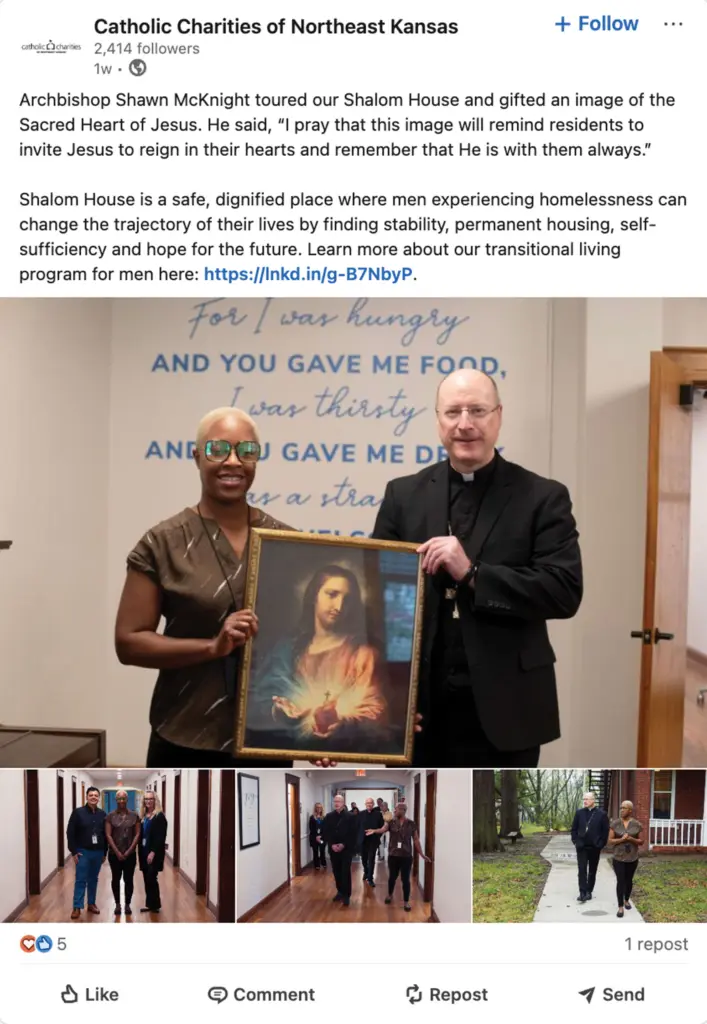
Carol Cowdrey, vice president of marketing and communications at Catholic Charities of Northeast Kansas, said that though challenging, posting frequently should be a top priority, too.
“It’s critical to keep content fresh so that your followers will remain engaged,” she said.
Nash agreed.
“You have to be really strategic about it if you want to keep your presence valid and up to date,” said Nash. “Review the quarterly reports so you know what’s winning and not.”
Cowdrey acknowledged that many organizations don’t have a dedicated social media manager, making posting frequency even more difficult to execute. Still, she encourages organizations to stay the course.
“Although it requires a time commitment, it is well worth it. Allocate the time. Social media is a cost-effective way to communicate information about your organization frequently,” said Cowdrey.
“More importantly, it’s an opportunity to tell your story and engage others — including donors and volunteers — in your mission.”
How to leverage your social media
• Bounce ideas off someone else
• Look at other pages for inspiration
• Follow other like-minded pages. Tag them and share their posts
• Set aside dedicated planning time
• Review the analytics
• Know your target audience
• Post regularly
Where to reach audiences by age group
• Young people: Instagram and TikTok
• Parents and grandparents: Facebook and X
• Alumni and working professionals: LinkedIn and X
Content tools
• Scheduling: Hootsuite, Meta Business Suite
• Design: Canva
• Video: Reels template feature in Instagram
Posts that increase engagement
• Photos
• Trends
• Series (saint of the day, history posts, etc.)
• Competitions