by Ines San Martin, OSV News
LAS PALMAS DE GRAN CANARIA, Spain (OSV News) — As hundreds of drones illuminated the night sky above Barcelona’s Sagrada Família, or Basilica of the Holy Family, forming the image of Antoni Gaudí and one of the architect’s most enduring maxims — “First love, then technique” — the message seemed almost paradoxical.
The June 10 spectacle marking the centenary of Gaudí’s death relied on some of the most advanced technology available. Yet its creators insist the evening’s purpose was not to showcase innovation, but to honor the faith that inspired the architect known as “God’s architect” and the basilica that remains his life’s masterpiece.
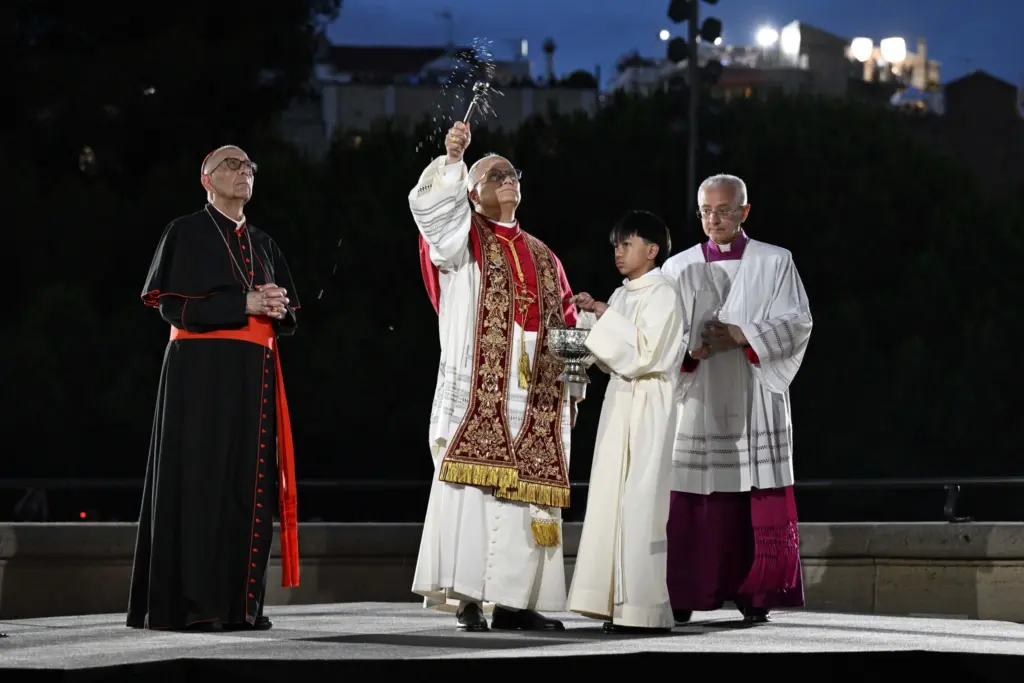
During the ceremony, Pope Leo XIV blessed the newly completed Tower of Jesus Christ, the tallest and most symbolic structure of the basilica designed by Gaudí. During the Mass preceding the inauguration, the pope reflected on the relationship between faith, art and beauty, describing the famed basilica as “an eloquent catechesis made of stones, colors and light” and a reminder that “art and beauty are privileged channels of evangelization.”
For Enrique Subiela, manager of Igor Studio and one of the people involved in the yearlong effort to create the outdoor ceremony, those same ideas guided every stage of the production.
“We built everything on a profound respect for the Sagrada Família and the values it transmits,” he told OSV News.
A year of work, 10 minutes of enchantment
When work began nearly a year ago, organizers knew they would be inaugurating the Tower of Jesus Christ during the centenary year of Gaudí’s death. They did not yet know the pope would preside over the celebration.
“The figure of the Holy Father wasn’t part of the project at the beginning,” Subiela said. “The idea was to pay tribute to Gaudí while respecting the strong values that define the identity of the Sagrada Família.”
While the liturgy and blessing remained under the Church’s responsibility, the outdoor artistic program was conceived and produced by creative director Igor Cortadellas and his team.
Inspired by Gaudí’s understanding of light as a symbol of the divine, the production imagined the illumination of the tower as beginning with a light carried within each person.
Bishops, distinguished guests and people present at the ceremony were handed lanterns that did their magic.
Sagrada Familia as a great lamp radiating light
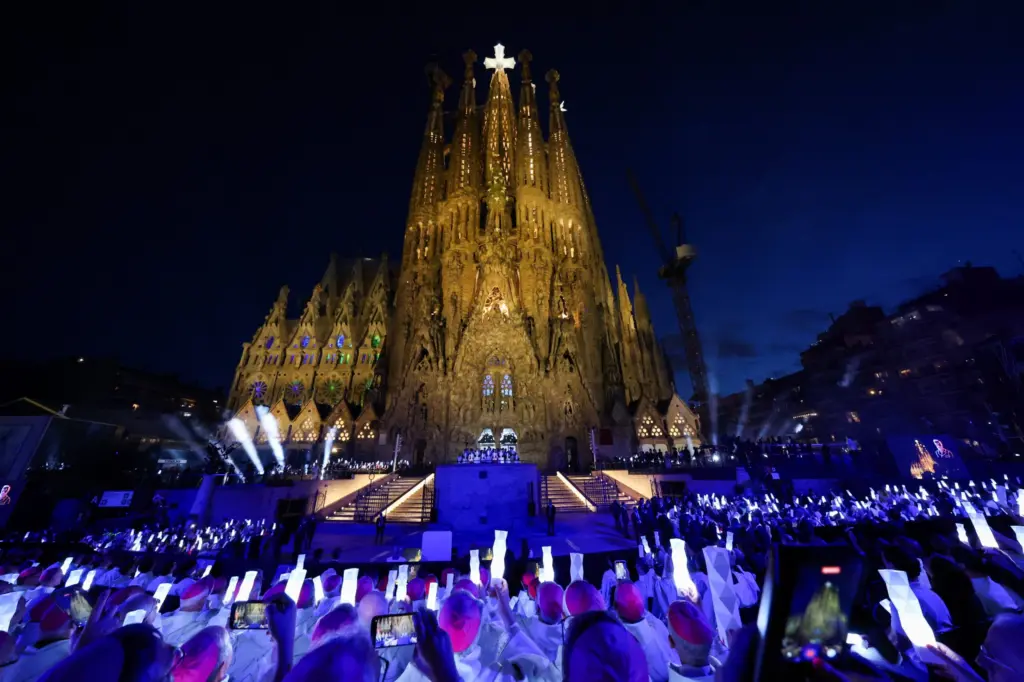
Thousands of coordinated lights created a breathtaking “human screen,” with centrally controlled lanterns receiving invisible wireless signals from transmitters around the site to change color and flash in sync with the ceremony’s music and lighting effects.
According to Subiela, the concept sought to portray the anonymous workers, benefactors and faithful who helped build the basilica over generations as contributing their own light to the great cross crowning the Tower of Jesus Christ — and for whose wages Gaudí himself went asking for donations around Barcelona, so he can pay his workers on time.
In Gaudí’s vision, Subiela said, the basilica was itself a great lamp radiating light. The show’s narrative sought to bring that idea to life by symbolically channeling the light of thousands of individuals toward the illuminated cross atop the tower.
The same concept guided the international television production, a joint effort involving Catalonia’s public broadcaster 3Cat, Spain’s national broadcaster RTVE and Barcelona’s municipal television network.
For Pau Subirà, director of television at 3Cat, the challenge was not simply to capture a spectacle but to communicate its meaning.
“The celebration wanted to tell a story: that the light of everyone enters the Sagrada Família, that the basilica breathes and speaks, and that this light emerges from the cross,” he told OSV News. “It transmits Gaudí’s message of love for others.”
Heavenly performance of Escolania de Montserrat
The ceremony began not with fireworks but with prayer.
One hundred boys from the Escolania de Montserrat, among Europe’s oldest and most renowned choirs, processed while singing the “Sanctus,” underscoring that the event was first and foremost a religious celebration.
Additionally 500 singers and 50 musicians from the Sagrada Familia orchestra performed in a moment in which beauty put the world on pause.
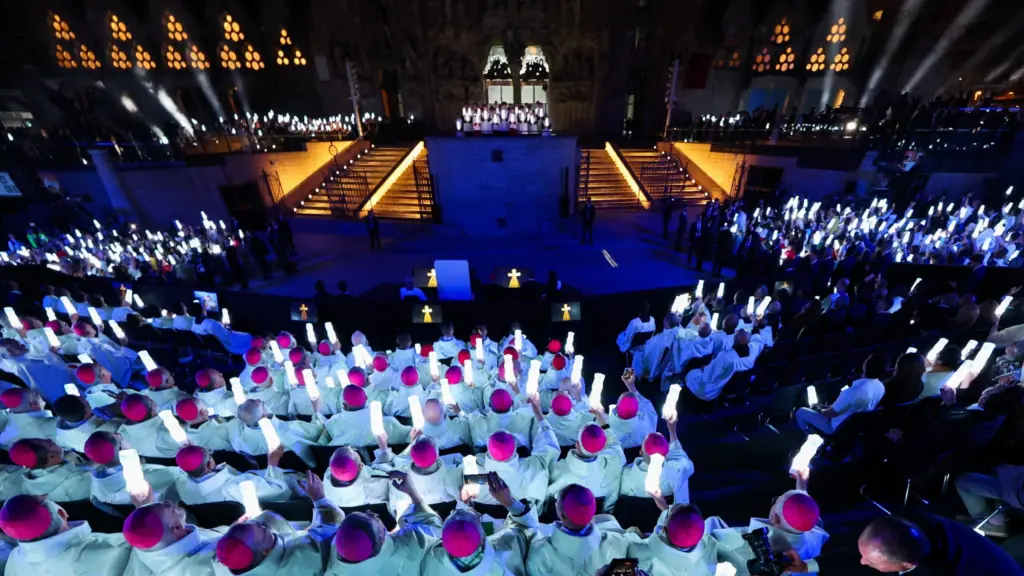
Subiela said the goal was to create a transition from the deeply spiritual act of the papal blessing to a more festive presentation of the illuminated cross to the world.
As thousands of spectators watched holding their lanterns, the façade of the basilica became a canvas of light and music. More than 8,000 white lamps, inscribed with Gaudí’s words “First love, then technique,” were distributed among those gathered inside and outside the church.
The cross illuminating the path
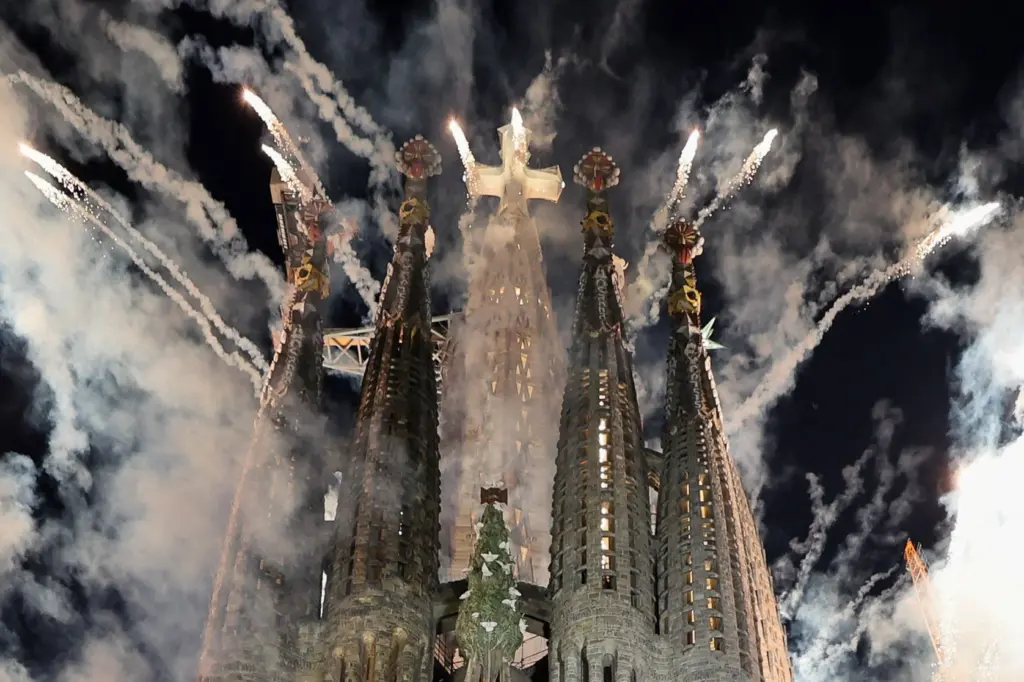
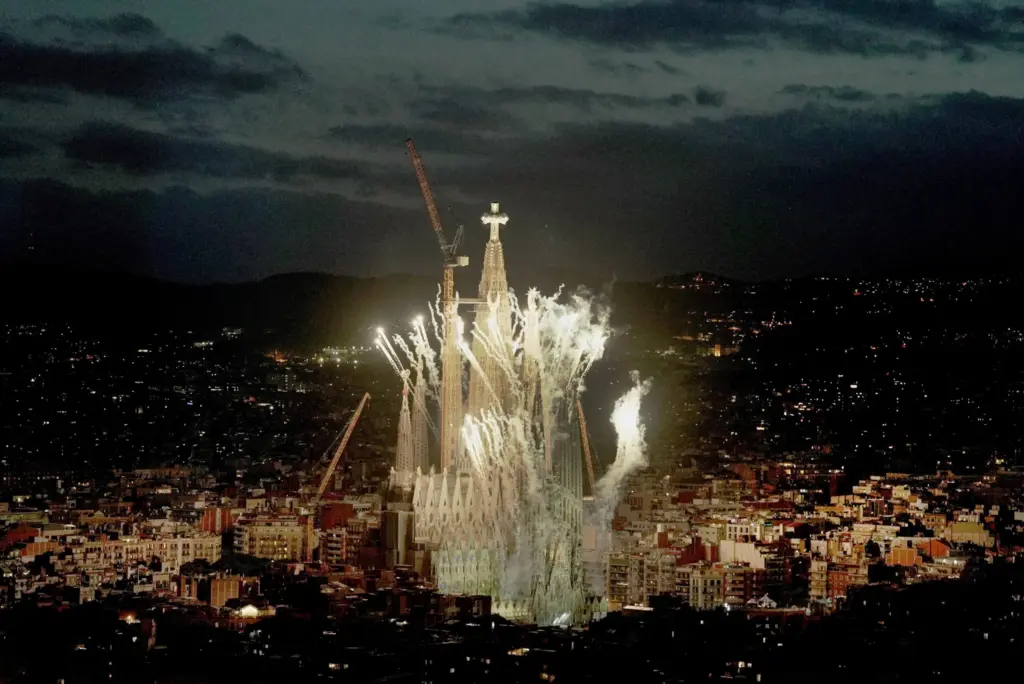
The evening culminated with hundreds of drones forming Gaudí’s likeness in the Barcelona sky. At one point, the architect appeared to gaze upon the basilica that consumed much of his life. Moments later, his famous maxim appeared above the city before fireworks erupted and the illuminated cross atop the Tower of Jesus Christ shone over Barcelona.
“Sagrada Familia is the tallest church in the world, not so as to stand out in worldly rankings, but rather to guide the steps of the People of God who make their pilgrimage in this land of Catalonia,” Pope Leo said during the Mass preceding the inauguration, “with the Cross illuminating their path, like a lamp burning brightly as we await the return of the Bridegroom.”
Thanks to a collaboration between several Spanish networks and those organizing Pope Leo’s visit, the institutional television signal was distributed free of charge to broadcasters worldwide during the 6 days of the visit, allowing audiences far beyond Spain to participate in the trip.
“The language was Gaudí,” Subirà said, referring to the June 10 show. “The language was art, music and the Sanctus. It was a visual explanation of what we wanted to tell.”
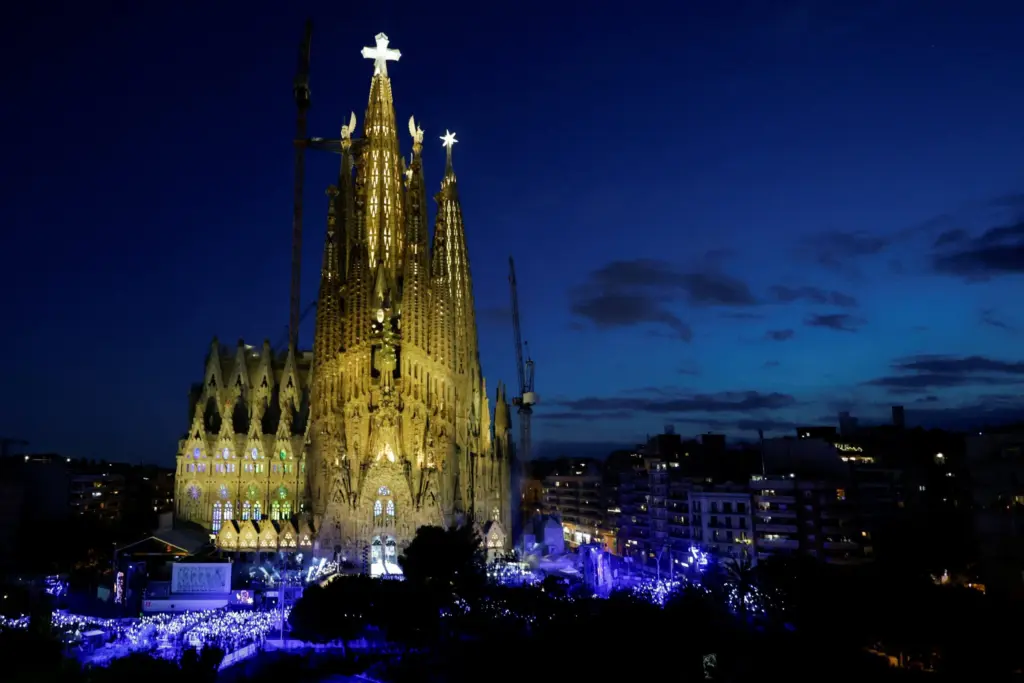
For Víctor Sánchez, chief operating officer of RTVE, the scale of the production reflected the significance of the moment. More than 150 people from multiple companies collaborated to produce the broadcast, coordinating dozens of cameras and technical systems to capture the historic event.
“We knew this signal was going to be seen all over the world,” Sánchez told OSV News. “But sometimes even knowing that, you don’t fully grasp the magnitude of the event, because the Sagrada Família is truly an extraordinary monument recognized around the world.”
However, Subiela said the fleeting spectacle was ultimately about something enduring.
“In 100 years, nothing will remain except the Sagrada Família,” he said.
For one night, light, music and technology helped tell once more the story Gaudí spent a lifetime proclaiming: that beauty, when rooted in faith, can lead people to God.