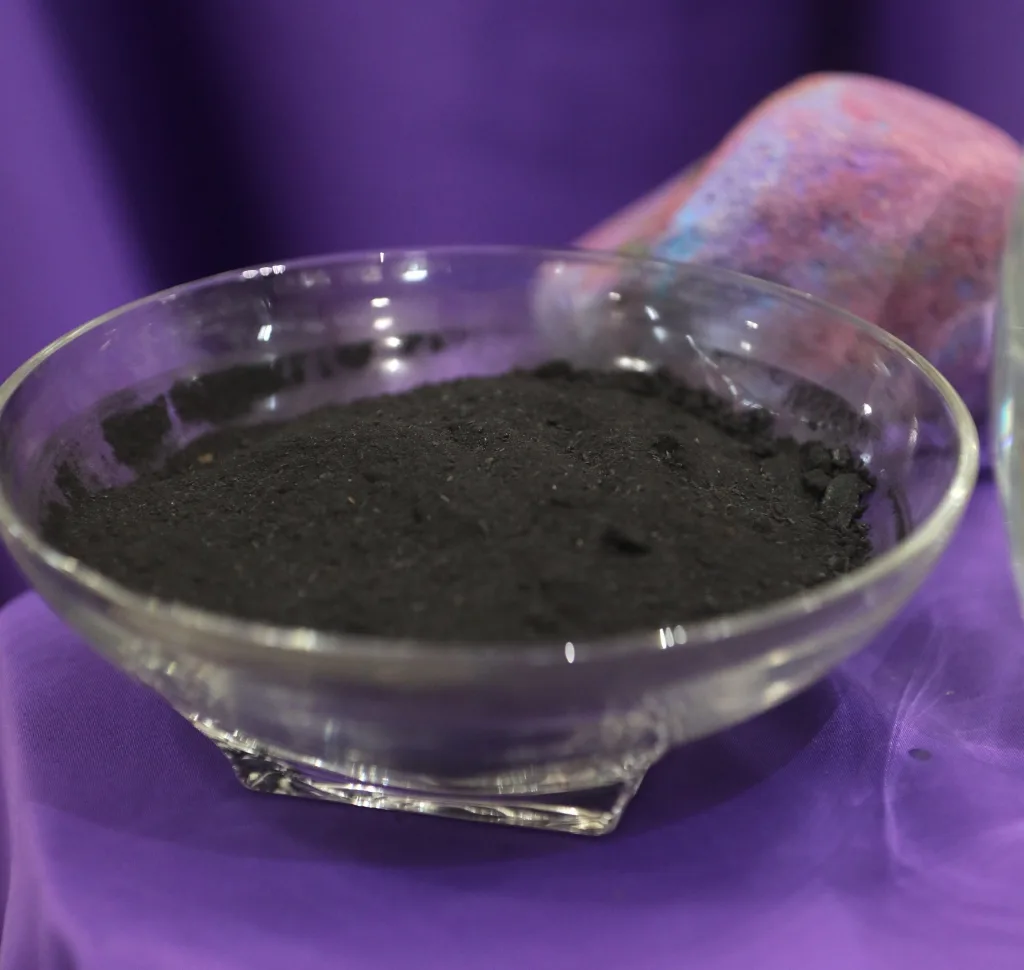
by Caroline de Sury, OSV News
PARIS (OSV News) — Attendance at Ash Wednesday Mass is again expected to break records in France with national papers headlining their daily wires as an “unexpected return of Lent” and highlighting the “enduring nature” of the 2025 boom in reception of ashes.
Public television channel France 3 asked after the Ash Wednesday surge in 2025 — to be repeated in popularity, according to church previews — whether the Lenten surge was “a fad on social media or a quest for meaning?” A French Catholic journalist dedicated months of research to find the answer. And he leans strongly toward the latter.
After months of research, he describes a generation on a “genuine spiritual quest,” drawn by Scripture, personal encounters and often the quiet witness of a believing grandmother.
“Our parents turned away from faith, but our generation is returning to it,” Le Figaro quoted members of the young generation as saying Feb. 18.
Lent 2025 was marked by record participation in Ash Wednesday Masses in France and a record number of catechumens preparing to enter the Catholic Church on Easter. More than 17,800 catechumens were baptized during the Easter Vigil on April 19, 2025, including 10,384 adults and more than 7,400 young people ages 11 to 17, according to an annual survey by the National Service for Catechumens of the French bishops’ conference.
For Antoine Pasquier, news editor of the Catholic weekly Famille Chrétienne, the influx of young people to Ash Wednesday Masses again this year comes as no surprise. He is personally involved in accompanying young catechumens in Meaux, east of Paris.
“Last year’s phenomenon was not a passing fad,” he told OSV News. “Everywhere we see more and more young people coming to parishes and high school chaplaincies to ask to prepare for baptism.”
As a journalist, Pasquier closely followed, or broke news, of revelations concerning sexual abuse scandals within the Church in France in recent years, followed by the publication of the report by the CIASE, the independent commission tasked with investigating this issue.”In this context, this influx of young catechumens since 2022 came as an astonishing paradox,” Pasquier told OSV News.
To understand the influx phenomenon, Pasquier conducted several months of research, the results of which he published in September 2025 in a book titled “Survey of young people who want to become Christians.” He verified in the field what emerges from the precise statistics that have been published each year since 2002 by the National Service for Catechesis and Catechumenate of the French bishops’ conference.
“The number of baptisms at Easter in 2025 was the highest ever recorded since this census was established in 2002,” he recalled. “It far exceeded the record figures already collected in 2024. The number almost doubled between 2023 and 2025,” he told OSV News as the Archdiocese of Paris initiated a special council to embrace the phenomenon.
Pasquier believes that it is still difficult to provide a complete explanation for this sudden growth. “The causes are as numerous as the number of catechumens,” he said. “Each newly baptized person has a very personal and unique journey and story, made up of encounters, failures, trials, errors and hopes on the path of faith.”
But for Pasquier, “a genuine spiritual quest” can be found in all of them. “These young people grew up on unstable foundations, without any truths being passed on to them, in a world where everything was relative,” he explained. “As they mature, they find themselves confronted with important questions and seek a solid frame of reference to answer them. Little by little, their questions cease to be solely philosophical and become spiritual.”
Few of these young people report a radical conversion, according to Pasquier’s observations.
“Rather, they feel a kind of gradual inner calling, both in terms of time and intensity,” he found in the course of his research. “Religion began to gradually take shape in their minds during a slow spiritual maturation, punctuated by periods of doubt and questioning, and often experienced in great solitude at the beginning.”
Pasquier also mentioned “young people’s new enthusiasm for the Bible.” Many began reading it “on their own, before beginning to prepare for baptism,” he said. “Booksellers and publishers in France confirm a surge in the number of Bibles sold since 2020 to a generally young audience.”
The other phenomenon noted by Pasquier is that of the Christian grandmother. “An overwhelming majority of young people mention her when they write their letters to the bishop before their baptism,” he said. “She is often the last believer in their family, who has tried, as best she can, to pass on the faith to them.”
For Pasquier, the internet and social media do not play a “decisive role” in converting young people, but “they often complement and accelerate a process of reflection that began several years earlier.”
“Testimonies of conversion shared on Instagram, explanatory videos made by Christian influencers on YouTube, online Bible studies, and prayers are very important,” he said. “But very quickly, young people realize that the virtual world alone will not satisfy their quest, and they feel the need to meet Christians in person, especially other young people.”
Pasquier emphasized that Lent is a “particularly favorable” time for these young people to attend Mass for the first time, and that it is often a desire felt “thanks to their friends.”
“Lent is a simple, concrete, clear, and structured period, and it is limited in time,” he said. “It is easily understandable for these young people who are discovering the faith, with a joyful final goal, which is Easter.”
For Pasquier, the demands of Lent, including fasting, “attract them even if they do not always understand the theological significance.”
In light of this, Pasquier emphasized the need for mobilization in parishes, chaplaincies, and dioceses. “Our communities are not remaining passive,” he pointed out. “Since 2024, everyone has been actively working, with great inventiveness, to train more mentors and better welcome candidates for baptism.”
In this context, Pasquier urged “not to give in to exaggerated euphoria.”
“This does not compensate for the decline in baptisms of newborns in recent years,” Famille Chrétienne editor noted. “But it does contradict, against all expectations, the predicted disappearance of the Christian faith in France. Who among French Catholics can say that, a few years ago, they never thought they would be among the last Catholics in France?
“Yet for the past four or five years, and for the first time in decades, priests and religious are now convinced that they will leave France more Christian than it was when they were born.”