by Therese Horvat
Special to The Leaven
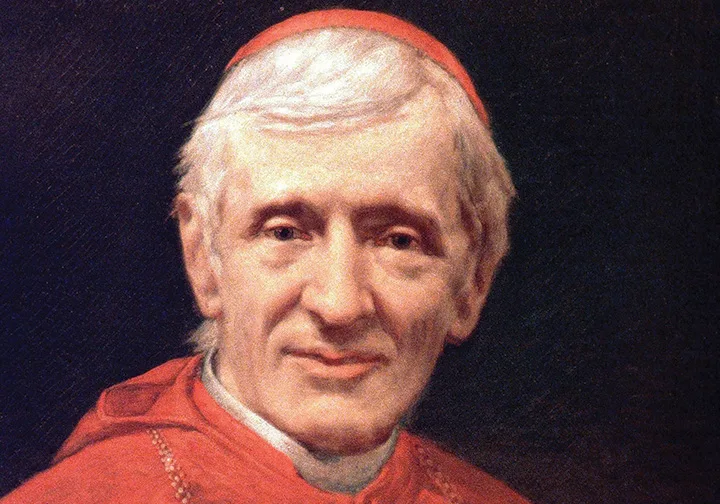
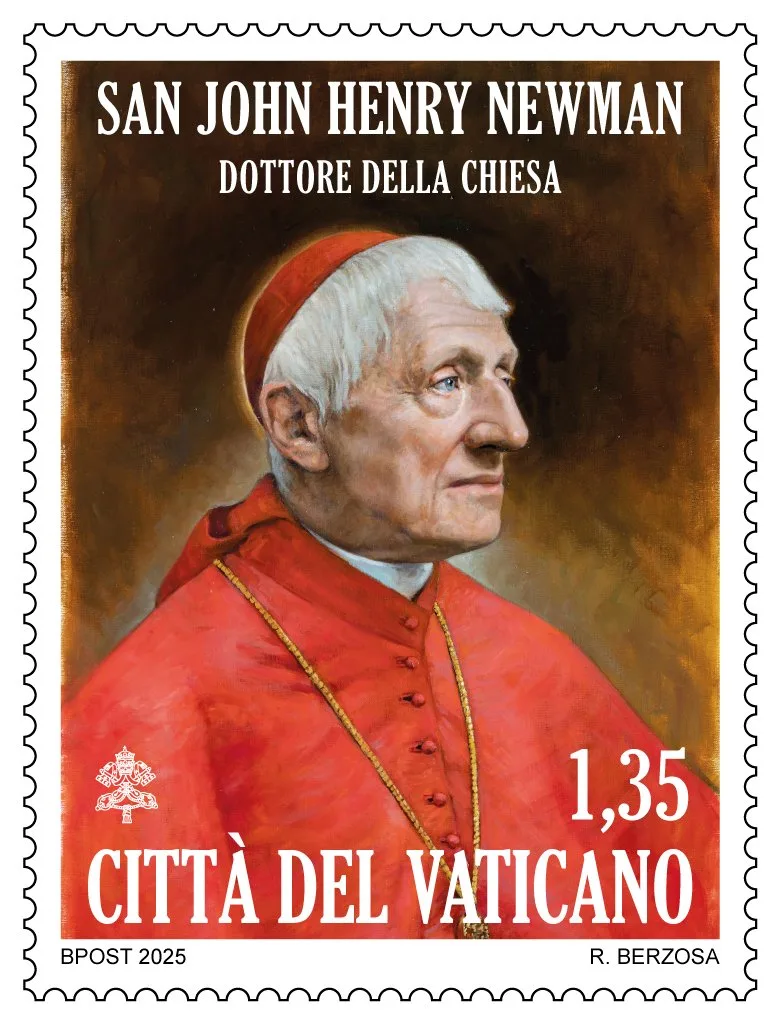
Since his birth in 1801, John Henry Newman has held many titles of distinction. He was an Anglican priest, a convert to Catholicism, a Roman Catholic priest, rector of a university and a cardinal. He has been acclaimed as a prolific writer and a renowned preacher, one of the most influential theologians of the 19th century, and the “hidden father” of the Second Vatican Council. In 2019, Pope Francis canonized Newman a saint.
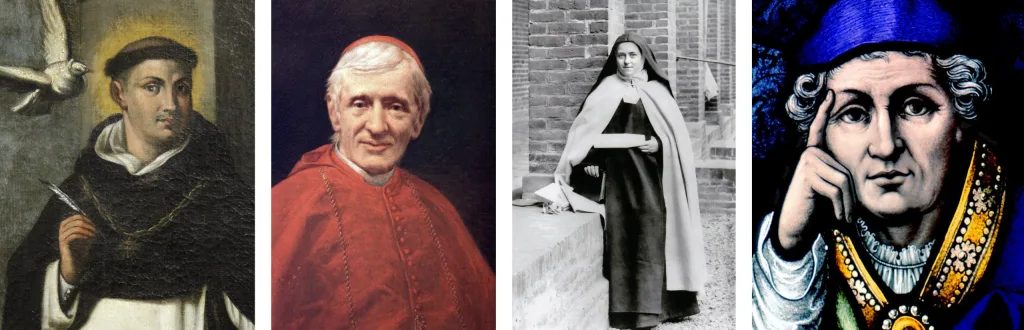
On Nov. 1 in Rome, Pope Leo XIV bestowed yet another distinction upon St. John Henry Newman by officially declaring him a doctor of the universal church. Across 2,000 years of Catholic Church history, Newman is only the 38th person to receive this special designation, joining the company of St. Augustine, St. Thomas Aquinas, St. Catherine of Siena and others.
What does it mean to be a doctor of the Catholic Church? Who was John Henry Newman? Why do his teachings and writings remain relevant today? For the answers, The Leaven talked to the experts.
Being named a doctor of the church
Speaking with authority across time
The Catholic Church confers the title of doctor on saints who have made significant contributions to theology and doctrine. While not identified as infallible, their doctrinal writings and teachings hold special authority and have the depth and breadth to transcend time and culture.
Matthew Muller, Ph.D., associate professor of theology at Benedictine College in Atchison, elaborated.
“To be declared a doctor of the church means that a person’s thought has had a significant influence on the magisterium (teaching authority/role) of the churchThe doctors have continuing relevance and provide insights into divine revelation that are of enduring significance to the church,” said Muller.
Being named a doctor of the church also recognizes an individual’s charism of wisdom and the beneficial influence of his/her teachings.
Brian Hughes, Ph.D., professor of theology at the University of Saint Mary in Leavenworth, said that taken in its entirety, the body of work of a doctor advances the mission of the church and teaches something that is vivifying.
Process akin to becoming a saint
Similar to the cause for canonization, the process for being named a doctor begins with a group of Catholics who apply on the person’s behalf to the Vatican. In Newman’s case, Muller notes that English-speaking bishops’ conferences around the world had long voiced their support for the declaration. Bishops of England and Wales were the formal petitioners.
Both Hughes and Muller contributed content to the “positio,” the book-length document written and compiled by a group of Newman scholars in support of the saint’s being proclaimed a doctor. At the Vatican, committees from the Dicastery for the Causes of Saints and the Dicastery for the Doctrine of the Faith reviewed and affirmed the findings. The Holy Father confirmed their opinion on this past July 31.
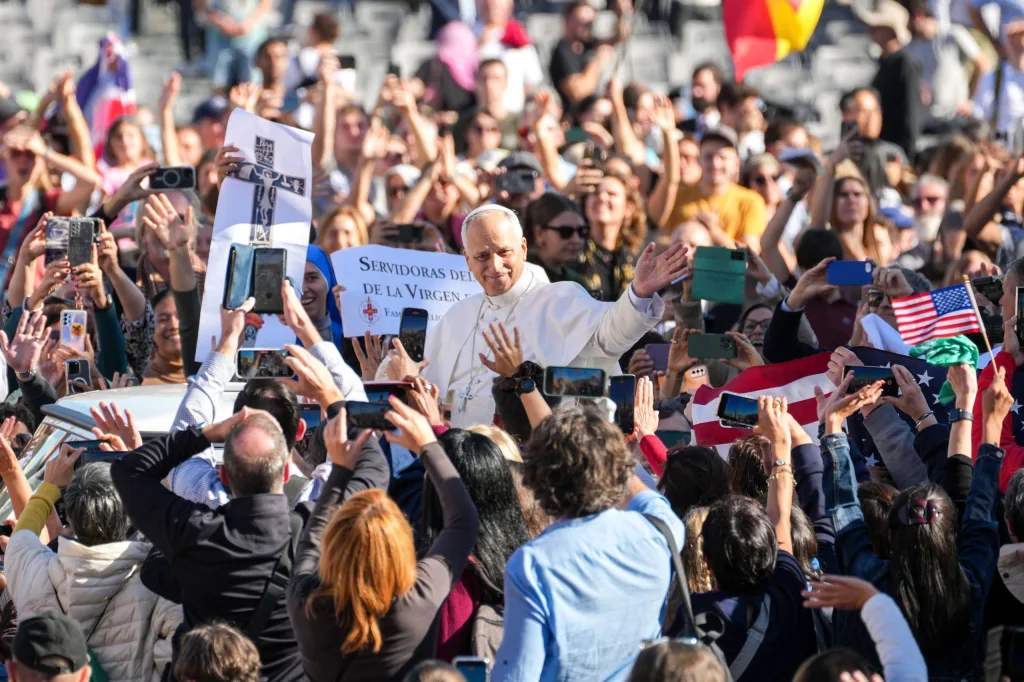
The conclusion was that Newman’s writings are “eminent” — outstanding — and of great relevance to the church of his time and of today. A Vatican News reporter called Newman “one of the greatest modern thinkers of Christianity,” a person whose writings show how living the faith is a daily “heart-to-heart dialogue with Christ.”
The Catholic Bishops’ Conference of England and Wales wrote: “St. John Henry Newman is especially remarkable for the breadth of his teaching across many aspects of the faith, his influence upon various branches of doctrine and theology, and his engagement with problems of faith which remain burning issues in our own time.”
A man of profound faith
Anglican roots
From his youth, John Henry Newman had a deep relationship with God, Christ and church. Baptized and raised in the Anglican Church/Church of England, he had an early interest in Scripture. In his 1864 autobiographical work, “Apologia Pro Su Vita” (“Defense of His Life”), he reports a religious experience he had at age 15 that sent him down the path to Anglican priesthood, albeit with a strong anti- Catholic bias.
At age 16, Newman attended Trinity College at Oxford, then at Oriel College, Oxford, pursued Church of England seminary formation. Ordained an Anglican priest in 1825 and assigned a congregation, he visited the poor and sick, and tutored college students.
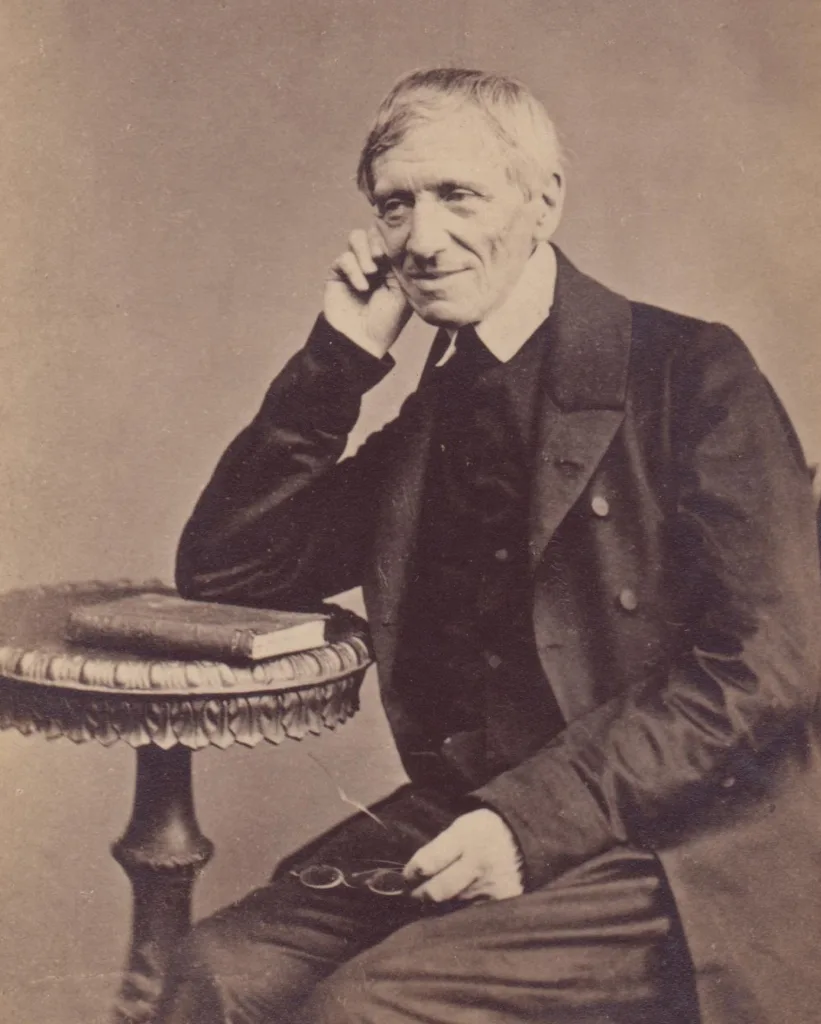
Newman became a popular and respected Anglican priest, and his preaching attracted attention. During this time, he began reading the works of the Fathers of the Catholic Church. He also developed concerns about the direction of the Anglican Church.
While on a tour in 1833 in Sicily, Newman experienced a life-threatening illness that led to a sort of second conversion. Returning to England, Newman and friends cofounded what came to be known as the Oxford Movement with the goal of renewing the Church of England. They published arguments criticizing the Church of England for becoming complacent and politicized, for which Newman ran afoul of church authorities.
Becoming Catholic
After leaving Oxford for study and prayer, Newman reconsidered his view of Catholicism and came to see the Catholic Church as the true continuation of early Christianity. He was received into the church on Oct. 9, 1845. The National Catholic Register later described his conversion as a “cultural and ecclesial earthquake in England,” given his stature as the nation’s leading religious intellect. Though he lost friends and his position at Oxford, Newman said the decision felt “like coming into port after a rough sea.”
That same year, he published what many regard as his greatest theological work, “An Essay on the Development of Christian Doctrine.” After further study in Rome, he was ordained a Catholic priest in 1847.
He had been drawn to the communal life of the Oratorians of St. Philip Neri, and with papal approval, he established the first oratory of St. Philip in England at Birmingham and later a second in London. (An oratory is not a traditional monastic order but a religious society whose members live in a community of charity.)
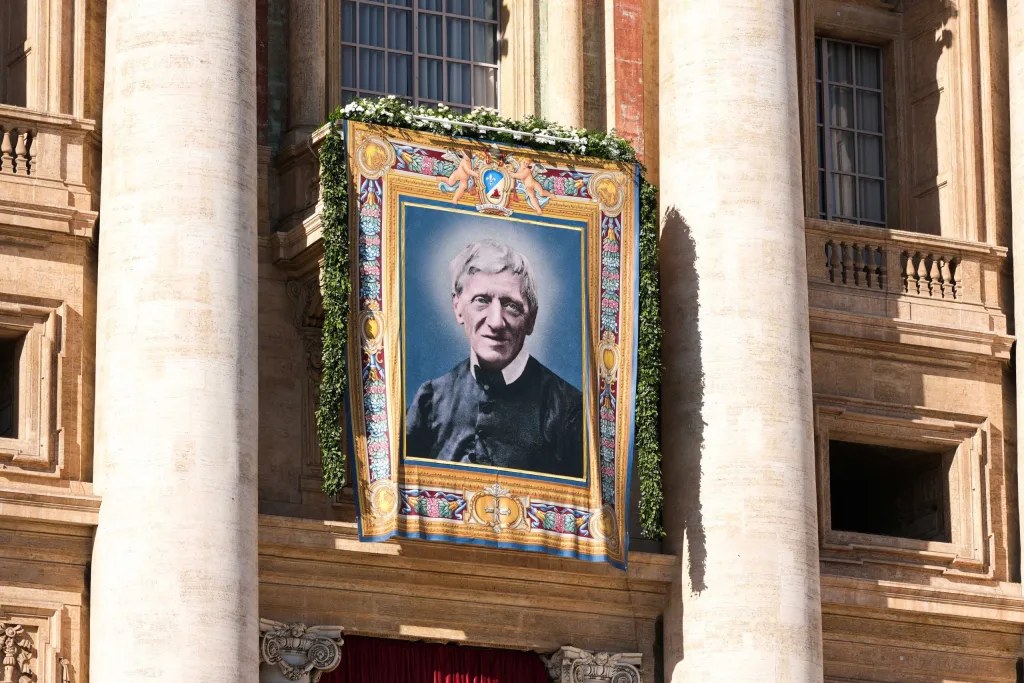
Committed to higher education, Newman helped establish the Catholic University of Ireland in Dublin, serving as its rector for four years. His lectures there became the foundation for “The Idea of a University,” his classic defense of liberal education.
His later writings included the autobiography tracing his journey from Anglicanism to Catholicism and a study of how individuals come to genuine conviction and belief.
Complex, yet simple
Pope Leo XIII named Newman a cardinal in 1879 and granted him permission to remain in Birmingham where he continued to write. Newman died on Aug. 11, 1890, at age 89.
From his reading of Newman’s letters and diaries, Hughes perceives the saint as a passionate, driven, sometimes overly sensitive but deeply caring person who wanted to obey his conscience at all times.
“At times,” said Hughes, “Newman seems duty-bound and hyperaware of his prejudices and shortcomings, and, at the same time, he reveals a strong obligation to give everything he could to the people around him.”
Muller thinks that one of Newman’s greatest gifts was his ability to understand the complexity of the human mind and people’s interior lives. His sermons demonstrate deep insight into the souls of those who were in his pastoral care.
Teachings relevant for today
Writing during the time of the Industrial Revolution, Newman emphasized matters of faith and proclaiming the Gospel in an environment of increasing secularism and dehumanization. In a recent Ignatian Press podcast, Bishop Stephen Lopes said today’s technological revolution creates a new secularism that requires recapturing the imagination theologically in a similar way.
Development of doctrine
Newman taught that authentic Christianity has continued unbroken from the apostles to today. He asked how the simple faith of the early church grew into more elaborate beliefs and concluded that these changes arose through a historical and social process shaped by human insight and circumstance.
He saw this growth as organic: Doctrine unfolds and matures over time without losing its original essence. For an idea to remain true, it must be able to change and develop — like a living thing.
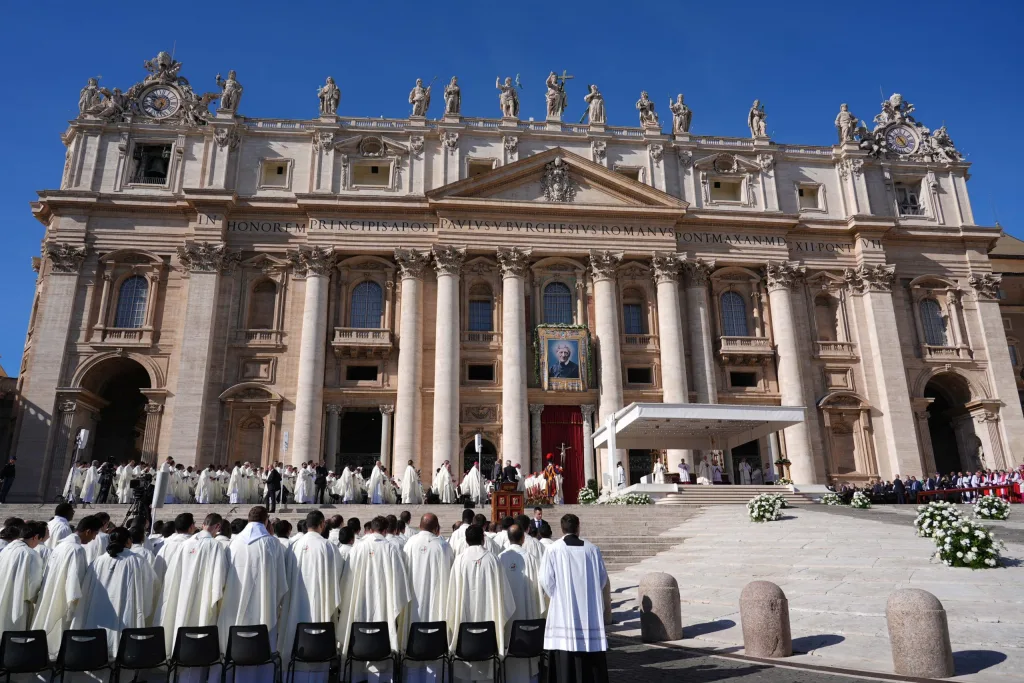
Though some critics called his view heretical, the church later drew on it in defining the Immaculate Conception (1854) and in Vatican II’s Dogmatic Constitution on Divine Revelation (“Dei Verbum”).
In 1986, Pope Benedict XVI (then Cardinal Ratzinger) called Newman’s idea of doctrinal development one of Catholicism’s decisive insights, integrating history and faith within theology.
Muller believes that Newman’s teaching on the development of doctrine was instrumental in earning him the title doctor of the church.
“Newman’s theory of doctrinal development, while created to explain how things have changed or grown over the centuries, also attempts to show how things remain the same,” said Muller.
“Ideas ‘change in order to remain the same,’ Newman said. So, development isn’t a blank check to do what we want with the church,” he added. “Instead, it is a complex process that we do not do, but God does through the church as we communicate the truth of divine revelation to the world.”
Conscience
Newman believed that the most pervasive evidence for the existence of God is the reality of conscience — the inescapable witness in every human heart that speaks of the objective reality of right and wrong. Conscience is the voice of God within a person.
Newman affirmed that conscience needs illumination by the Gospel and by teachings of the church — it isn’t a matter of personal taste or preferences. For Newman, the existence and demand of conscience point believers beyond themselves to seek God whose goodness and righteousness conscience reflects.
Consulting the faithful
In 1859, Newman published the then- controversial article, “On Consulting the Faithful in Matters of Doctrine.” His study of church history revealed that the Catholic faithful and their pastors were guardians of the faith. Newman wanted a church where faith and intellect were valued along with the gifts of various members.
His views on the role of the laity received little traction in the 19th century but were influential in the 20th century and the emphasis of Vatican II on the people of God. Likewise, Newman’s understanding of church resonates with the focus on synodality — a listening church with room for all at the table for discussion.
“Newman had a strong view that the teaching church and the listening church must form a unitive, reciprocal dynamism for discernment and future church teaching — social, moral, economic and spiritual emphases,” said Hughes.
University education
For some, Newman is most remembered for his support of a liberal education. His contributions to education reinforced the dignity of the human person; the importance of the heart; the role of the intellect and the need to cultivate it; and the value of moral and intellectual development.
Muller attributes renewal in Catholic higher education over the last half century to Newman’s vision. He notes that many American Catholics know the name Newman from “Newman Centers” associated with Catholic campus ministry programs, usually at public universities, and, more recently, the Cardinal Newman Society.
Conclusion
In the end, Muller credits Newman with showing believers a path forward and sharing principles for thinking through the challenges of modernity. This includes the recognition that there is religious truth and that humans are capable of knowing and confirming these truths; that divine providence is operative behind all; that revelation unfolds according to God’s time and influence; and that God has a personal calling for and desires a personal relationship with everyone.
That calling and relationship are foundational to Newman’s spirituality which, compared to the complexity of his theological discourse, seems to follow a simpler path.
In the end, newly named doctor of the church St. John Henry Newman advocated doing the ordinary in extraordinary ways as the journey toward perfection and holiness.
Newman scholars with local ties celebrate new doctor of the church
KANSAS CITY, Kan. — Two scholars from the Archdiocese of Kansas City in Kansas had the honor of contributing documentation in support of St. John Henry Newman being named a doctor of the church.
Brian Hughes and Matthew Muller literally got to see their efforts come to fruition at the Nov. 1 ceremonies in Rome where Pope Leo XIV made the declaration official. Hughes is a professor of theology at the University of Saint Mary in Leavenworth; Muller is associate professor of theology at Benedictine College in Atchison.
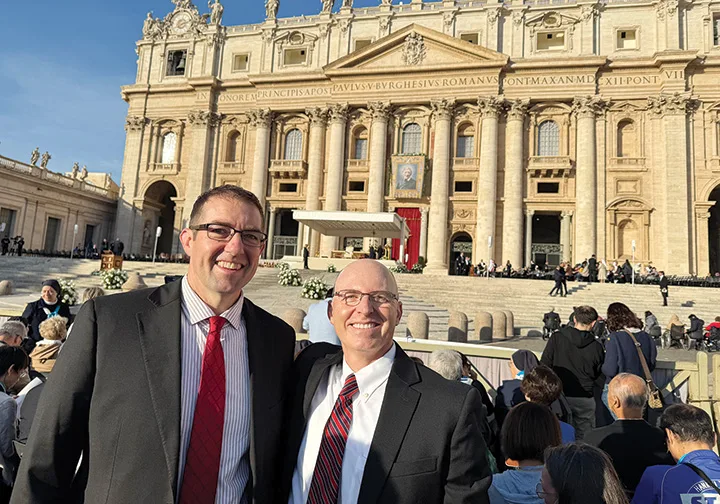
Both men are associated with the National Institute for Newman Studies (NINS) that coordinated compilation of a 300-page chapter of the book-length white paper submitted to the Vatican. Hughes and Muller each authored an article in this section defending Newman’s theology as having authority and relevance across time. NINS also facilitated access to Newman’s published works for review by Vatican committees.
“I feel incredibly blessed,” said Muller, “to have been a part of this. It was truly historic, and being at St. Peter’s Square for the Mass really made that sink in. Everyone in our group shared their sense of awe and amazement that we were able to contribute to Newman becoming a doctor of the church.”
Hughes was impressed by the reverence and prayerfulness of the thousands of people throughout the liturgy.
“I felt rooted and present the entire time to be with pilgrims, seekers and believers from all corners of the globe,” he said. “Spiritual energy, faith and hope were palpable throughout the liturgy.”
Describing Newman as a modern saint and a modern doctor of the church, Hughes elaborated.
“Newman lived and preached a spirituality rooted in the experience of the Holy Spirit through community, friendship and service,” said Hughes.
“Perhaps above all,” he continued, “his spirituality channeled and developed his motto as cardinal, a spirituality of deep encounter with the ‘other’ – ‘Cor ad cor loquitur’ – ‘Heart speaks to heart.’
“This phrase is so desperately needed in this time of political, social and economic division around the globe to remind everyone that we are all part of the same reality that God lovingly created and wills to be one.”