by Todd Habiger
todd.habiger@theleaven.org
ST. LOUIS — If you noticed that your parish priest was missing in action the week of Sept. 28, you weren’t alone.
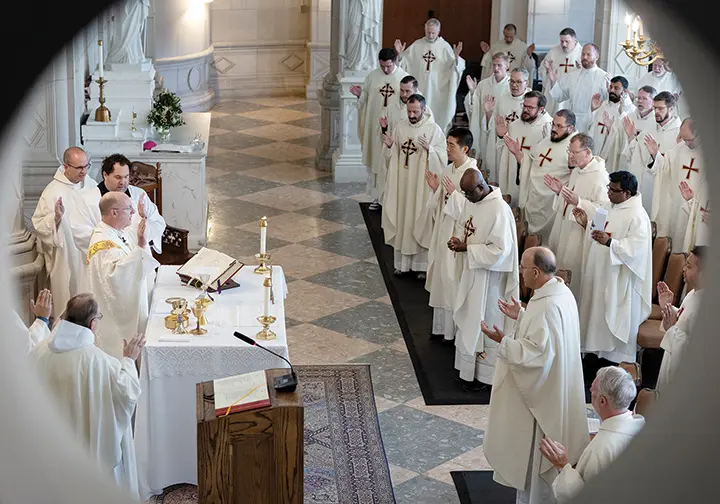
Nearly the entire presbyterate of the Archdiocese of Kansas City in Kansas gathered at the Augustine Institute in St. Louis for their annual convocation.

The first days of the convocation covered the Order of Christian Initiation of Adults (OCIA) and how it differs from the old Rite of Christian Initiation of Adults (RCIA).
Liturgical Training Publications out of Chicago presented to the priests, explaining the process and how it could differentiate from person to person.
“Sometimes the candidates for full communion come to us with a wealth of background and experience in their relationship with the Lord Jesus and a foundation in the Word of God, so their formation track can look a lot different from others,” said Father Michael Hawken, vicar general and moderator of the curia for the archdiocese.
“Every person needs to be assessed to see where they’re at in the process,” he continued, “and in this new order, you can bring them into the church at any time throughout the year.”
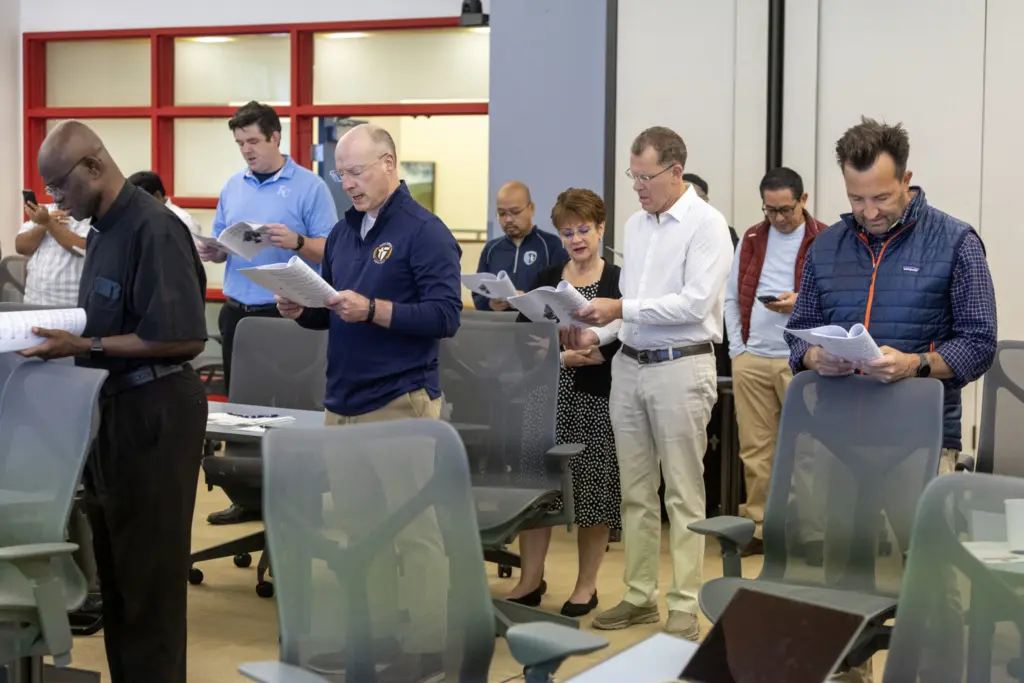
Father Hawken hoped the convocation would help each parish get on the same page with implementing OCIA.
“We are going to have a concerted effort to do that in the way that the church is asking us to do it,” he said.
Down to business
The final day of the convocation was a “business day,” which included an introduction of new personnel in key positions in the archdiocese as well as informative presentations.
Dr. Erin Vader, the new superintendent of archdiocesan schools; Andrew Bartell, the new archdiocesan chancellor, chief operating officer and promoter of justice; and Paul Malley, the new executive director of the Kansas Catholic Conference, were each given time to introduce themselves.
Patrick Schmadeke and Jane Oberlies from the University of Notre Dame presented on artificial intelligence, exploring how AI has infiltrated all aspects of life.
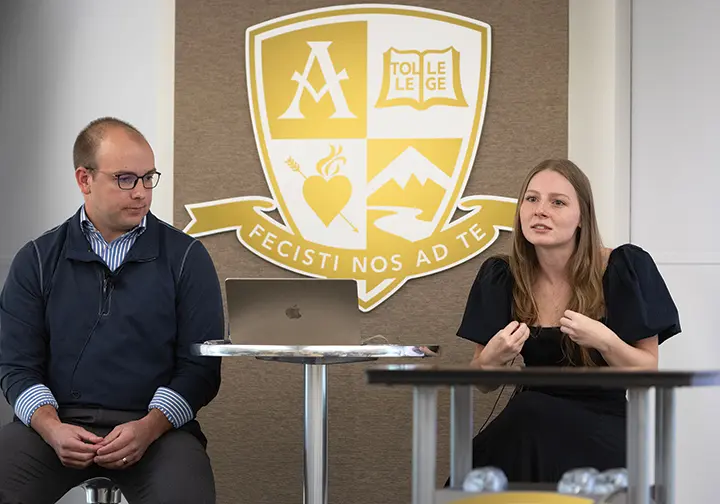
When Schmadeke was the director of evangelization for the Diocese of Davenport, Iowa, he saw aspects of AI that disturbed him.
“It was fascinating to see candidates and catechumans turn to their phones to look for answers of the faith — seeking truth in the machine — instead of turning to the faith community, to this presence of spirit in Jesus among us for answers to questions of faith,” he said.
Schmadeke and Oberlies said studies have shown that 54% of students between the ages of 13 to 17 use AI to help with schoolwork, and that 10% use it all or most of the time. They said the students fear falling behind without the use of AI.
The pair also touched on the environmental impact of AI in regard to its water consumption, and they encouraged priests to preach on AI.
The lineup
Vince Anch, executive director of the Catholic Education Foundation (CEF) talked to the priests about the Federal Scholarship Tax Credit program that will begin in January 2027. He emphasized that all 42 archdiocesan schools could benefit from the program.
Chris Arth, archdiocesan general counsel, spoke on legal issues parishes may face and how his office can help navigate those issues.
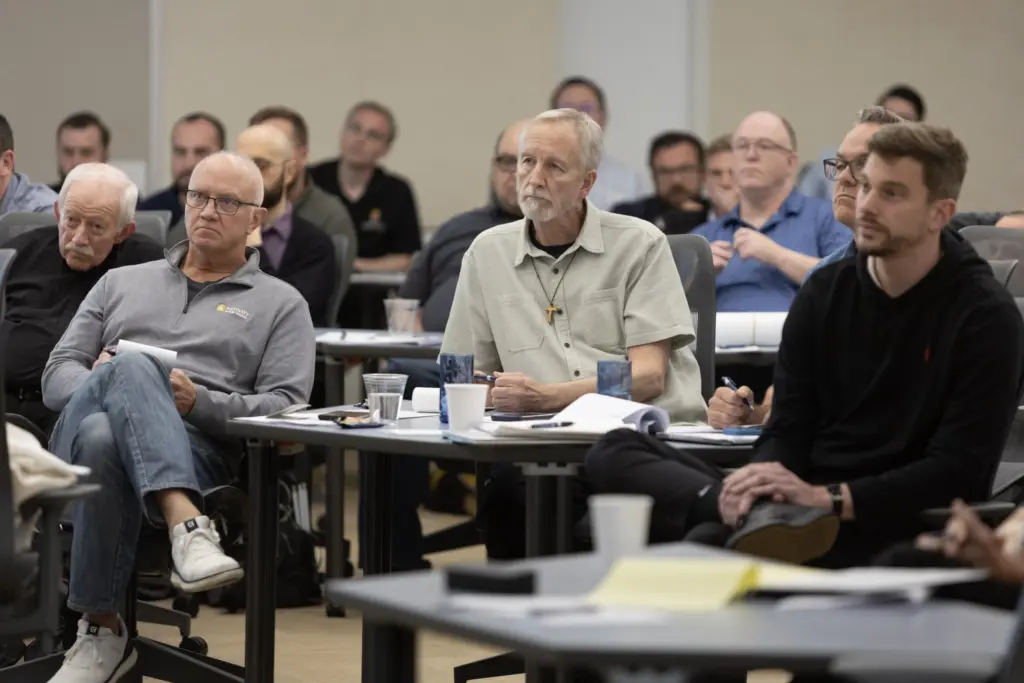
Carla Mills, archdiocesan chief financial officer, updated the priests on many of the archdiocesan policies under review. She also discussed the archdiocese’s shared business services, which can provide qualified accountants and human resources professionals to help with parish business. Mills said having parishes on a common accounting system gives credibility to financial management and allows pastors to move from parish to parish and immediately understand its financial situation.
Dan Daly, executive director of the Center for Theology and Ethics in Catholic Health and associate professor of moral theology at Boston College, spoke about vaccination requirements in Catholic schools.
Kevin Cronister, the archdiocesan director of ministerial standards, explained the role of his office and how it ensures that all allegations of misconduct are received, assessed and investigated in compliance with civil and ecclesiastical law.
Jenifer Valenti, director of the office for prevention and care, highlighted the changing role of her office and its focus on abuse prevention, compliance and the care of people who have been harmed by an agent of the church.
For Father Hawken, one of the benefits of the convocation was having the majority of priests gathered together in one place.
“I hope that our days together were a time when they appreciated our fraternity with one another — to not just study together, but to pray, socialize and have a good time together during the week,” he said.