A PASTORAL LETTER ON SYNODALITY IN THE ARCHDIOCESE OF KANSAS CITY IN KANSAS – Part 3 of 7
BELONGING IN A COMMUNITY
People long to be known; they want a place where everyone knows their name. This longing is not primarily about being recognized at the local coffee shop or store, or for the priest to say one’s name as they are leaving Mass. It is something more, something deeper. It is the longing of someone to know, even before a crisis arrives, that the Church will be there for them. The farmer who can’t make ends meet. The mother who receives a terminal diagnosis. The veteran returning home from far away. The student who fears sitting alone in the cafeteria, or the whispers in the hallway. The immigrant struggling to support their family. The prisoner in despair, apart from family, church, and community.
What each of them, and each one of us, needs is the feeling of belonging to the Church and that we are known by the Church. While moments of personal crisis can be an opportunity for members of the Church “to proclaim glad tidings to the poor,” our faith is stronger when that relationship exists prior to our moment of crisis.
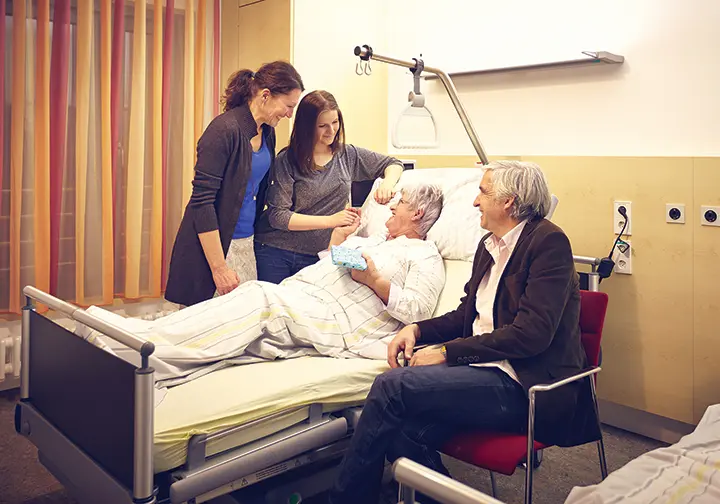
Allow me to offer an example of how this desire for belonging was expressed by one participant in a listening session: “My wife had Alzheimer’s. I was her sole caregiver. She got to the point where I could no longer get her to church. I put her name on the prayer list. For six months, we had no contact from anyone in our parish until 10 days before she died.”
This is only one story that was shared. In hearing these stories as Catholics, we can pause and ask ourselves: Is this not like the story of the Good Samaritan? How many people read that prayer list and just went on with their lives? How many people prayed for that couple, then turned to other matters? And how many people thought about how they could intentionally step out of their daily routines and let this spouse know he is seen and heard – really seen and heard – so that he knows he and his wife are loved and belong in their family of faith?
Across every deanery, we heard very clearly that belonging is often the doorway into active discipleship. People described the Church at her best as a family, a sanctuary, and a steady source of support when life becomes difficult — during illness, grief, relocation, or crisis.
People did not say they want the Church to become a “resource center” or a “one-stop” place for them to get their needs met. They aren’t seeking transactional opportunities; they want to belong.
People shared that what helps them move from simply attending Mass to truly feeling connected are often simple, personal invitations and connections: Come join our small faith-sharing group, the men’s or women’s groups. Be with us on a retreat. Join me in this service opportunity. Repeatedly, people named these moments as the turning points where they stopped feeling anonymous and began to feel known.
At the same time, participants also reminded us that entering parish life can be hard. One parent told us how they enrolled their daughter, who attended public school, in a CYO track program as an intentional way to meet other Catholic families at their parish. She was the only public-school student on the team. After several meets, their daughter shared that the other parents from their parish did not cheer for her when she raced. Her sense of exclusion shaped her parents’ perspective on families who send their children to Catholic schools.
Long-standing friendships, family networks, large parishes, small, tight-knit parishes, busy schedules: These can create barriers that insiders may not even notice. Just like the parents who are focused on their own children, we don’t consider how our behaviors may tell someone they aren’t really a member of our team or our community.
For newcomers, converts, returning Catholics, single adults, childless couples, divorced persons, and non-Catholic spouses, and even the husband housebound with a wife with dementia, those barriers can feel overwhelming.
That is why hospitality cannot be only a greeting at the door. It must become ongoing accompaniment — personal follow-up, relationship-building, and the patient work of helping each person know they belong.
Christian hospitality recognizes our belief that each human person is created in the image and likeness of God. God is a Trinity of divine persons — Father, Son, and Holy Spirit. And as God is a community of persons within himself, we who have been made in the image and likeness of God were created for relationship. We are seeking to belong because God created us that way. It is our path to salvation.
As Pope Leo XIV wrote in his first encyclical, Magnifica Humanitas (Magnificent Humanity):
“At the heart of the Christian understanding of the human person lies the great biblical affirmation that men and women are created in the image and likeness of the Triune God. Created for relationship, every human person is planned and willed by God to enter into communion with him, with others and with creation” (n. 50).
Pope Leo explains, “Human dignity does not depend on a person’s abilities, wealth or position in life, nor on the right or wrong choices made; instead, it is a gift that precedes and transcends each person, endowed by God as an expression of his unfailing love. For this reason, the human person always remains the ‘way for the Church’ and the heart of every authentic path of integral human development” (n. 50).
Belonging calls us into a deeper relationship with one another, and through these social bonds, into a deeper relationship with God.