by Moira Cullings
moira.cullings@theleaven.org
KANSAS CITY, Kan. — It often starts with minor memory issues, like losing items around the house and difficulty finding the right word during a conversation.
Over time, it develops into forgetting details about one’s own life, challenges with daily tasks and severe confusion.
“Dementia is a condition that can take away so much — memories, independence, a sense of time or place,” said Priscilla Salinas, who works in social services at Catholic Community Health in Lenexa.
“But what it doesn’t take away is the person at the heart of it all,” she said.
Sister Lucero Garcia, of the Sisters, Servants of Mary, said the dignity of the person is always there because each human being is made in the image of God.
“Our dignity does not come from what I can do, how I think, how profitable I am or how useful I am to society,” she said. “My dignity comes from being a child of God.”
As a member of the Servants of Mary, Ministers to the Sick, in Kansas City, Kansas, Sister Lucero takes care of the sick and dying in their own homes.
She has seen firsthand the struggles family members of those with dementia face and wants to reassure them.
“The person that you once knew, the person that you once loved — regardless of whatever behavior they display — is still there,” she said.
“Most of all, the Lord is walking this journey with you,” she added. “You’re never alone.”
Defining dementia
Dementia is not a specific disease but a group of symptoms that can result from a variety of diseases and injuries affecting the brain.
The most common cause is Alzheimer’s disease.
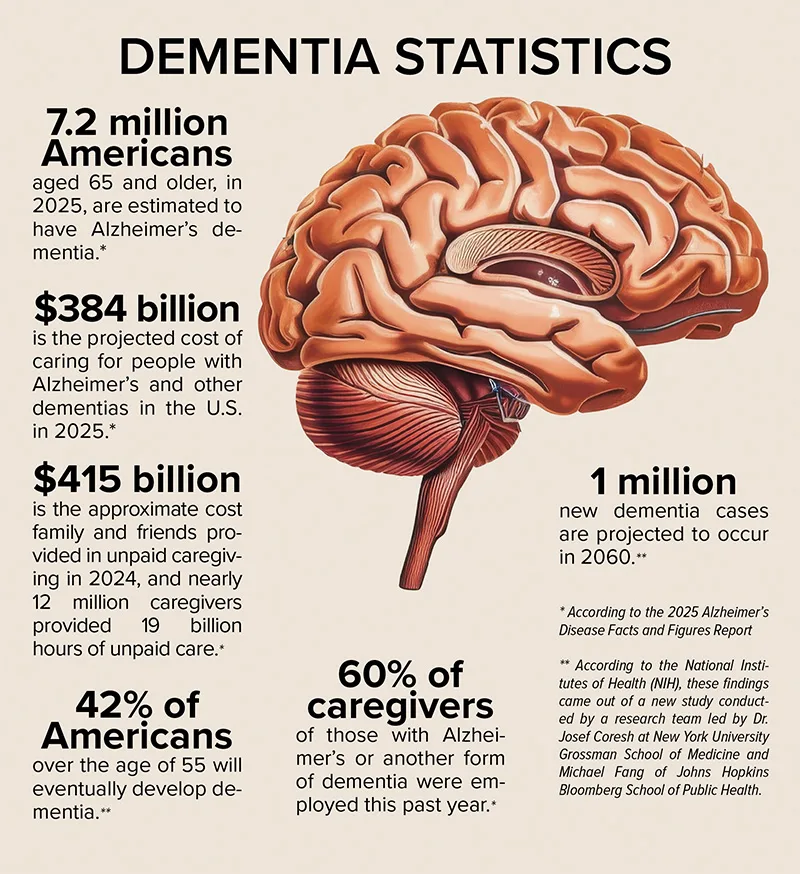
Symptoms of dementia include issues with memory, thinking skills and behaviors.
It’s complex, with varying degrees of severity that typically worsen over time.
“No two journeys are alike,” said Salinas. “Progression isn’t linear. There are clear, engaging days followed by confusion or withdrawal.
“That unpredictability requires compassionate flexibility.”
Eventually, when someone with dementia no longer remembers their loved ones, it can be difficult to grasp.
“Dementia makes people uncomfortable,” said Renee Porter, administrator of Dooley Center, a nursing home for the aging Sisters of Mount St. Scholastica in Atchison. “But if you see the brain, it’s incredible.”
Porter used the analogy of a bath sponge with holes.
“Those holes might be really deep, and it’s completely hollow,” she said. “But then [in] other parts, these holes are really deep, but there’s some sponge matter way deep down.”
“It’s OK that they don’t remember,” assured Porter. “Their brain is shrinking, and there are parts of their brain that are literally deteriorating.
“I think dementia is really more about how the family can cope and make that person still feel loved.”
Meaningful time
Creating quality time with a loved one who has dementia can feel daunting, especially when each visit might be different from the last.
“I talk with my families about meeting their loved ones in that moment in time,” said Salinas.
She encourages them to connect through emotion, not memory.
Two ways to do that are by listening to their loved one’s favorite music and looking through photos, said Salinas.
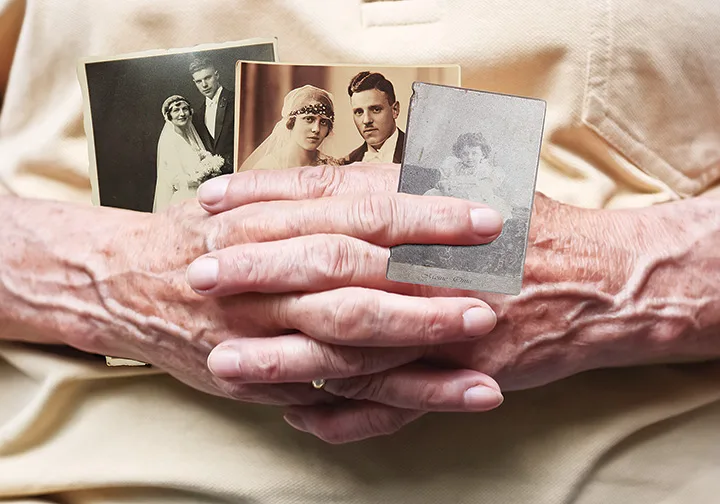
If a loved one isn’t remembering anything in the moment, “go ahead and tell them about your life,” said Porter.
“Share your stories. Share your thoughts,” she continued. “And if it gets to a point where you can no longer do that, continue to talk to them like they’re a normal person that understands.”
If the person with dementia begins talking about their own past, “take that moment to learn something that you may not have known about that era of their life,” said Porter.
“Because that’s where they’re at [mentally],” she continued. “If they’re talking about Mom and Dad, they’re a young adult or a young child.”
Caregivers might be tempted to correct them when they’re talking about a parent who has passed away, for example, but Porter discourages that.
“We try to use a distraction technique where we still reminisce with them,” she said, “but we’re not agitating them by saying, ‘Your mom’s not alive. You’re 98.’”
Instead, ask questions about their mom and what she was like, said Porter.
“Go down that journey and learn about their life,” she continued. “It’d be amazing what you find out.”
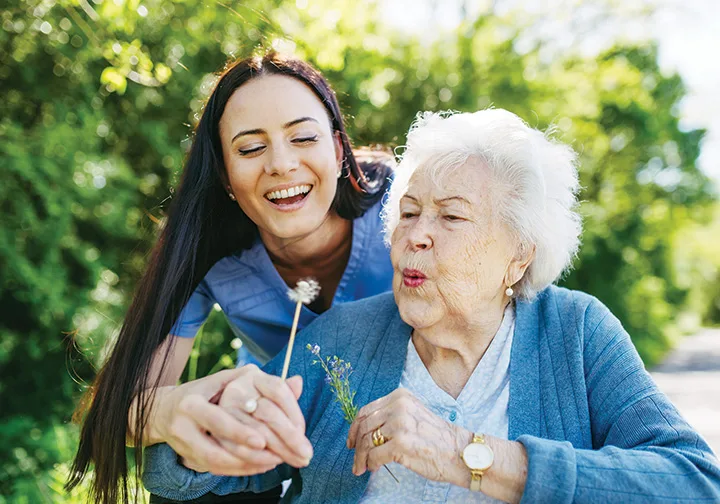
During challenging days, Sister Lucero emphasized how impactful a calming presence can be.
“When dealing with them, they may not respond to commands,” she said. “But they do respond to gentleness.
“Sometimes, they get very anxious or combative or irritable. If you maintain a calm attitude and your approach to them is gentle, most times it kind of disarms them because they don’t feel threatened.
“They know they are safe, and they can trust you.”
Spiritual connections
When a person of faith has lost most of their memory through dementia, religious devotions they once held dear can still be a point of connection.
“Catholic prayers and rituals like the Sign of [the Cross] or familiar hymns often remain deeply ingrained, offering comfort even in late stages,” said Duke Onkoba, executive director at Catholic Community Health.
“Hymns and prayers act like ‘music with memory,’ unlocking peace, smiles and recognition even when much else is forgotten,” added Kacie Lynn, RN, MDS and PEAK coordinator at Villa St. Francis in Olathe.
Kelly Swancoat, RN, staff development director at Catholic Community Hospice, said the simple presence of religious items can make a big difference.
“I’ve seen residents calm immediately when holding a rosary or hearing prayers, even if nonverbal,” she said. “Long-term memory of rituals can bring great peace.”

Sister Lucero has found that holy cards, Scripture passages and playing worship music, a talk by a favorite preacher or a televised Mass can also be sources of comfort for those with dementia.
“They may forget about everything,” she said. “They may not know the prayers anymore. But what is in their heart is still there. It doesn’t go away.”
That’s a helpful reminder for everyone, continued Sister Lucero.
“Whatever you build up, whatever you nourish during your lifetime — it stays with you all the way until the end,” she said.
Emotional toll
“Dementia is harder on the family and the caregiver than it is on the person with dementia,” said Porter, “because they don’t remember that they don’t remember you.”
But the emotional toll it takes on loved ones can be intense.
“I’ve seen families go through a wide range of emotions — from sadness and confusion to guilt and frustration,” said Salinas.
“One of the biggest challenges is accepting the changes in their loved one,” she continued. “It’s hard watching someone you’ve known your whole life slowly lose pieces of who they once were.”

Annalyne Mutai, assistant director of nursing and staff development nurse at Villa St. Francis, highlighted another challenge.
“For staff and families, it can feel like helplessness — repeating care tasks without recognition,” she said, “or watching decline without a cure.”
Down the road, loved ones will experience a unique type of grief.
“Families mourn twice — once as they watch the spark of their loved one fade,” said Lynn, “and later when they lose them physically.”
Although their ability, behavior and memory isn’t the same, people with dementia still have something left to give, said Porter.
“When a family member is feeling lost and they feel like they’ve lost everything,” she said, “I would encourage them to look for the gift that that loved one is still giving.
“In dementia, no matter how far progressed you are, there’s a gift that this person has probably naturally given their whole life. It might be comfort, it might be their smile, it might be the sparkle in their eyes.
“You may only get it once every six weeks, but they’re still giving that gift.”
Practical advice
What side of the bed do you normally get up on?
It’s one of the first questions Dooley Center staff ask when a new resident moves in.
“They wake up where they’re already somewhat disoriented because they’re in a new environment,” said Porter.
“Now, you have them getting up on the wrong side of the bed, and their stability is not what it would be because they’re disoriented,” she continued. “So now, you have a fall.”
Setting up patients’ rooms in a way that they’re used to can prevent falls and help with overall orientation, said Porter.
Dooley Center utilizes an age-in-place model, so once Sisters move in, that’s their room until they pass away.
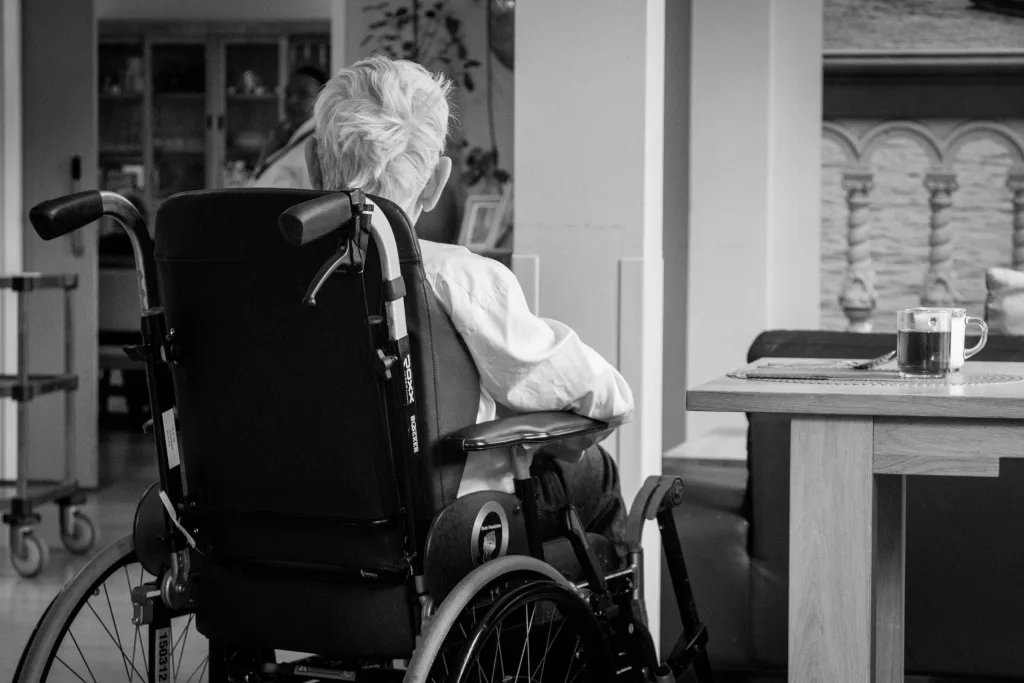
Keeping a routine is key.
For residents who can’t remember the schedule for the day but can still read a marker board, staff will write out what the day has in store, said Porter.
If they don’t recognize an object they need, like a walker, staff might put a sign on it that says, “I’m your friend. Take me with you,” she added.
When unusual behaviors arise, Sister Lucero encourages caregivers to not get frustrated.
“When they pace, sometimes that calms them down,” she said. “Let them pace. Let them wander, just watching them.”
Creativity, patience and low expectations can be fruitful ways for caregivers to cope when challenges arise.
“In our mind, we do not realize that they don’t have the ability to do what they once were able to do,” said Sister Lucero. “Sometimes, it’s very hard to accept that.
“We should not expect something from them that they are not able to give.”
Digging deeper
People with dementia might act out in a variety of ways.
Porter finds value in seeking the root cause.
“When you have a behavior, it’s a definition of an unmet need,” she said.
Often, individuals act out situations from their past. One example Porter recalled is a Sister who started tearing up chapel books.
Instead of telling her to stop, Porter encouraged the other Sisters to find an alternative and gave her a piece of paper to tear up instead.
“Then, we try to figure out why are they doing it,” she said.
In this case, Porter discovered the Sister had been a college instructor, and during her career she had torn out pages of magazines for lesson planning.
“So, we got her a stack of magazines [to tear], and it instantly stopped her behavior,” said Porter.
“In that instance, in her mind and in her process, she was no longer an 80-something-year-old Sister,” recalled Porter. “She was a 40-something-year-old Sister, and she was teaching.”

Another Sister kept putting her bedding on the floor during the night, and upon investigating, Porter discovered why.
“She had a really terrible childhood,” said Porter. “And when she would get scared at night, she would crawl under her bed and sleep on the floor.
“We took her bed out of the room and laid her mattress on the floor. Her sleep was better. Everything about her whole demeanor the next day was better, because she wasn’t waking up scared trying to hurry and get herself on the floor.”
Seeking support
One of the greatest challenges loved ones will face is striking a balance between caregiving and self-care, said Sister Lucero.
Caregivers often face social isolation, financial strain and exhaustion, she said. Yet they feel guilty when they do something good for themselves.
Salinas said reaching out for help is not a failure but an act of love.
“Over the years of working in dementia care,” she said, “I’ve seen so many families carry the weight of caregiving with incredible devotion.
“But I’ve also seen how that love can come with guilt — especially when the care becomes too much to manage at home.
“As needs increase, it’s not only OK to seek additional support — it’s often necessary to ensure your loved one’s safety and quality of life.”

Sister Lucero urges individuals to reach out to people who might be able to help, and if possible, find a support group.
Most importantly, “Find your strength in God,” she said.
She shared a simple prayer: “Give me whatever I need to take care of this person that you’re putting in front of me.
“Give me the patience, give me the compassion, give me your heart so I can actually care for them as you would.”
“You cannot make it without the help of God,” said Sister Lucero.
Help for the caregivers
“I find in our ministry that many, many people want to help,” said Sister Lucero, “but they do not know how.
“Sometimes they think, ‘What can I do? I cannot really do anything.’
“Nothing is small when it comes to helping a caregiver.”

Start by reaching out, letting them know they’re not alone, and be proactive.
“If you know of something that’s actually needed, just go ahead and do it,” said Sister Lucero, who shared a handful of ideas.
Run errands for the caregiver or stay with their loved one so they can run errands themselves, go to church, attend an appointment or take a break.
Mow their lawn or assist with daily tasks like laundry and meals.
Give them a gift card so they can dine out or enjoy a sweet treat.
No matter what it is, commit to what you offer, said Sister Lucero.
“Reach out to them, let them know you’re there and mean it,” she said. “Whatever you say and whatever you do, mean it.”
Christ at the center
When the Sisters, Servants of Mary are caring for someone who is sick or dying, they first see Christ in that person.
“Jesus said, ‘I was sick, and you visited me.’ ‘Whatever you do for the least of my brethren, you did to me,’” said Sister Lucero, citing the 25th Chapter of the Gospel of Matthew.
“We do believe that every time we work with our patients, we’re actually going to see Jesus,” she said, “because he said so.
“That’s the core of our spirituality. We know it’s actually Jesus who we’re taking care of.”
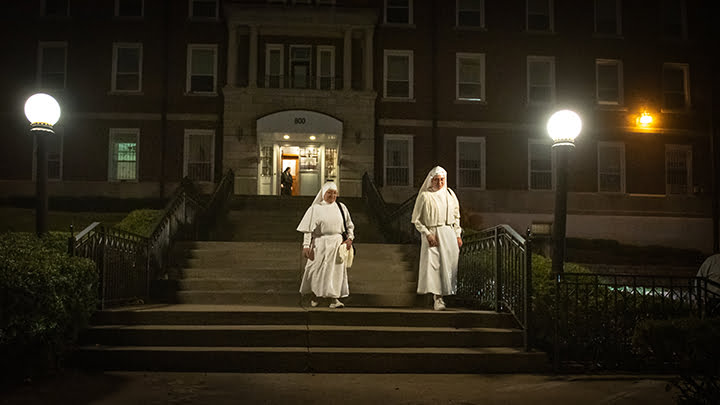
Sister Lucero said there’s nothing about Jesus being sick in the Gospel.
“But we see him sick, experiencing all kinds of pains and sufferings on the cross to the highest degrees,” she said.
She believes caregivers have a unique opportunity to be like Mary, who stayed with Jesus until the end.
“That’s something that we try to emulate — the presence of our Blessed Mother at the foot of the cross of Jesus,” she said, “who is actually still suffering in our brethren who are sick.”
Letting go
It’s a tough conversation, but finding out the wishes of your loved one when they reach the end of their life can take a weight off caregivers, said Porter.
Ask: “If you don’t know who I am and you can’t remember anything and you become ill, what would you like me to do?” she said.
“Find out the answers,” she continued, “because if you do that ahead of time, then you have peace knowing that they decided what the fate of their life was, and [it’s] not you having to make the decision for them.”
As is true of many people at the end of their lives, “a lot of times, the family needs to give them permission to let go,” said Porter.
“They may not have known you for five years,” she continued, “but upon death, they still need the OK that you’re going to be OK without them.
“And a lot of times, that’s all they need to let go so they’re not stuck in that turmoil of holding on.”

Porter said witnessing the Sisters’ faith at the end of life has shaped her own view of death.
“The Sisters have lived their entire life to make their final journey of walking with Jesus,” she said. “There’s no greater reward.”
For Sister Lucero, it’s a privilege to be with those as they pass away.
“It is very beautiful,” she said, “because when you get to be with these patients at the end of life, it’s a reminder of what is truly important in life, what truly matters.
“It is that encounter of heaven and earth.”