by Moira Cullings
moira.cullings@theleaven.org
LEAWOOD — Kids at Nativity Parish School here skated like it’s 1999 on Feb. 23 to kick off what their moms hope will be a lower-tech lifestyle.
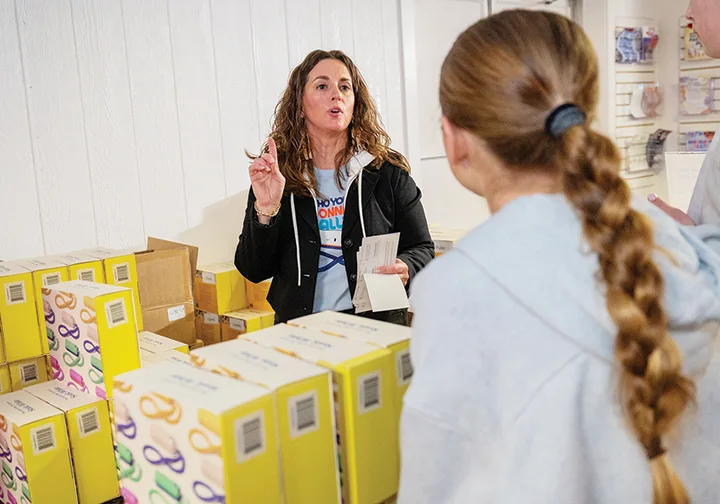
Kindergarten through fifth grade students from more than 200 Nativity families have opted to trade smartphones for the old-fashioned landline.
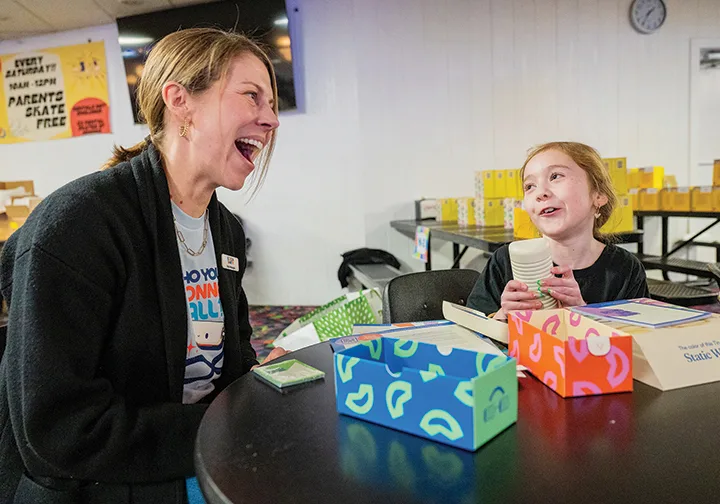
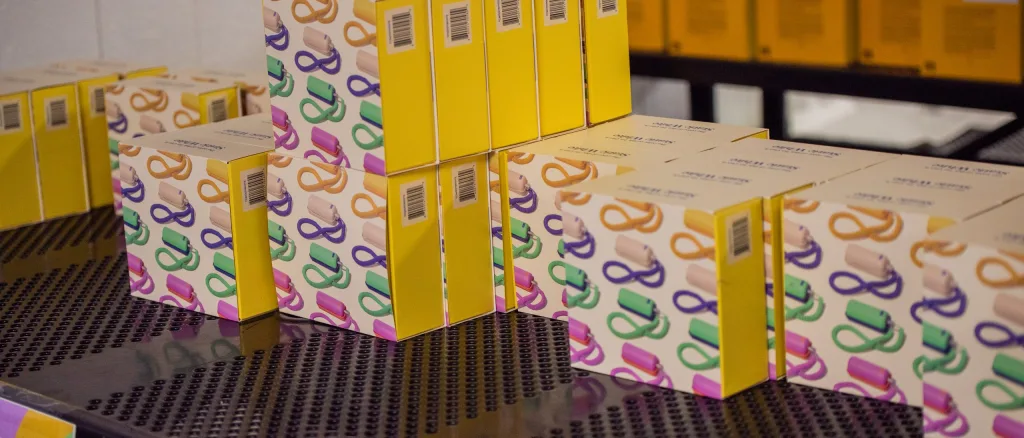
They gathered at Skate City in Overland Park to pick up a Tin Can phone and a goodie bag with resources on digital health education.
“What better place if we’re talking about bringing back the landline?” asked Tracy Foster, co-founder and executive director of Screen Sanity.

The nonprofit partnered with a group of Nativity moms on the community-funded, grassroots pilot initiative called Project Landline.
The excitement was palpable when 193 students showed up to skate — screen free — on a non-school day.
“It went beyond what we could’ve even imagined,” said Foster, “with the number of kids who came, the excitement that they had, the fun of them whizzing around on roller skates.
“It was truly so celebratory and joyful and heartwarming.”
Going old school
Abby Dean and Cory Wright were two of the first Nativity moms to jump on board with Project Landline.
Dean has a kindergartner and a third grader at Nativity, and Wright has a third and a fifth grader at the school.
“We all had landlines growing up and had to share them with our siblings and were stuck in the kitchen talking,” said Dean. “We couldn’t go hide in our room and gossip.
“We’ve gone backwards, but in a good way, on introducing that phone.”
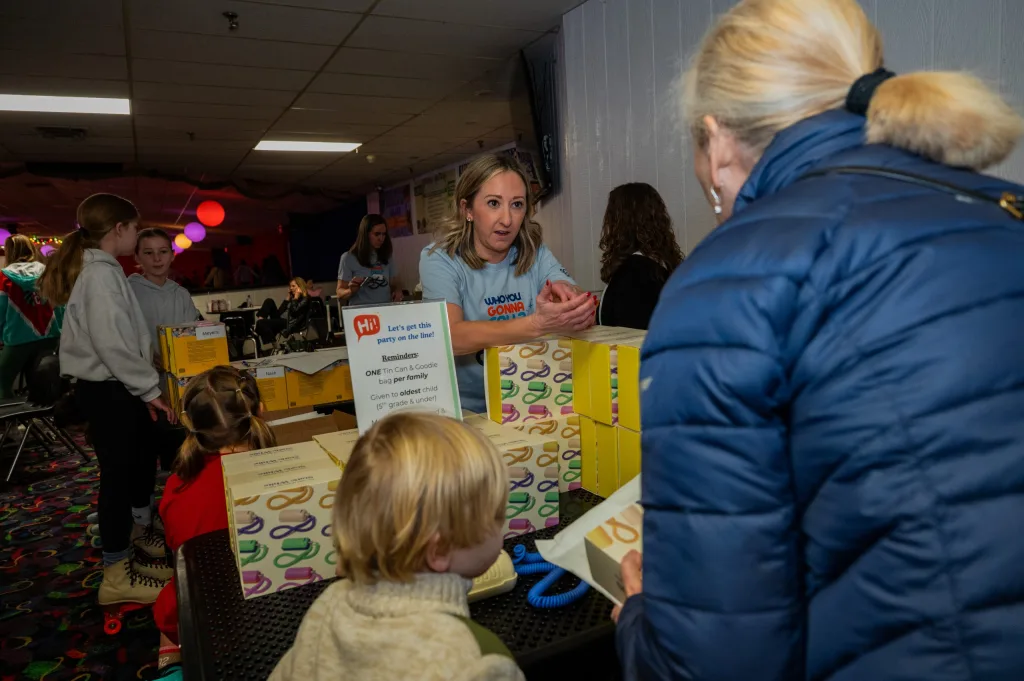
Foster said Screen Sanity was excited to work with Tin Can (tincan.kids) on the project.
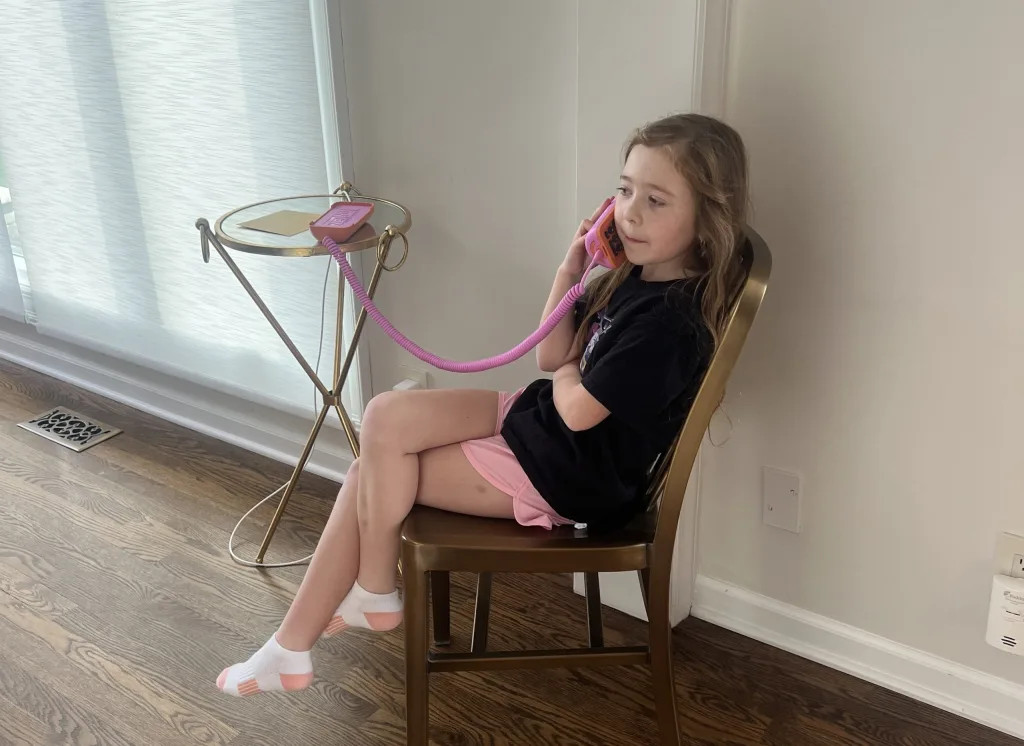
Its Wi-Fi-based phone functions like a landline so children can connect with friends without the pressure and distractions that come with smartphones.
Instead of FaceTiming, texting or scrolling on social media, the kids can communicate simply with their voices.
“The level of change in conversation [from] them having a FaceTime phone call with their friends versus this landline phone from the get-go was leaps and bounds different,” said Wright.
Changing the culture
Dean believes Project Landline is an important step to protect today’s children, who might experience bullying at school like previous generations.
“But kids then go home and are on a smartphone and are sitting in silence and isolation, looking at social media and reading things and getting bullied,” said Dean.
“They don’t have the protection of coming home and leaving it at school like we did and having that safe space,” she continued. “They’re still looking at their phone, and it piles on.
“And you can understand why their mental health has gone downhill since smartphones were introduced.”
Studies have found that smartphone use before age 12 is associated with higher risks of mental health issues like depression, poor sleep and obesity.
“We have the data,” said Wright. “We know that these aren’t the right answers for our kids.”
“The lack of permanence is also key for me,” she added. “You might be mad at somebody, and you want to talk through it with your friend. But that is a private conversation on a landline that’s not being recorded or screenshotted and shared with the entire class.
“This ruins kids’ lives with that technology that they have on smartphones.”
Back to the basics
Tin Can phones can call other Tin Can phones and 911 for free, or users can subscribe to a party line plan to call any external phone number.
Only approved contacts can make calls to a Tin Can phone, which includes a parents-only companion app. The phones also have a Do Not Disturb option.
While reaching out to local businesses to fundraise for the project, organizers realized how great the need is.
“When we were talking with the local businesses, they were sharing how much they think this is important — obviously for the kids — but also because they can see the effect of not learning how to have phone calls on their younger employees,” said Foster.
“They don’t know how to make a phone call,” she said. “They get nervous.”
The anxiety associated with making phone calls has a name: telephobia.
Foster believes smartphones are causing today’s youth to miss out on developmental skills that foster confidence in this area — like communication, independence and manners — which previous generations experienced organically.
“These kids, they need to learn how to call and order pizza,” said Foster. “They need to learn how to call and make an appointment.
“They need to learn how to call a friend and work through an issue using their voice. They need to call a grandparent or someone else and say, ‘How are you feeling today?’
“It’s important developmental stuff that we didn’t really realize we were taking away when we got rid of phones in houses.”
Answering the call
Dean and Wright believe Project Landline has been effective because so many Nativity parents are on board with postponing smartphone use.
“You need people for [the kids] to call but also parents that are going to align with you on beliefs and try to protect our kids,” said Dean.
“We needed it to be a level playing field for everybody,” added Wright.
Foster hopes more parents will be inspired to give the landline a try, and that when they decide their child is old enough, they’ll foster responsible smartphone use.
“For us as a nonprofit, our goal is to help change cultural norms around technology introduction,” said Foster. “We’d love to make it the norm that kids get a landline instead.
“We’re excited,” she continued, “and we just pray that this would be something that helps our kids to build connection, responsibility, skills that are so important that we just hadn’t realized they were losing out on.”
To learn more about Project Landline, visit: screensanity.org/project-landline.
About Screen Sanity
Screen Sanity was founded in 2018 by three moms hoping to change the culture around smartphone use in children.
It offers a number of tools and trainings for individuals and groups, including a Parent Night Kit, Social Worker CEU training and a Pediatric Provider Program.
To learn more, visit the website at: screensanity.org.