by Marc and Julie Anderson
mjanderson@theleaven.org
TOPEKA — A prenatal or postnatal diagnosis that a child will experience lifelong developmental challenges can feel like a heavy weight to new parents.
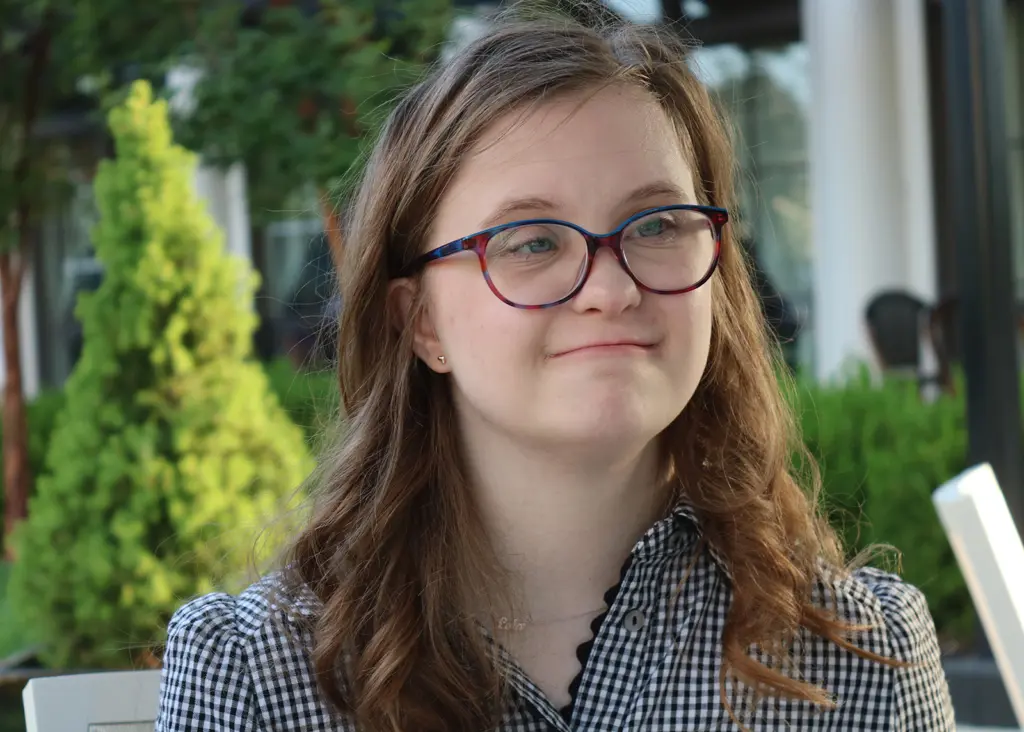
Lola Kernell, a parishioner at Curé of Ars Parish in Leawood, shares with families that amid an autism, Down syndrome or similar diagnosis, there is hope — and a great deal of it.
During the 2025 legislative season, Kernell testified on behalf of House Bill 2307. Signed into law on April 7, 2025, the bill transferred the authority for overseeing prenatal and postnatal diagnosed conditions awareness programs from the Kansas Department of Health and Environment to the Kansas Council on Developmental Disabilities (KCDD).
“Parents need real, hopeful information,” Kernell said during her testimony after having first shared her own story as someone with Down syndrome.
“Current evidence-based information must be collected, synthesized and disseminated to the parents in our state — information that celebrates the life of their baby and gives hope, not just facts focused on challenges,” Kernell said, adding later that doctors made false assumptions based on her diagnosis instead of on her as a person.
“One doctor was surprised [to hear] I was well-adjusted and able to learn,” she said, “saying to my mom, ‘She can read?!’ Obviously, the doctor had dated information about Down syndrome.
“Yes, I can read and write and work and learn French . . . and learn algebra . . . while being happy and successful in my life.”
Now more than a year after the bill’s passage, Kernell, in her role as advocacy coordinator at KCDD, is excited to have led the creation of the “New & Expectant Parent Guide: A Resource Guide for Kansas families in the I/DD Community.”
With this new guide in hand, Kernell is excited to share the life-affirming message of how people with diagnoses such as her own can not only survive but thrive.
“People with disabilities have a strong impact on their communities, and it’s not something to be scared of,” Kernell said.
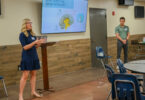
Kernell is in the midst of holding training sessions about the different resources available to families. Through those sessions, she hopes to get the guide in as many hands as possible, such as those of medical associations, genetic counselors, doctors, nurses, social workers, teachers and families.
The guide contains checklists of things parents should do, beginning with welcoming their baby just as they had planned, scheduling appointments with pediatricians to learn the medical facts of their child’s diagnosis and meeting with social workers to assess their family’s unique situation.
It also discusses ways to obtain early intervention services, such as speech and occupational therapy, as well as lists of diagnosis-specific organizations at local, state and national levels and publicly-funded support programs available, such as the state’s Special Healthcare Needs Program.
Near the end of the guide, a few sentences underscore its goal of providing hope: “Your child’s future is full of possibility, and so is yours. Welcome to a community that believes in you!”
Ultimately, Kernell said, the guide focuses on helping every child reach his or her full potential.
“I keep coming back to hope, but I look forward to their life accomplishments,” she said.