by Jeanne Gorman
Special to The Leaven
LEAWOOD — When Jesus said that whatever we do for the “least of these” we do for him, he likely wasn’t thinking about bus passes, eviction notices or spring-break child care.
But on Oct. 25 at St. Michael the Archangel Parish in Leawood, about 30 Catholics discovered just how closely those everyday struggles connect to the Gospel — by stepping into the shoes of neighbors living in poverty.
Denise Ogilvie of Catholic Charities of Northeast Kansas (CCNEK) guided participants through the Cost of Poverty Experience (COPE), a program developed by Think Tank to help people rethink poverty. Before beginning the role-playing exercise, Ogilvie shared sobering statistics about poverty in the country, the state and the archdiocese.
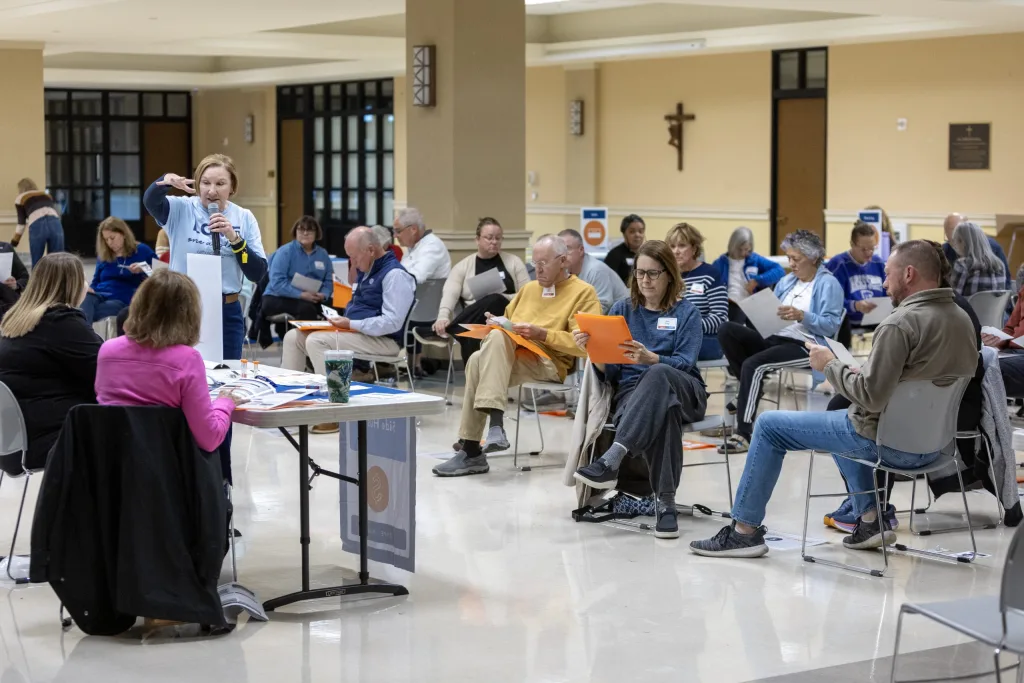
Of the three million residents in Kansas, 1.4 million live within the Archdiocese of Kansas City in Kansas, which includes both the richest county (Johnson) and the poorest (Wyandotte). A family of four is considered to be living in poverty if its annual income is below $30,000, and CCNEK serves people of all faiths with incomes up to 140% of the poverty level.
In Wyandotte County, 19% of the population live in poverty, compared with 4% in Johnson County. One in five children in Kansas are food insecure.
Ogilvie noted that little progress has been made in reducing the U.S. poverty rate — still about 12% — over the last century. Housing insecurity is also a major challenge. In Johnson County, for every two households seeking housing, only one unit is available. Health inequities further compound the problem: In Wyandotte County, life expectancy is 15 years shorter than in Johnson.
Multiple factors influence poverty in the United States, including housing insecurity, unemployment, health and education inequities, food insecurity, incarceration and its aftermath, and the racial wealth gap.
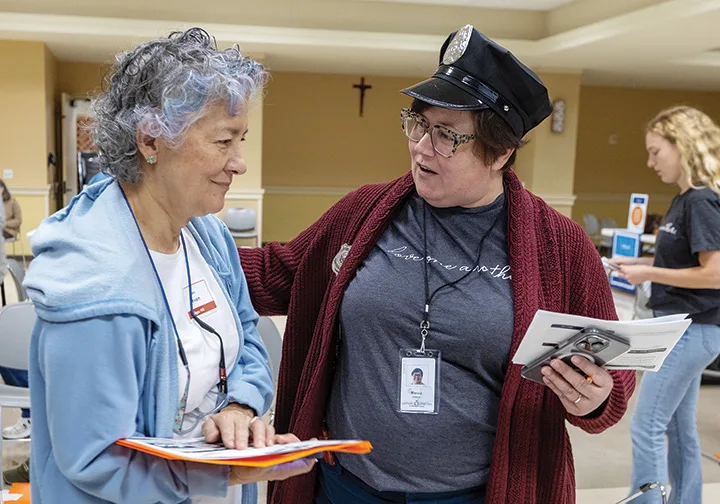
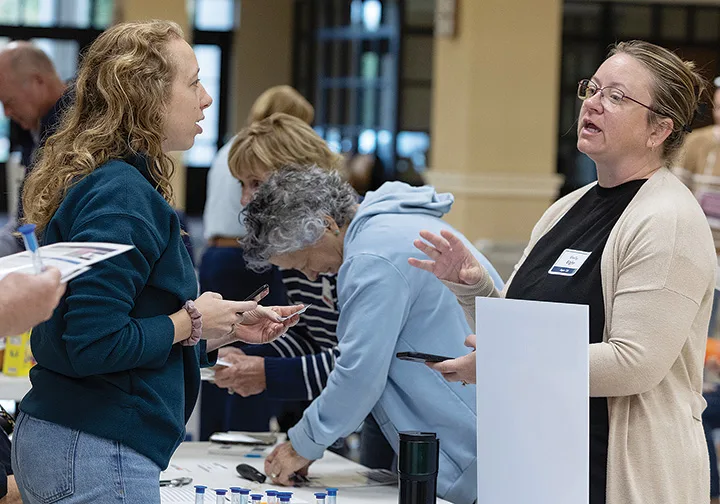
Against this backdrop, participants were divided into groups and assigned roles based on real-life situations: single moms, unemployed adults, children, or incarcerated heads of household. Tables around the room represented the resources they might need to navigate their challenges: schools (also serving as child care), banks (for those who are unbanked), emergency shelters (often unavailable), jails, employment, government services, megamarts, utilities, courts and probation, side hustles and more.
Every participant had to start at the transportation table — gas, bus passes or other options — since transportation is crucial to accessing all other resources. A wandering policewoman monitored the room, responding to crime, checking on unattended children, investigating domestic abuse and providing directions.
To add complexity, participants were asked to imagine what they would do on spring break when school (and child care) was unavailable. Carol Cowdrey, CCNEK’s vice president of marketing, said the experience “is a good opportunity for people to begin to understand the barriers that low-income people face.”
Although it is a common reality, being “unbanked,” or without access to a bank account, can make it impossible to cash checks, buy groceries or pay utilities.
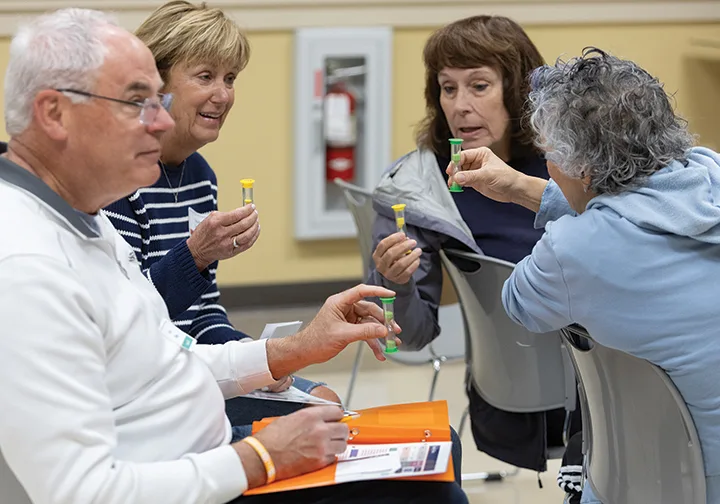
After the role-playing ended, the group gathered quietly to share their experiences. Participants said trying to cope with all the obstacles left them feeling “frustrated,” “stressed,” “confused” and “lonely.” They felt little control over their circumstances and admitted an urge “to go to the dark side.”
Participants also felt isolated. Many had done things they never thought they would: walked to work instead of driving, bailed someone out of jail, gambled, given up food or health care or left a child unattended. Even pretending to do these things left them stressed, overwhelmed and anxious.
Child role-players reported that no one at home checked in on them during the exercise.
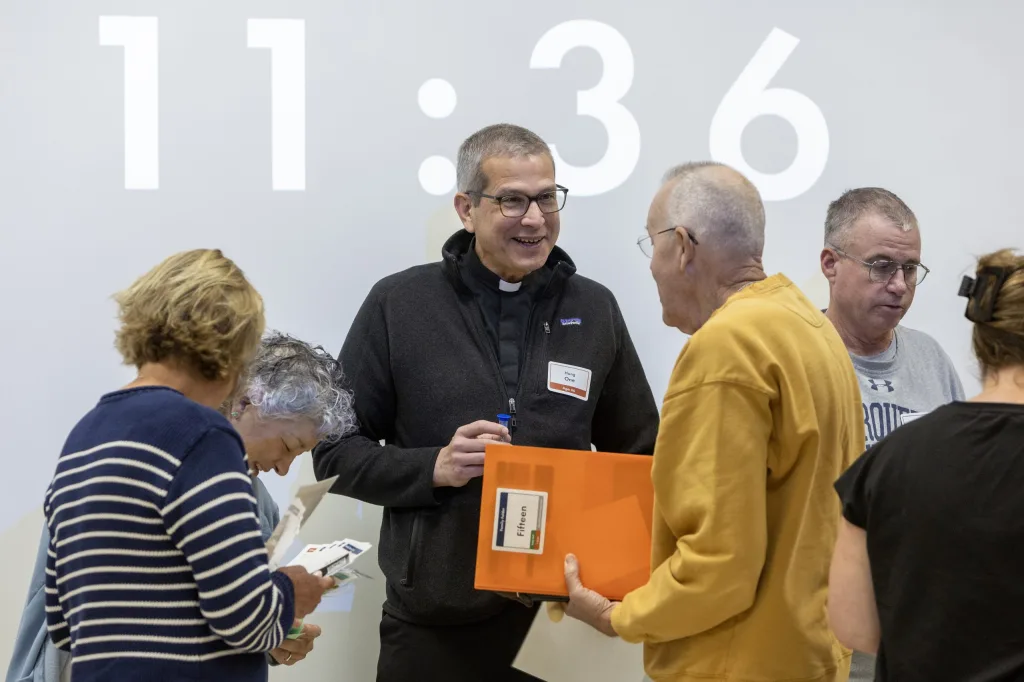
“The human person is more important than anything else,” Ogilvie reminded the group, cautioning that “when we look away from those in need, we are turning away from Jesus.” She challenged participants to think about how they can make the world a better place, emphasizing that those served must always be treated with respect and dignity.
“We all have something to give,” she concluded simply.
For information on COPE events in the future, send an email to: outreach@catholiccharitiesks.org.