by Olivia Martin-Davies
olivia.martin@theleaven.org
LENEXA — No one is addicted to their weather app or banking app.
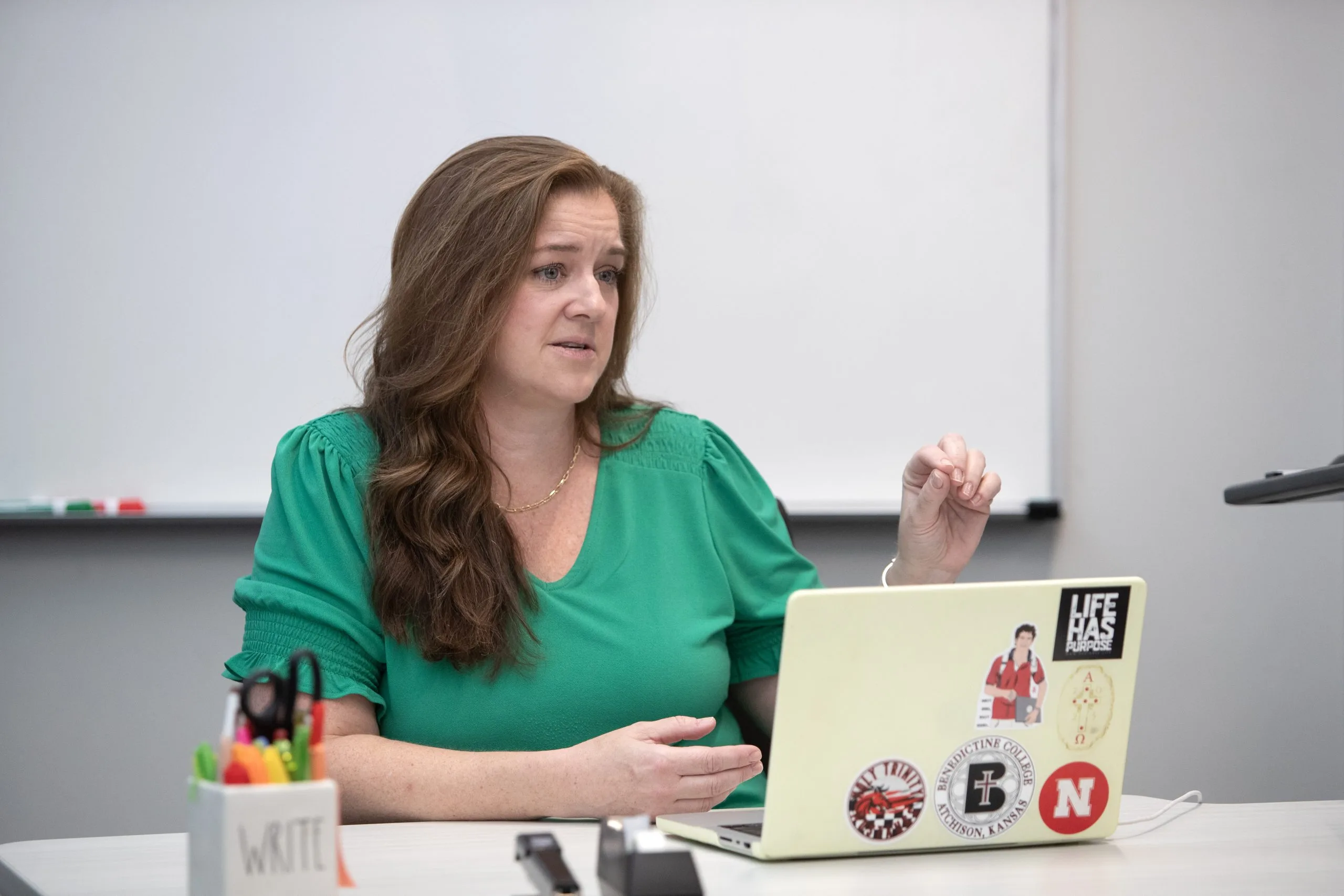
That’s a point Christine Lemmon, a parishioner of Holy Trinity Parish in Lenexa, makes to grab her students’ attention.
She continues: Social media, on the other hand, is made to be addictive.
A mother of six and a computer science teacher at St. James Academy in Lenexa, Lemmon has seen over many years the profound impact social media has on kids and families.
Today, she invites her students to think critically about the time they spend on their phones and how it affects them — and she works to educate parents on how they can do the same with their families.
“Every time I talk to a parent group, somebody says, ‘Could you come to my house and help me do this with my kids?’” said Lemmon.
Then, she realized that while she couldn’t physically visit everyone’s homes, virtually, she could.
Lemmon recently created an online course called “Raising Kids in a Digital World: Your Social Media Guide” on Udemy.com that offers a five-step plan to help families have conversations about social media.
“It’s not about fear,” Lemmon said. “It’s about giving kids life skills — the same way we teach them to cross the road or drive a car.
“Big Tech has a very intentional plan for your child. I want parents to have one, too.”
The reality facing families
The average American spends over five hours looking at their phone each day. For Gen-Z, this number is closer to six-and-a-half hours.
A 2024 study conducted by the Pew Research Center found that “[m]ore than half of teens (ages 13 to 17) visit YouTube and TikTok at least daily, with some saying they’re on the sites ‘almost constantly.’”
“These apps are designed like gambling,” Lemmon explained. “They’re built to trigger the same pathways in your brain that keep you coming back.”

Kids themselves feel dependence on social media is a problem.
“A senior in my AP computer science class once said to me he wants parents to know it’s hard out here,” said Lemmon. “Your kids want you to talk to them about it.”
Usage that creates encounter
While the reality of the toll social media can take is scary, Lemmon does not think completely warding it off is the answer.
”I want to be out there (on social media) enough that I can be my kids’ accountability,” she said. “It’s huge with anything in which you’re trying to find balance. It’s the reason we have trainers and money managers.”
She added that being on social media helps give her context for what is going on in her kids’ lives, too.
“Social media is like a language, and I want to speak the language that my kids use to communicate with each other,” Lemmon asserted.

With its ability to shape minds and hearts, social media has the potential to deepen users’ faith, too.
This is exactly what Pope Leo XIV reminded his audience during his July 2025 address to Catholic digital missionaries and influencers.
“Today, we find ourselves in a new culture, deeply characterized and formed by technology. It is up to us . . . to ensure that this culture remains human,” said the pope.
“It is not simply a matter of generating content,” he added, “but of creating an encounter of hearts.”
Steps to take
The first step to having a better relationship with technology is having open, honest conversations as a family.
“It doesn’t take a big overhaul,” said Lemmon. “Start small. Focus on one or two problem areas. Be honest with your kids about what’s hard for you, too. That honesty builds trust.”
A simple step to improve the content kids see in their apps’ feeds is to have them train their algorithms by following accounts that have the keyword “catholic.”
But perhaps the most important step is the one parents take themselves.
“We used to tell parents, ‘Make sure when your child walks into the room, your face lights up,’” she said.
“Now we have to say, ‘Put your phone down first, and then light up your face,’” she added.
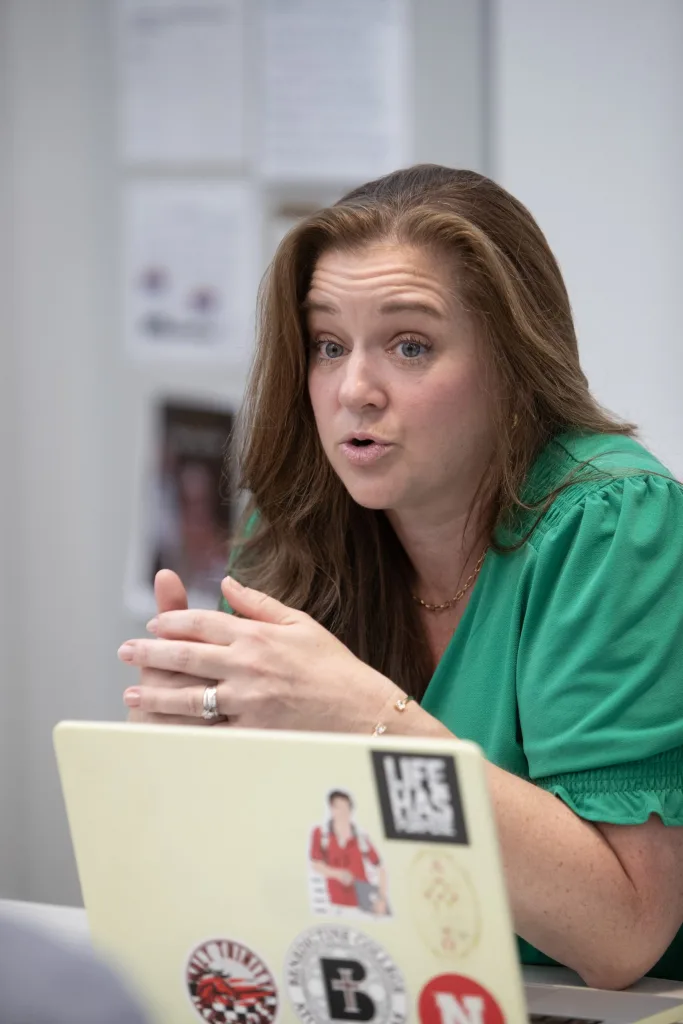
Ultimately, these conversations can help families create a plan for the kind of life they dream of living: a happy, holy and balanced one.
“I think when something is high stakes, we always put a plan around it,” said Lemmon. “The Hope Diamond has big security because it’s valuable.
“What influences my children is one of the highest stakes.”
To sign up for this online course and get 20% off, click this link and enter the code “THANKYOU20.”