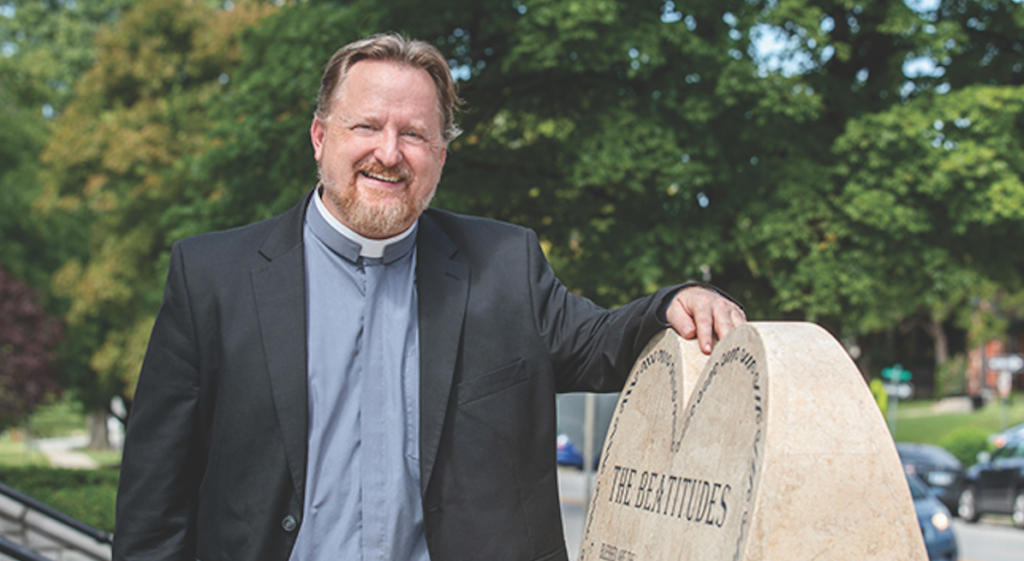
by Deacon Bill Scholl
Perhaps the most tragic political development for Catholics in the United States in the last 60 years has been the wedge issue of abortion.
In every presidential election where abortion has been an issue, Catholics have voted around 50/50. In doing so, we effectively cancel out our political power to bring about change.
I agree with the U.S. bishops: The issue has a special claim on Catholic conscience. I used to think this 50/50 vote split was a divide between “good” and “bad” Catholics.
However, as I’ve learned more and spoken to more people, I have come to see this as a result of most of us trying to apply the Gospel pragmatically, but in different ways.
For many who don’t vote pro-life, I wonder if they are actually, instead, trying to vote in ways that help the poor and working class. If I’m being honest, while I vote pro-life, I have often felt like I was being held hostage by the issue because the candidate was so weak on other social justice issues, particularly care for the poor.
It can be hard to vote against abortion with its invisible suffering when we see so much visible suffering in the world.
This makes me think of the words of the apostle John: “For whoever does not love their brother and sister, whom they have seen, cannot love God whom they have not seen.”
What if we came to see each and every person through a pro-life lens? What if we are both pro-life for the invisible victims — the unborn, and the mothers and fathers who carry trauma in secret — and pro-life for visible suffering immigrants?
I know that abortion and immigration are not the same in principle. Governments have a duty to enforce laws and secure borders. Immigration reform isn’t so clear-cut as the abolition of abortion. But perhaps if we could start to look at the issue of immigration through the lens of pro-life, we could also get others to see the tragedy of abortion.
The archdiocesan office for social justice is honored to join Catholic Charities to speak at this year’s Respect Life event, “Life: Our Sign of Hope,” on the topic of immigration, seen through pro-life eyes.
In this jubilee year of hope, may we see all who struggle for life and coordinate our advocacy. Dare we dream of a day when Catholics vote to make our country a little more like the kingdom Christ wants? If we could, both political platforms could be changed overnight.