Msgr. Stuart W. Swetland, president of Donnelly College, breaks down Pope Leo’s first encyclical for Leaven readers.
In March of this year, the AI company Anthropic was informed by the Department of War (Defense) that it had been designated as “a supply chain risk” to national security. This action, potentially devastating to any company, followed from a dispute over the use by the government of Anthropic’s advanced AI platform, Claude. Anthropic in its contract with the Department had insisted that Claude could not be used in mass surveillance of the American people or in fully autonomous weaponry. The Department insisted that these ethical limits be removed. Anthropic refused, leading to their ongoing dispute with the Defense Department.
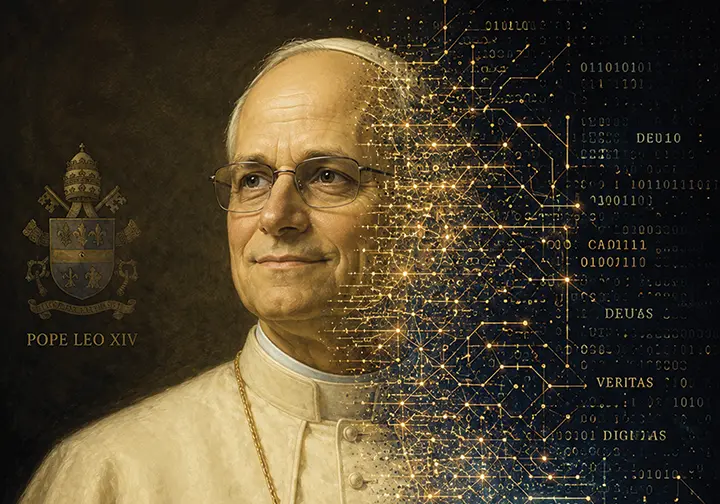
This real-world example illustrates that due to rapidly developing new technologies (especially in the area of AI), we are entering a new age for humanity. Pope Leo XIV, reading the signs of the times in light of the faith (cf. “Gaudium et Spes”), has written his first encyclical “Magnifica Humanitas” (MH) to address the “new things” our world is facing today. Subtitled “On Safeguarding the Human Person in the Time of Artificial Intelligence,” Pope Leo has attempted to provide humanity with a moral compass, if we will listen, by applying the wisdom of Catholic social teaching to the possibilities and challenges posed by these emerging technologies.
Before we start, this is Pope Leo XIV’s first encyclical. Is there any significance to the fact that the first American pope chose “Leo XIV” for his pontifical name?
It is profoundly significant. Pope Leo XIV has told the world that he chose Leo as his name to honor Leo XIII. Of course, it was Leo XIII who began the modern Catholic social tradition with his ground-breaking encyclical, “Rerum Novarum,” in 1891, which addressed the new things of the late 19th century — the Industrial Revolution foremost among them. Leo XIV continues that tradition with “Magnifica Humanitas.” Of course, Leo XIII’s encyclical came about 100 years after the start of the Industrial Revolution. Leo XIV’s reflection is written as we begin this new age of the algorithm.
What is an encyclical?
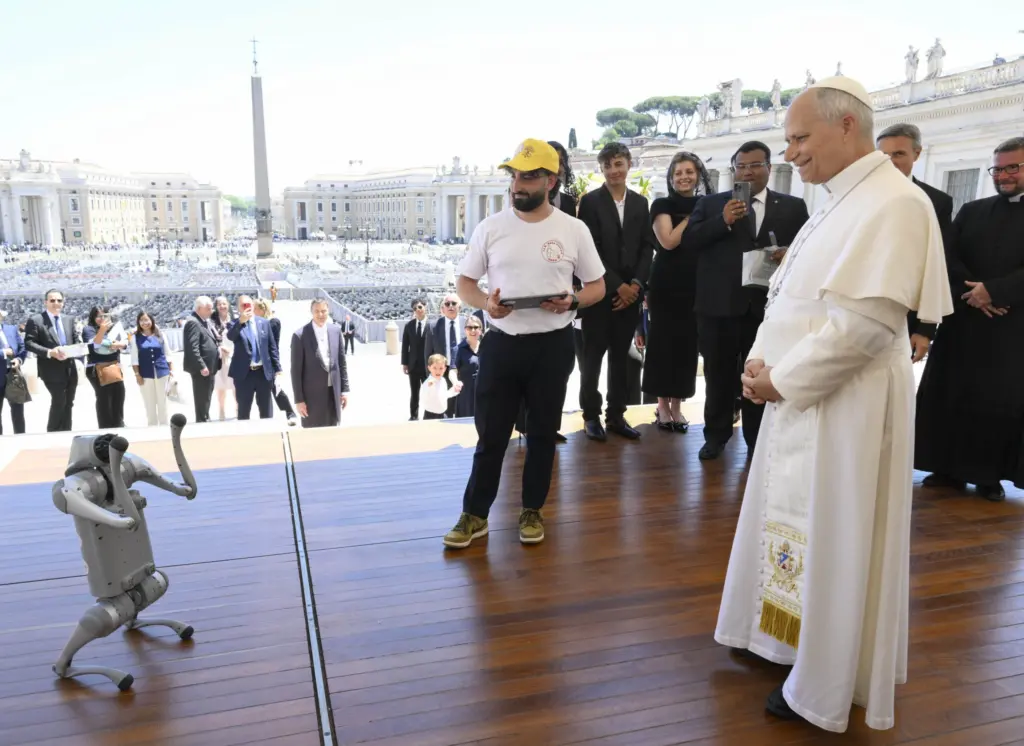
An encyclical is technically a “circular” letter from the Holy Father sent to the bishops of the world (or to a specific region) in union with the Holy See. It can also be addressed to others. It is one of the most authoritative ways a pope can teach and all Catholics are required to give its authentic teachings in the areas of faith and morals at least a religious assent of mind and will (cf. “Lumen Gentium” 25).
Who is MH addressed to?
In paragraph 16 of the encyclical, Leo XIV tells us that he is addressing all those of good will: “I address this heartfelt appeal to all the Catholic faithful, to all Christians and to all men and women of goodwill.”

What does its title mean and why did the Holy Father use this title?
The title “Magnifica Humanitas” is Latin for the grandeur or the magnificence of humanity. Leo XIV’s first line of the encyclical from which the title is taken is translated in English as: “Humanity, created by God in all its grandeur, is today facing a pivotal choice: either to construct a new tower of Babel or to build the city in which God and humanity dwell together.”
I believe Leo XIV chose this title to emphasize, against all reductionist attempts to the contrary, the fundamental truth of Catholic anthropology: the dignity and wonder of each and every human being all created in the image and likeness of God and called to an eternal destiny with God. Right from the first paragraph, Leo XIV teaches that it is only in Jesus that we discover who we really are: “Whenever humanity is in danger of marring its true identity, we Christians lift our eyes to the Incarnate God, knowing that it is ‘only in the mystery of the Word made flesh that the mystery of humanity truly becomes clear’ [“Gaudium et Spes” 22].”
How does it begin?
As quoted above, Leo XIV believes that humanity is at a crossroads: either the Tower of Babel (cf. Gen. 11:1-9) or (good Augustinian that he is) the City of God. The latter he illustrates with the biblical example of the communal rebuilding of Jerusalem after the Babylonian Exile under the leadership of Nehemiah (cf. Neh 2-6).
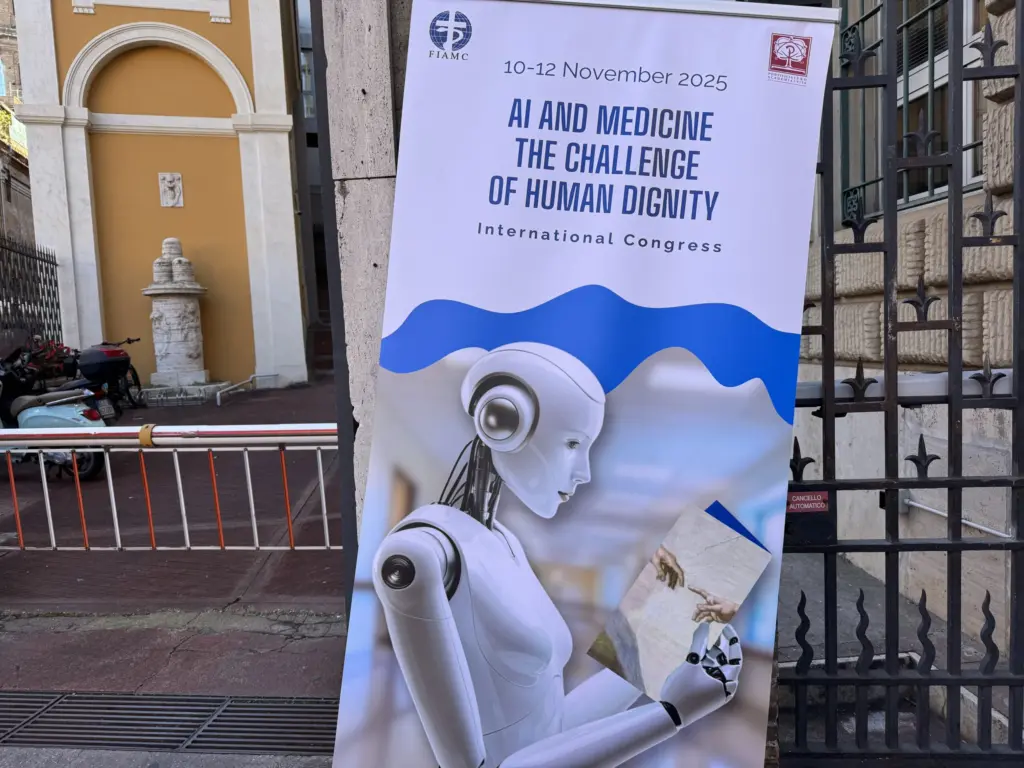
Pope Leo XIV states that while technology “should not be considered, in itself, as a force antagonistic to humanity” (MH 4). (In fact, in many ways, it has been our ally in advancing the well-being of many.) But “the emerging technologies” are so unique and so powerful that we must step back, slow down and “establish adequate regulatory tools” (MH 5) to ensure that these “new things” truly serve the human person and the common good. If not, Leo XIV teaches, “The risk of dehumanization — of building a future that excludes God and reduces the other to a means — is an ancient and ever-new temptation that today takes on a technical guise” (MH 10).
Is it significant that he signed it on May 15?
Yes, the date is highly symbolic. First, it is my birthday. Second, it is the 135th anniversary of his namesake Leo XIII’s landmark encyclical “Rerum Novarum” (“Of New Things”). By dating the document on May 15, Leo XIV places it squarely within the rich tradition of Catholic social teaching. In fact, he spends approximately 40% of this very long encyclical (over 42,000 words — the longest ever, I believe) summarizing that teaching, first historically and then thematically. He will then take the most important concepts and teachings of Catholic social thought (the dignity of the human person, the supreme value of human rights, the common good, the universal destination of goods, subsidiarity, solidarity, social justice, integral human development, etc.) and apply them to the “new things” of today.
What are its main teachings?
After summarizing Catholic social teaching, Leo XIV attempts to apply these concepts to the development of AI and the digital revolution now underway. While I highly encourage everyone to read and study (in groups or individually) the document itself (for no summary can do it justice), there are some key themes that ought to be highlighted. First, and perhaps most importantly, due to the dignity of the human person, technology of any sort must serve the true good of human persons and humanity as a whole not vice versa. This is one of the true dangers of AI and a world dominated by algorithms and data extraction. The power that these tools can wield, in the wrong hands or without proper failsafe controls, could well enslave or dominate us. Already we see how quickly our children and grandchildren can become addicted to their screens and gaming devices. We, too, know how seductive our own devices, running on well-tested algorithms, capture our attention and rivet us to their use. We also know that many of these algorithms enhance conflict, division, anger and vitriolic disagreements. This drives even more traffic and usage to these well-devised sites and message platforms. As Jonathan Haidt, among others, has shown, our use of screens is changing how we think and adversely affecting many people’s mental health. Leo XIV writes: “In recent years, psychological and psychiatric literature has documented with growing insistence how early and unsupervised exposure to digital devices and social media can negatively impact sleep, attention span, control of emotions and relationships, especially during the most vulnerable stages of life, at times with tragic consequences” (MH 141).

Leo XIV is also concerned that AI and other advances are controlled by a few very wealthy and powerful people and companies in only a very few nations. He calls for accountability, transparency and mechanisms that will ensure universal benefits and universal respect for human rights. The power and wealth associated with these new technologies cannot be monopolized by the few at the expense of everyone else.
In addition to a global ethical framework based in natural law that ensures proper control and equitable use and the distribution of benefits of AI and other advancing technologies, the Holy Father calls us to value true human encounters and relationships that allow for deep and abiding friendships and real human community (cf. MH 118-120).
And, ultimately, the age calls for discernment and wisdom. Wisdom is the intellectual virtue and gift of the Holy Spirit that allows us to know the purpose of things and how to achieve them. The wise person knows the purpose of life (for example, to know, love and serve God in this life) and how to achieve it. Leo XIV teaches: “Let us remain faithful to the truth! Living amid incessant flows of information, opinions and images, we know how easy it can be to influence decisions and preferences through increasingly sophisticated algorithms. In this context, it is imperative to cultivate hearts that love truth, prefer what is right despite the most appealing content and pursue wisdom rather than immediate results. We must always keep before us the truth about God and humanity, just as Christ has revealed them to us” (MH 237).
What does it say about war?
One meaning of Leo XIV’s admonishment that “AI must be disarmed” is that we must ensure that AI is not used to make autonomous weaponry. Our military systems and our weapons must be under ethical human control at every level. The decision to use deadly force is too important to ever be entrusted to algorithm and machine. Leo XIV also questions if just war theory, developed and applied, has not become outdated by our new technologies and the lethality of advanced weaponry: “Today, more than ever, without prejudice to the right to self-defense in the strictest sense, it is important to reaffirm that the ‘just war’ theory, which has all too often been used to justify any kind of war, is now outdated” (MH 192). Of course, Leo XIV is correct that the just war doctrine has been often misused. Many believe that the war the United States recently waged against Iran was an unjust one, for example, and that leaders and pundits (some, sadly, who claim to be Catholics) used the theory simply to justify the conflict. But note that “outdated” does not mean totally without merit. Leo XIV is an Augustinian and it is St. Augustine who is one of the fathers of the just war tradition. It has developed greatly since St. Augustine’s times and Leo XIV is correct that the “new things” require a reevaluation and updating of the teaching of the just war theory.
Currently, just war theory prohibits the use of deadly force except under the strictest circumstances and conditions. Perhaps, given our new technologies, even the very limited possibility of a just war may have to give way to something better. Leo XIV suggests such a way: “Humanity possesses far more effective and capable tools for promoting human life and resolving conflicts, such as dialogue, diplomacy and forgiveness. The use of force, violence and weapons reflects a relational poverty that always has disastrous consequences for civilian populations” (MH 192).
What does it say about slavery?
The encyclical covers a wide range of social injustices. It addresses the serious environmental issues associated with the new technologies, including the massive amounts of energy and water needed in their use, the procurement (often under the cruelest of conditions) of the rare-earth metals and other raw materials needed, the unjust working conditions of many people in workhouses and factories under AI or robotic influences, the social upheaval surely to come from employment displacements that will follow widespread use of AI, etc. But Leo XIV takes a moment to recognize and apologize for the role the Church played, directly or indirectly, in the continuation of slavery and the slave trade. He calls this failure a “wound in Christian memory. . . . For this, in the name of the Church, I sincerely ask for pardon” (MH 176).
Leo XIV also recognizes new forms of slavery, including human trafficking and the possibility of our own digital enslavement.
What does it say to the lay faithful for their home life and work life?
Early on in the encyclical, Leo XIV reiterates vital teachings from the Second Vatican Council — the autonomy of earthly affairs and the role of laity to sanctify the world through their home life and work (cf. MH 20-22). In MH 47, Leo XIV calls upon the laity to apply the social teaching of the church to their daily lives: “In offering these reflections, my hope is, first and foremost, to help the lay faithful and people of goodwill rediscover their duty of implementing the above-mentioned principles in their daily lives, family relationships, work and involvement in society. Thus, they will let themselves be inspired by the aim of embodying God’s love in the concrete events of life.”
What does it say about K-12 schools?
Schools must play a central role in what Leo XIV calls (in Chapter 4) “safeguarding humanity at a time of transformation.” He particularly calls schools to aid parents by being centers where “new generations can learn to seek and love the truth, to reflect on the meaning of life and to recognize the dignity of every person” (MH 143). In MH 147, Leo XIV calls families, schools, parishes, and even public institutions “to form a renewed educational alliance” so that the young can seek the truth and develop healthy and holy human relationships (cf. MH 147).
What does it say about colleges and universities?
Already in “Dilexi te,” Leo XIV had taught the urgency of providing education for all, especially the poor: “For the Christian faith, the education of the poor is not a favor but a duty. Children have a right to knowledge as a fundamental requirement for the recognition of human dignity” (“Dilexi te,” 72). In MH, he builds upon this duty by challenging colleges and universities to be at the forefront of mastering the new technology and ensuring that they are made widely available and at the service of the dignity of persons and the common good (cf. MH 47, 72). Colleges and universities are also called to teach our students how to verify facts and integrate knowledge in ways that build up authentic understanding and wisdom (cf. MH 139).

What does it say for those who work in AI?
In MH 13, Leo XIV calls everyone, including “scientists and researchers,” to help “rebuild the wall,” like Nehemiah of old, of a just, prosperous, and peaceful city where all can flourish. Everyone has their role to play, their vocation to fulfill.
In a way, Leo XIV is calling those involved in advanced research and development of AI and other technologies to the virtue of humility. We cannot and should not try to become God-like on our own terms. This was the fundamental attitude behind the Tower of Babel (Gen. 11: 1-9). Leo XIV reminds us that the authentic way to become “more than human” is by receiving the transforming and elevating gift of God’s grace (cf. MH 127-128). Quoting Pope Francis, Leo XIV teaches, “We become fully human when we become more than human, when we let God bring us beyond ourselves in order to attain the fullness of our being” (MH 128). Grace, not technology, is our salvation. To live this humility, researchers and developers of AI must in particular be transparent and responsible, totally aware of the common good and the real purpose of human life (cf. MH 209).
Was it significant that Chrisopher Olah, the cofounder of the AI company Anthropic, was present and spoke at the presentation of the encyclical? What did he say?
It was very significant because it showed, in a concrete way, that many in the field of AI are searching for moral and theological guidance as they struggle to innovate in ways that will truly serve the human person. Mr. Olah stated this plainly in his brief remarks as he admitted that aspects of the technology that he and his team are producing remain mysteriously opaque even to them. He also admitted that they were in need of the kind of moral reflection that Leo XIV was providing in the encyclical: “We need more of the world — religious communities, civil society, scholars, governments, and indeed all people of good will — to do what His Holiness has done here: to take this seriously, to look closely, and to push events in a better direction. We need informed critics who will tell the labs when we are failing. We need moral voices that the incentives [of pride and profit] cannot bend.” Earlier in his speech, Olah had thanked Leo XIV by saying: “That is what I see in ‘Magnifica Humanitas,’ and it is why I am grateful to His Holiness and to the church for taking up this work of discernment.”

Any concluding thoughts?
The week after Leo XIV published MH, I had the honor of meeting with him in private audience with a small group of Catholic college and university presidents from Canada and the United States. In his discussion with us, Leo XIV reiterated some of the major themes in the encyclical. But he particularly focused on the need for colleges — like Donnelly College where I serve — to instill in our students not a “fragmentation of knowledge,” but a passion for the truth: “Unless Catholic education instills in students a true passion for the truth — and not only intellectual truth, but the Truth that is in Christ himself (cf. Jn.14:6) — we can hardly expect people to be willing to put forth the effort required to recognize truth and adapt one’s life accordingly” (“Address of Pope Leo XIV to a Delegation of the Association of Catholic Colleges and Universities”).
The truth that is in Jesus Christ reveals us to ourselves (cf. GS 22) and teaches us our great dignity and the magnificent dignity of each and every human person. And this truth both empowers and motivates us to serve that dignity, to build up the common good and seek first and always the kingdom of God.
In this, AI and the other new technologies can be a tool, but can never replace the grace or truth of Jesus and, if misused, can become an obstacle or even a threat to humanity itself. May God grant us the gifts of knowledge, understanding, good counsel and wisdom to discern prudently how best to move forward in a time of artificial intelligence.