How Catholic immigrants built America
This is the second article in a series.
by Therese Horvat
Special to The Leaven
IRISH
St. Patrick Parish, Emerald
The Catholic community of St. Patrick, Emerald, dates to 1859 when the first Mass was offered in the home of an Irish immigrant. Upon completion of the log-cabin church, a priest from Scipio travelled by horseback to offer Mass every two weeks in Emerald.
Parishioner Joan Gagnon’s ancestors were likely in attendance. Her great-great uncle Henry Collins donated property on which the church currently stands. A great uncle operated the post office out of his home.
Gagnon thinks the Irish settled in the area because farmland was inexpensive and the terrain and its rockiness resembled their homeland. Parishioners quarried rock to build their second church. The can-do spirit of the Irish prevailed. Over the years, German settlers joined the community, and by 1899, the brick church opened for worship. Forty years later, a devastating lightning strike required rebuilding. The mason who did the brickwork completed the job at a price parishioners could afford.
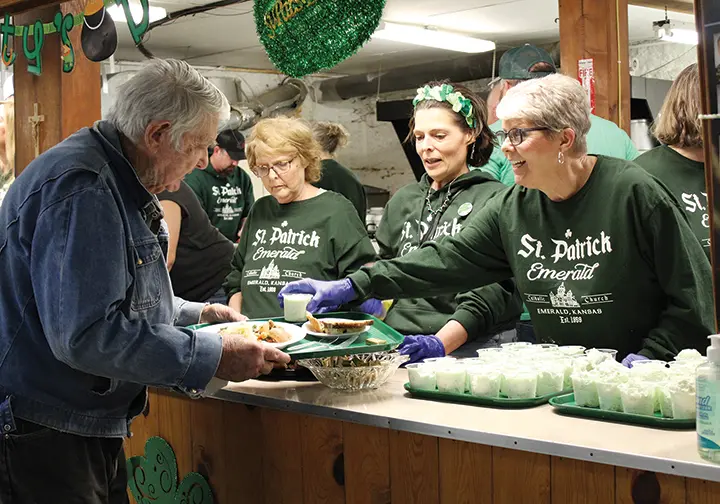
In the 1950s, a new basement was dug and constructed under the church, creating space for gatherings, including bazaars that attracted guests from the surrounding area. For the past 30 years, the parish has hosted a celebration the first Sunday before St. Patrick’s Day with traditional Irish food and music.
Gagnon says St. Patrick has never been a large parish. In her youth, there were 50 families, each averaging 10 to 12 children. From 1899 to 1961, the parish operated a public school with women religious as teachers. Today, the congregation is served from St. Francis Xavier Parish in Burlington.
Descendants of some of the original Irish settlers still reside in Emerald. Gagnon lives in the house where her father was born. She values St. Patrick Parish as a true small faith community.
St. Columbkille Parish, Blaine
Upon seeing the plight of Irish immigrants living in slum-like conditions in St. Louis, Father Thomas Butler took action. The Irish priest helped organize a colonization project in Kansas. With their purchase of shares to buy land, 60 families came west and platted a town in 1879.
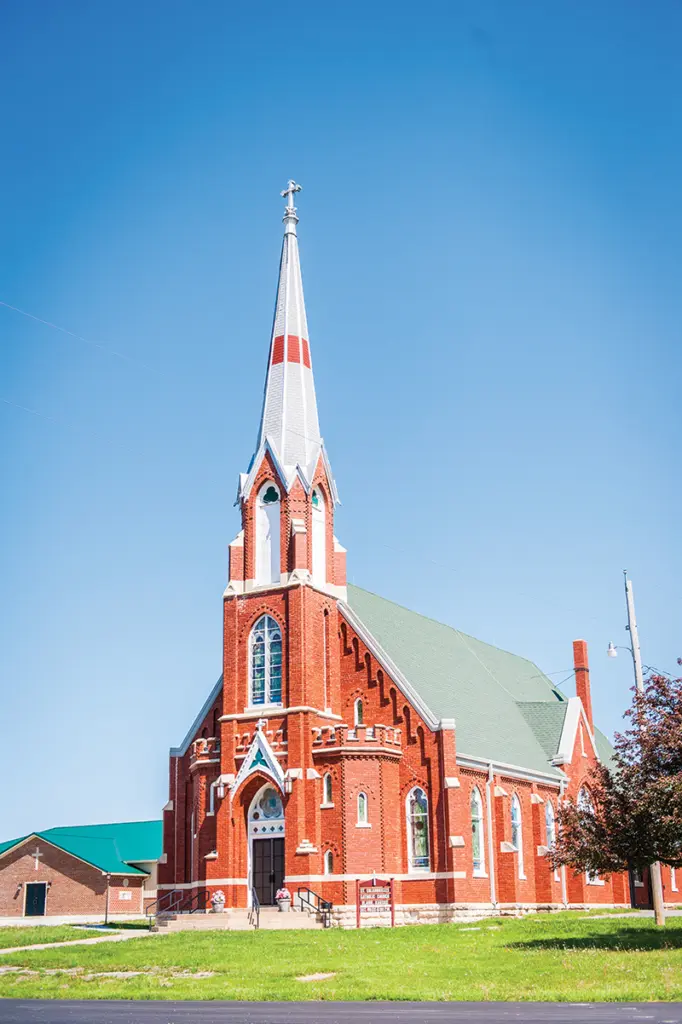
Jim McCormick’s great-grandfather was among these settlers. The town was initially named Butler City in honor of the priest. McCormick has heard two different stories behind the name change to Blaine — one that it was done by the post office and the other that it was changed by the railroad that came to town in 1881. There’s no doubt about the Irish connection of the church’s name. St. Columbkille was and remains a popular saint of Ireland.
McCormick credits the settlers with being industrious. Within a couple of years of arriving, they built the church and parish house from scratch. Later, they constructed another church building that required major restoration following a storm in 2010.
St. Columbkille had an elementary and high school taught by the Benedictine Sisters of Atchison. For a time, the Sisters boarded students in the convent when families were unable to transport them to school.
While descendants bearing the names of seven of the original 60 families remain in the area, McCormick no longer thinks of Blaine as an Irish town. But he believes that people still rely on the faith and dedication of those who preceded them. There’s continuity of engagement in the parish. Parishioners volunteered to help build the new parish hall.
McCormick acknowledges those who teach religious education and instruct young servers. He senses the resurgence of interest of young people in the church.
Today, St. Columbkille is a mission of Annunciation Parish in Frankfort.