
by Jill Ragar Esfeld
jill.esfeld@theleaven.org
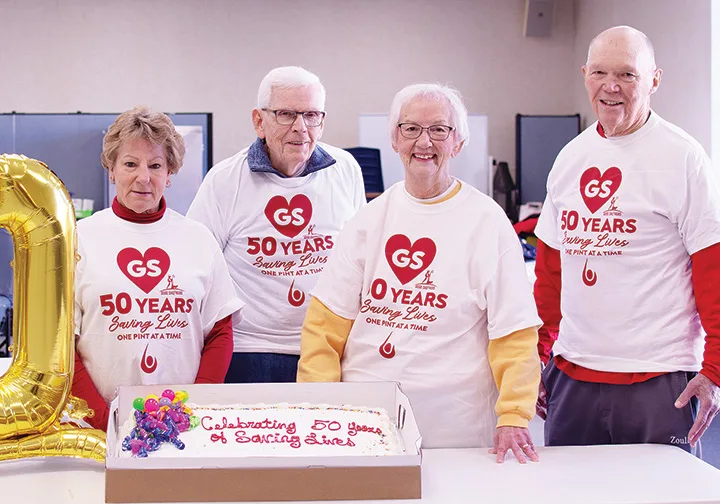
SHAWNEE — At the anniversary of their 50th blood drive on Jan. 19, Good Shepherd parishioners here set a goal of registering 50 new donors.
It was a lofty objective, but hardly one to outshine what they had already accomplished.
“The vast majority of our accounts are younger than 20 years,” said Patrick Wisely, Community Blood Center Account Manager for North Johnson County. “Fifty years is quite a feat.
“And it’s 50 years without missing a single year. So even through the pandemic, Good Shepherd gave.
“That’s very impressive!”
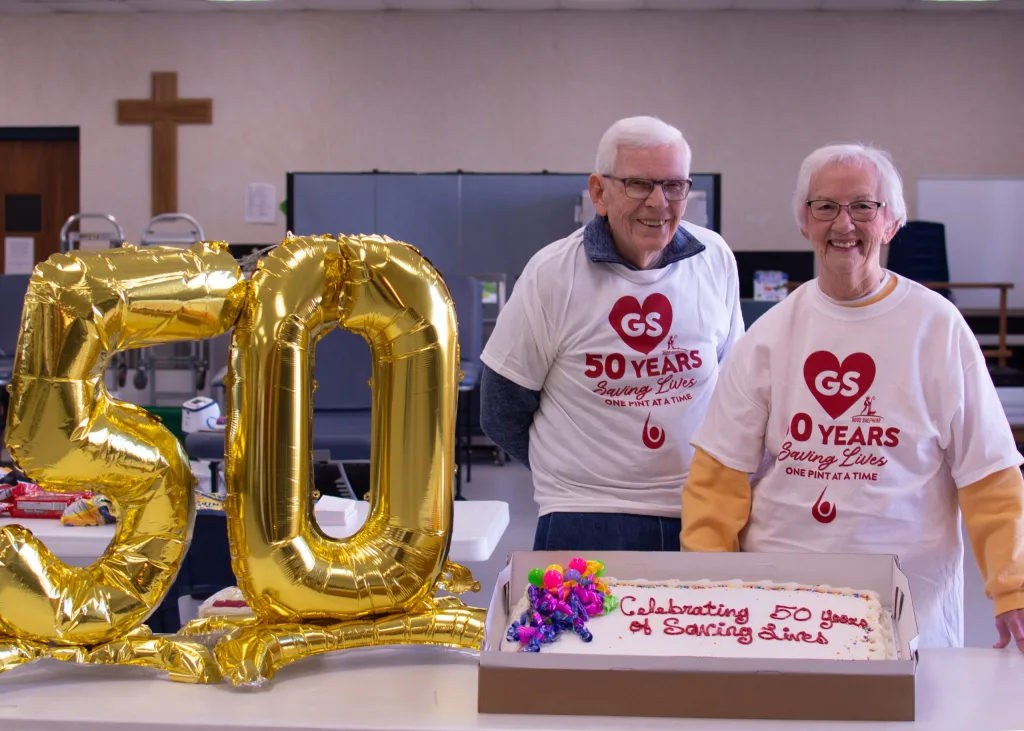
Good Shepherd parishioner Irma Royal organized the first blood drive in November 1976.
“Irma was a nurse,” said Jack Carson, who coordinates the blood drives with fellow parishioner Susan Currie. “She was the quintessential leader of outreach in our new parish.”
Irma died in 2019 but her legacy continues.
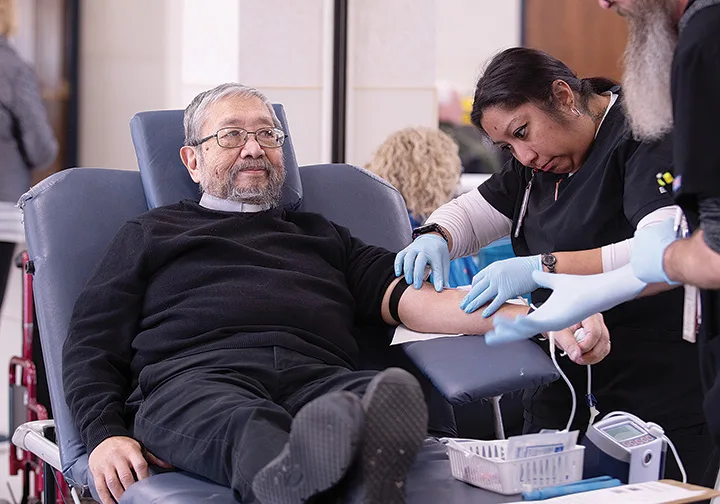
“Ninety-five percent of blood donated through the Community Blood Center stays local,” said Wisely. “So, it’s likely the pint you give is quite literally going to a neighbor within the 70 or so hospitals in the KC metro.
Despite all the technology and medical advancements today, there is no alternative way to get hospitals supplied with blood except through generous individuals taking a few moments to donate.
“It is an answer to a need that only the community can give,” said Wisely. “In faith, you’re answering a call to help where our community doesn’t have other resources.
“Faith-based organizations are really top-notch at having the most generous and compassionate donors.”
But even faith-based communities are falling short in recruiting new, younger donors. And that’s becoming a concern for the future.
“We are seeing a slow, but very steady, decline in donors because of the age-out process,” said Wisely. “So, what we are seeing is a lack of youth donors replacing the older donors who can no longer give because of health reasons.
“Young people need to step up and continue the privilege of donating.”
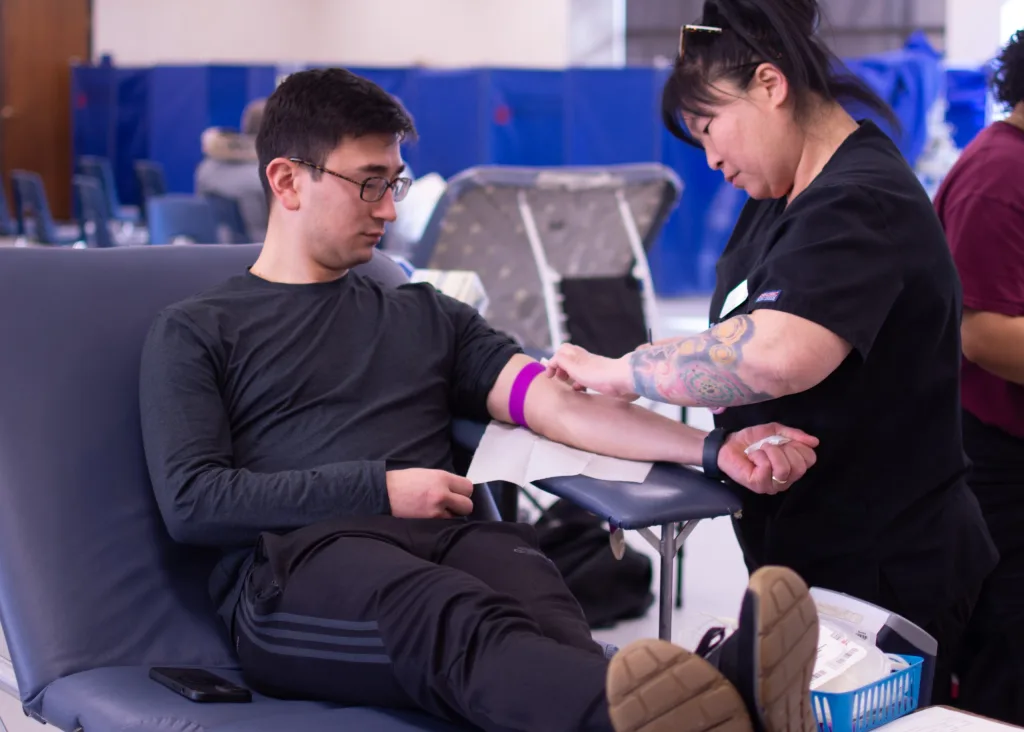
In response to this concern, the parish reached out to Good Shepherd School parents to join the 50th anniversary celebration by becoming regular donors.
“Annie Lehwald, a PTO member who has three, soon to be four, children at the school, got busy posting on Facebook and sending text chains to encourage school families to participate.
“I tried to get folks who had done it in high school and maybe didn’t have a good experience to try again,” she said. “You’re probably heavier, your body is different.”
Lehwald also set up tables with coloring books and markers because the drive took place on a school holiday and she wanted parents to feel comfortable bringing their children.
“I take my kids with me,” she said. “We talk about why we are doing this and why it’s so selfless.
“This is part of our Catholic faith. It’s a corporal work of mercy.”
Lehwald has a personal reason for supporting the drive.
“My nephew was born with multiple congenital heart defects and so he had two open heart surgeries by the time he was three,” she said. “And he just needed so much blood.
“Once you know someone, then it’s like, that momentary discomfort of giving is worth it.”
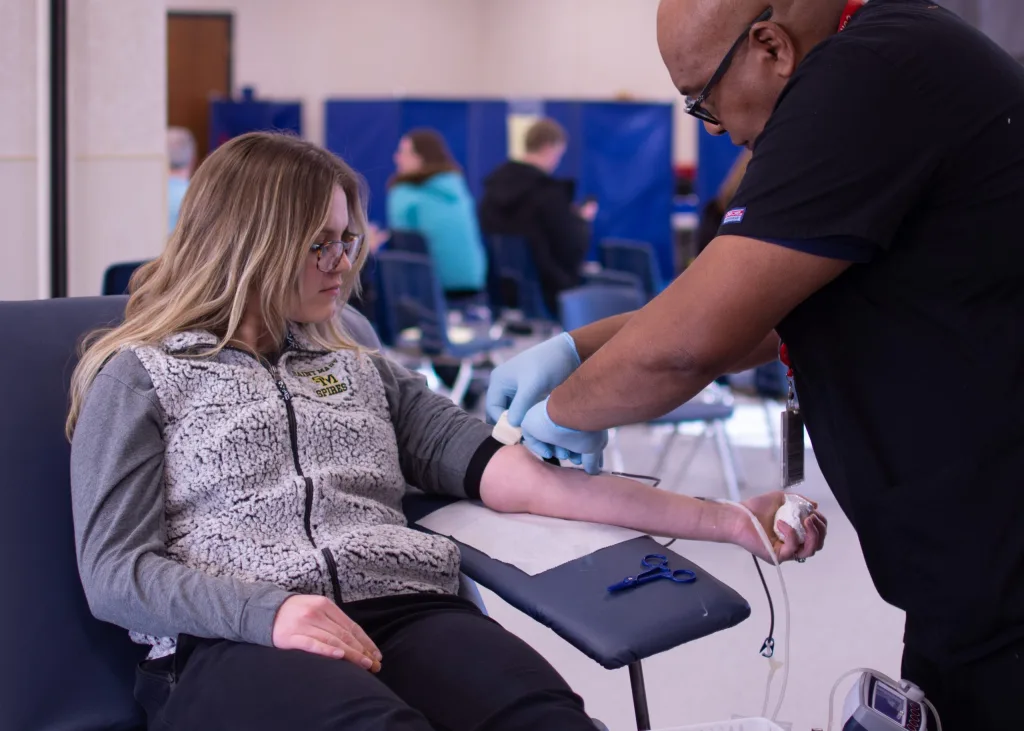
Wisely finds that many of his most prominent drives are led by people who have been personally impacted by a blood donation.
“That tends to be a heavy motivator,” he said. “It’s that personal impact. When you see the need in real life, you understand.”
Good Shepherd parishioners understand they have been the hands and feet of Christ working to save lives for 50 years.
“It takes time,” said Lehwald of the donating experience. “It’s a little uncomfortable, but if you can get through it, then it’s a huge benefit.
“You have to take what you’ve been given and give to other people.”
Save three lives
When you give a pint of blood, you’re actually giving three different people the chance to benefit from your donation. The whole blood is separated into three different components: red blood cells, platelets and plasma. All three offer different benefits and treat different conditions.
Benefits of donating
• Improved cardiovascular health: Regular donation supports your heart and vascular system, reducing blood viscosity and potentially lowering the risk of arterial blockages, heart attacks, and strokes.
• Lowered cancer risk: By reducing excess iron stores in the body, particularly in the liver, lungs, colon, and esophagus, regular donation may be associated with a lower risk of certain types of cancer.
• Burn calories: Your body burns approximately 650 calories as it works to replenish the pint of blood you donated, offering a minor metabolic boost.
• Decrease forever chemicals: PFAS (per- and polyfluoroalkyl substances) are nicknamed “forever chemicals” for their ubiquity, persistence and toxicity. Now scientists have found a way to remove PFAS from the human body: by donating blood. Because PFAS bind to serum proteins in the blood, reducing the amount of that blood component can, over time, reduce the levels of PFAS.
How-to have the best experience when you donate
• Drink plenty of fluids the day before and the day of donation.
• Eat a good hearty protein and iron-rich meal the day before and eat a good breakfast the morning of the donation.
• If you’re a little squeamish or worried about donating, know that’s very common. The Community Blood Center has great phlebotomists and donor care technicians that are fantastic at monitoring you and making you feel safe and secure.
Blood banks offer short-term savings
It’s called a blood bank, but there’s not much of a banking aspect to blood because it’s got a pretty short shelf life — less than 50 days. Even if there is a month with a lot of donations and adequate supply for hospitals, the very next month there is a need.





This was a great article and one that needed to be done. A blood drive in itself is great no matter who sponsors it, but the area and lives that it affects and saves is vast. This is not a one and done as there is no substitute for blood. Thank you Jill