by Marc and Julie Anderson
mjanderson@theleaven.org
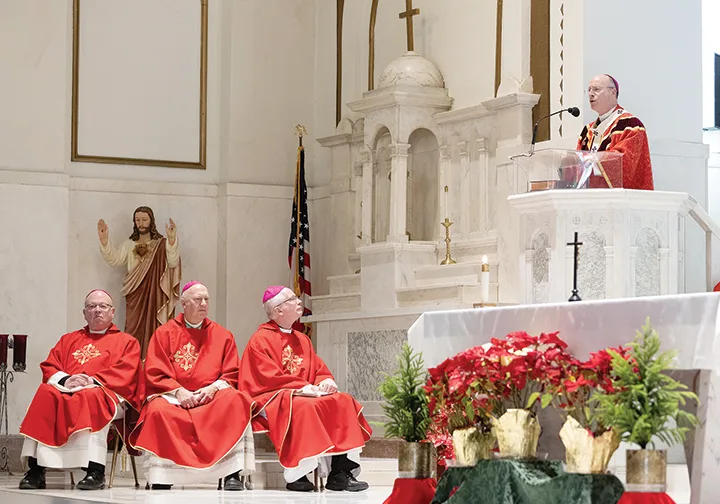
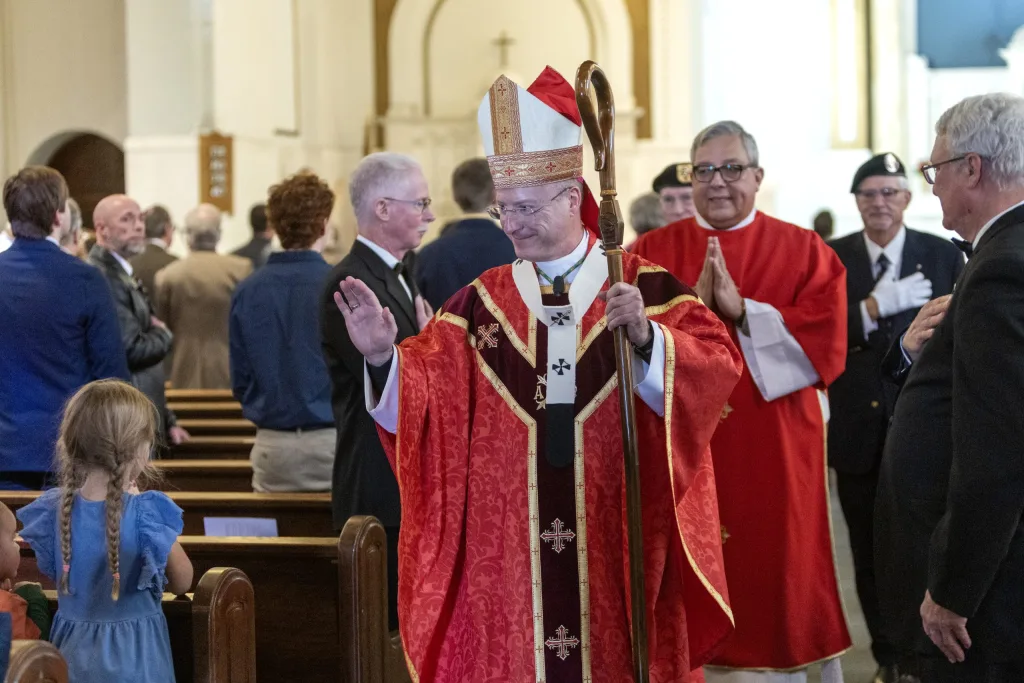
TOPEKA — Archbishop Shawn McKnight celebrated his first Red Mass as the metropolitan archbishop of the state of Kansas on Jan. 27 at Assumption Church – Mater Dei Parish here. Located directly across the street from the Capitol, Assumption is also the mother church of the city of Topeka.
Archbishop McKnight was both the main celebrant and the homilist at the liturgy.
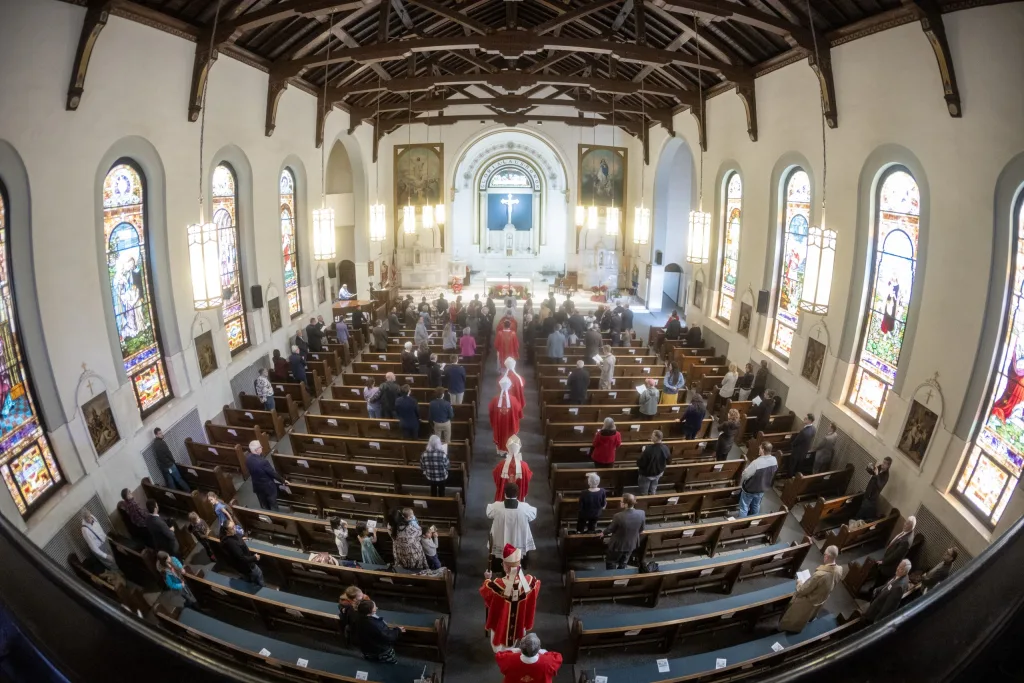
Sponsored by the Kansas Catholic Conference, which serves as the voice of the Catholic bishops in Kansas and provides Catholic perspective to Kansas lawmakers on a range of issues, the annual Mass is celebrated within the first few weeks of each legislative session. This year’s session began Jan. 12.
The Mass gets its name from the red liturgical vestments worn by the celebrant. In church tradition, red symbolizes the Holy Spirit. During the Mass, Catholics pray for an outpouring of the Holy Spirit upon those involved in public life, especially elected government officials, civil servants, attorneys and judges.
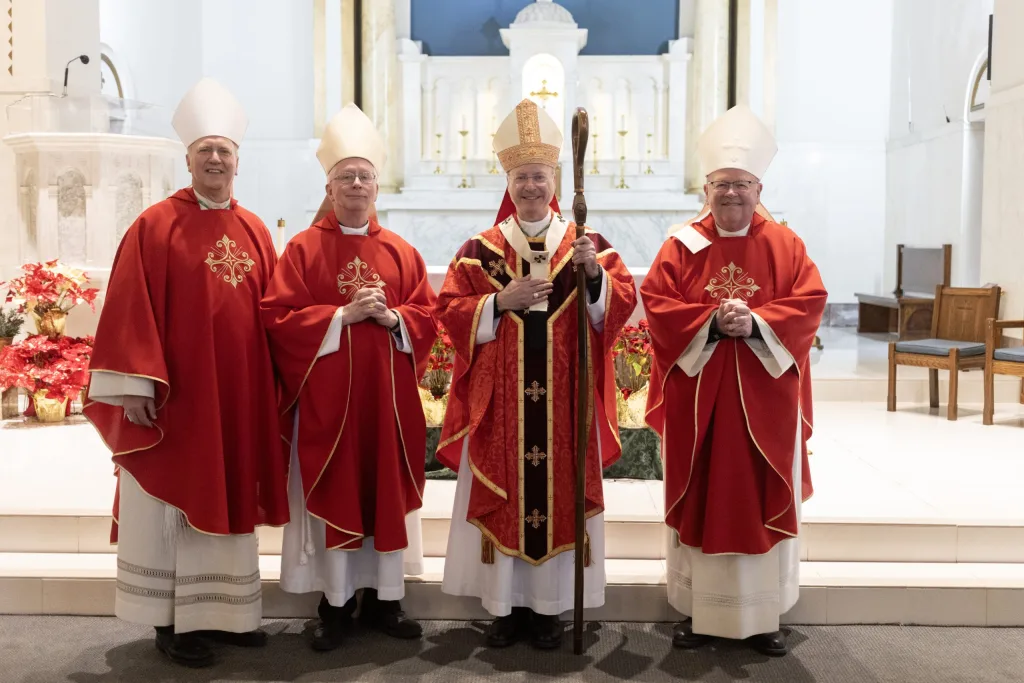
Joining Archbishop McKnight were the other three bishops of Kansas: Bishop John Brungardt of the Diocese of Dodge City, Bishop Carl Kemme of the Diocese of Wichita and Bishop Gerald Vincke of the Diocese of Salina, along with Father Matt Nagle, pastor of Mater Dei; Father Brian Lager, state chaplain of the Knights of Columbus; and Father Joe Chontos, chaplain at the Kansas Juvenile Correctional Complex in Topeka. Father Keith Chadwick served as master of ceremonies while Deacon Bob Ortiz of Mater Dei Parish served as the deacon.
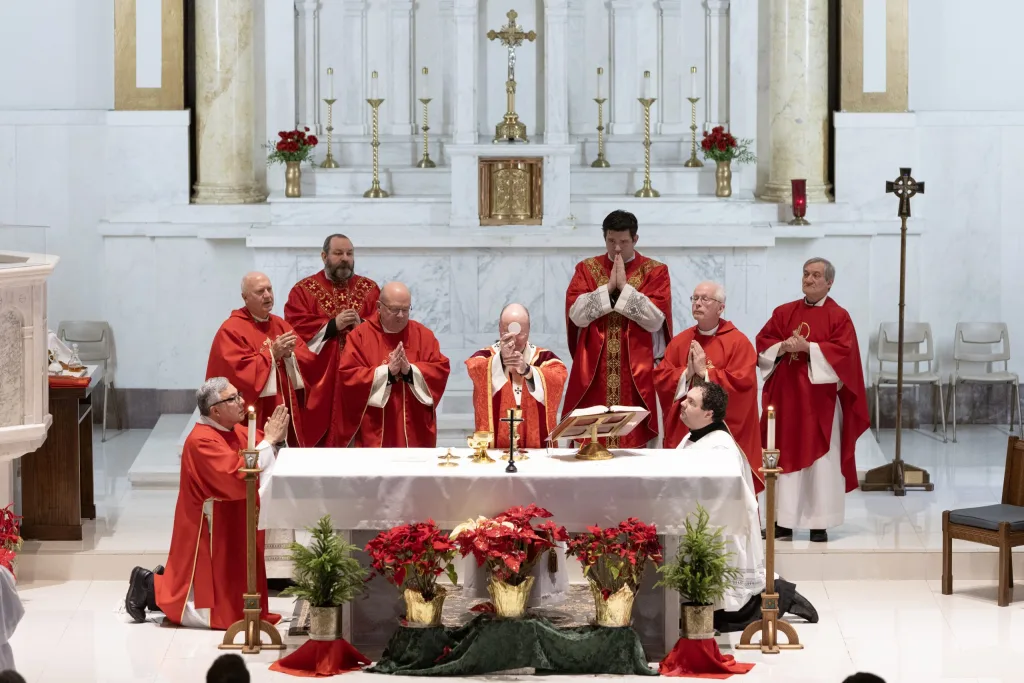
Archbishop McKnight opened his homily by asking for an outpouring of the gifts of the Holy Spirit on those involved in the legal profession — the judiciary as well as the legal and executive branches of state government. He also expressed his gratitude to be with the gathered.
“As the new archbishop of Kansas City, I am honored to be with you for the first time in our state capital to pray for another outpouring of the Holy Spirit in a church, state and world so desperately in need of it.”
How, he went on to ask, can Catholics in the legal profession “save their soul, let alone witness your faith, while practicing law? By using the gifts of the Holy Spirit given to you.”
He went on to briefly explain each of the gifts of the Spirit — wisdom, understanding, counsel, fortitude, knowledge, piety and fear of the Lord — and discussed how they should be used to bring about a more just society.
He then told of an experience he treasured from his years in Washington at the U.S. Conference of Catholic Bishops (USCCB). There he came to know Father Paul Scalia, the vicar for clergy in the Diocese of Arlington.
When a colleague of the archbishop’s expressed regret at not having toured the Supreme Court of the United States, Father Scalia and Archbishop McKnight arranged a tour.
“Our personalized tour concluded with a visit to the chambers of Father Paul Scalia’s father, Justice Antonin Scalia, who was quietly working in his office. It was a deeply human moment to witness such a powerful public figure delighting in his son’s presence,” the archbishop said.
The only picture of another sitting justice, Archbishop McKnight remarked, that was on the walls of Justice Scalia’s chambers, was of Justice Ruth Bader Ginsburg.
“As I later learned, Justice Scalia and Justice Ginsburg were good friends,” the archbishop said, despite being of different religions, backgrounds and judicial philosophies.
“They made room in their hearts for a friendship rooted in mutual respect for each other’s human dignity,” he said.
“Having friends who are different from us allows for Pentecost to happen all over again,” he added. “Our faith and the gifts of the Spirit make it possible to overcome race, religion, politics, even judicial philosophy.”
In conclusion, Archbishop McKnight said, “You, my dear brothers and sisters, have been called to evangelize . . . Our community needs good Christians in the legal profession who are bold women and men of faith, not in any triumphalist sense, but in humility, boasting only of the merciful works of God, as the apostles did at the time of Pentecost.
“May the Holy Spirit grant you not only wisdom and judgment but courage in action, so that through your integrity, civility and faithfulness to the truth, the law may serve its highest purpose — the protection of human dignity and the pursuit of justice worthy of the human person.”