by Jeanne Gorman
Special to The Leaven
KANSAS CITY, Kan. — Shouts of “School’s out, school’s out” and shrieks of laughter fill the air when elementary students run out of their school doors for the last time in the 2025-2026 school year and race into whatever adventures and surprises await during their summer vacations.
Teachers tell us, however, that if a minimal effort isn’t expended to keep their brains sharp over the summer, they risk forgetting what they learned during the previous year and falling behind when they return to school in the fall.
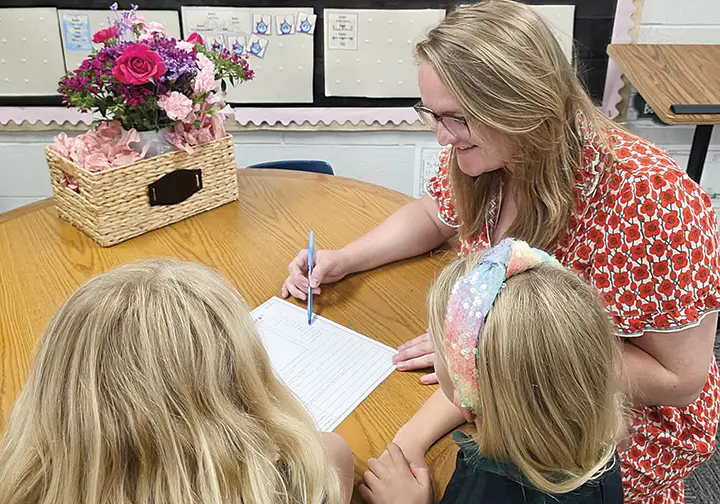
From her vantage point as a nine-year veteran teacher of first and second grade, Jolene Stuchlik, a teacher at Sacred Heart School in Ottawa, has seen what she calls the “summer dip.” Students must have their memories “refreshed” when they return to school because they have forgotten what they learned the prior year. To combat the “dip,” Stuchlik, like many other teachers, sends home optional summer packets that they hope will be used to help prevent students falling back.
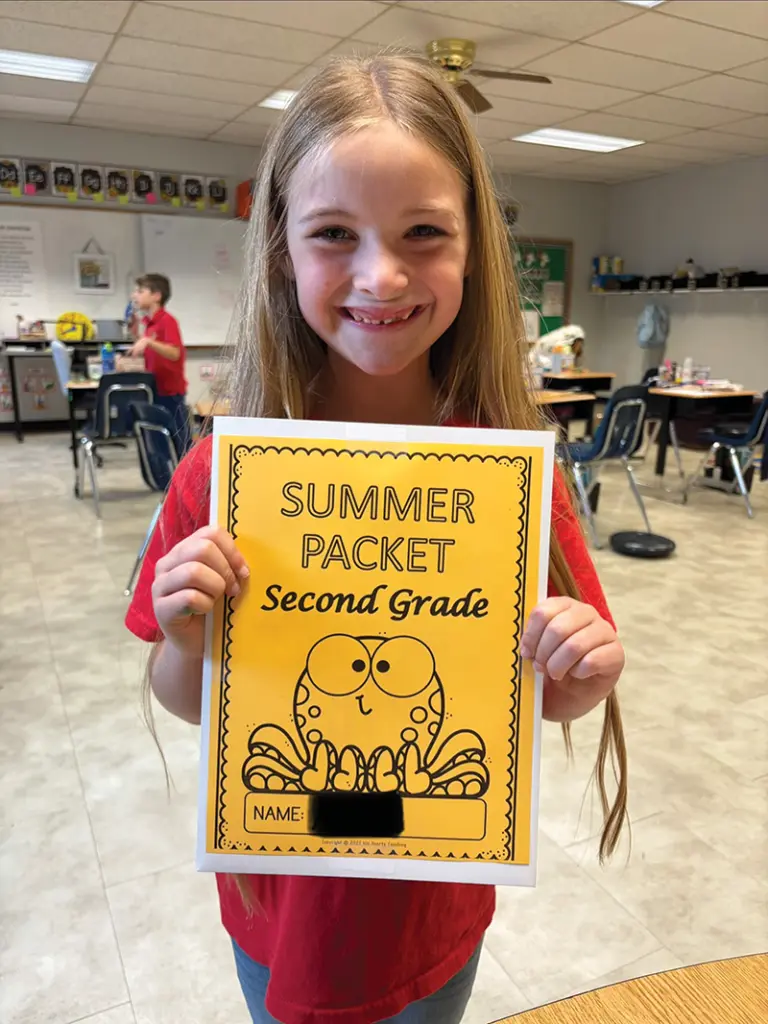
Knowing there is much competition for the students’ attention in the summer like sports, vacation, sleepovers, etc., as well as limits on their parents’ time, Stuchlik designs the worksheets to be completed in about 15 minutes. She tailors the packets to the needs of her students. If the students complete the packets, she gives them a small reward when they return to school in the fall.
Most of all, Stuchlik urges parents to read aloud to their children as much as possible and have their children read as well. She preaches that reading with their children is the best thing parents can do educationally for their kids. Reading “grows their [student’s] vocabulary, builds family time and grows imaginations,” she said. To make that more fun, she suggests the students “read to their stuffed animals, read outside with a flashlight, read with their grandma” and such.
Parents and students can take turns reading to each other or reading every other page. She also advocates “drop reading” — parents start reading a sentence and stop and let their child take over the reading. Parents can tell whether the child is engaged with this method.

Megan Staley, another teacher at Sacred Heart, loves teaching second graders. She agrees students tend to fall back in their academics during summer vacation. She believes “if you don’t use it, you lose it.” She can tell when the fall semester begins who put in a little work over the summer and who has not. The latter require more “catching up” in the first month or so of class rather than moving on ahead.
Like Stuchlik, Staley sends home optional summer packets. There is one page for each day of vacation. The pages are to be completed one a day, every day. She agrees with Stuchlik that the best thing you can do is read with kids every day.
Many public libraries have reading challenges and hold other events to engage the children of all ages. Staley recommends that parents find books that interest their children and advises them to “read, read, read.” But she also suggests that kids get plenty of outside free play and not just watch television or be on screens all day. Go to the pool, the zoo, explore museums or whatever is in your community. Be creative. Education is about developing the whole child.
Third graders can also “drop off” during the summer, according to Bobbi Jo Wenciker, third grade teacher at Queen of the Holy Rosary School in Wea. Wenciker, too, encourages parents to read with their children and meet them where they are. One fun way is to select a book that has been made into a movie and read the book together. After completing the book, have a movie night with snacks and watch the movie together.

Third graders should know how to address a letter and write one, said Wenciker. When on vacation, parents should encourage their child to address and write a postcard or letter to someone, maybe a grandparent, about the trip and mail it.
Because third graders are learning fractions, she suggests reviewing fractions in the kitchen. Parents can review fractions when measuring ingredients, e.g., ¼ cup plus ¼ cup equals ½ cup. Besides a review, this provides parents and kids with valuable time together.
She also recommends children plan and prepare meals, so they can use their fractions. At the grocery store, kids can compare prices of products or practice math skills by estimating the cost of the groceries in the cart. Board games may also provide an opportunity for review — adding up scores, for example.
Wenciker strongly suggests that there be structure in her students’ summer schedule — 20 minutes set aside for reading, for example, and 20 for math, as children thrive on predictability and structure.
Finally, Wenciker encourages parents to join their children outdoors this summer, and take some time with them to marvel at God’s creation. Just spending time with their children in these and other activities is what is most important.
Happy summer vacation!